Still Life with Cat — History & Facts
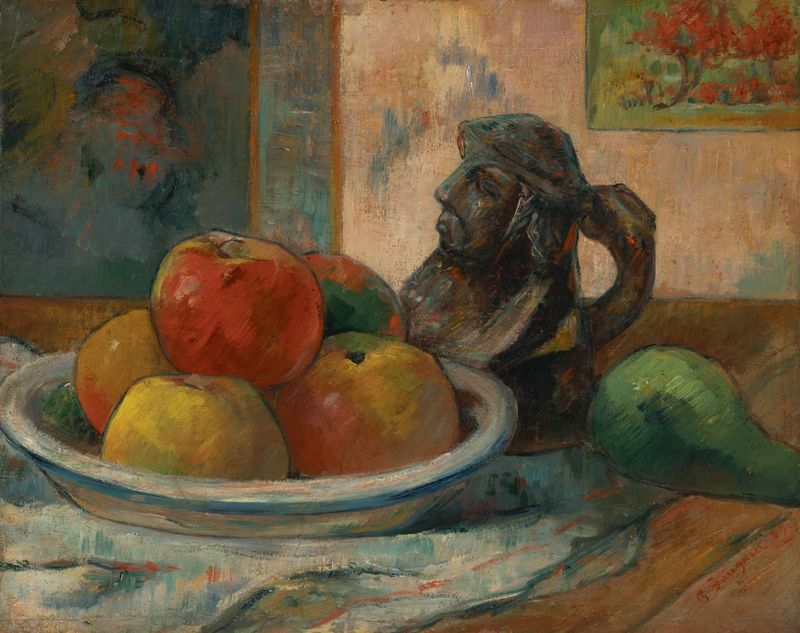
Did the painter know this moment would outlive them? A sense of serenity pervades the canvas, inviting us to linger in its stillness. Focus on the delicate arrangement of fruits and flowers in the foreground; notice how the sunlight caresses them, creating a gentle glow that contrasts with the soft shadows. The cat, poised lazily among the bounty, draws the eye with its relaxed posture and watchful gaze. The meticulous brushwork captures each petal and fruit with such precision that they seem to breathe, while a subtle harmony of warm hues envelops the composition, infusing it with tranquility. Yet, beneath this tranquility lies a deeper narrative.
The positioning of the cat suggests a silent guardian, watching over the fleeting beauty of the still life. The juxtaposition of the vibrant fruits and the cat’s somber fur evokes the passage of time; what thrives in life will inevitably fade. This duality of vitality and stillness strikes a chord, prompting us to ponder the ephemeral nature of existence itself. Agostino Verrocchi created this work in the 17th century during a time when still life painting was gaining prominence in the art world.
He was based in Italy, where the genre was being embraced as a reflection of both natural beauty and human mortality. As Verrocchi captured this serene moment, he was participating in a broader cultural shift, one that sought to find meaning in the everyday and elevate the mundane to an art form.