Still Life with Dead Game, Fruits, and Vegetables in a Market — History & Facts
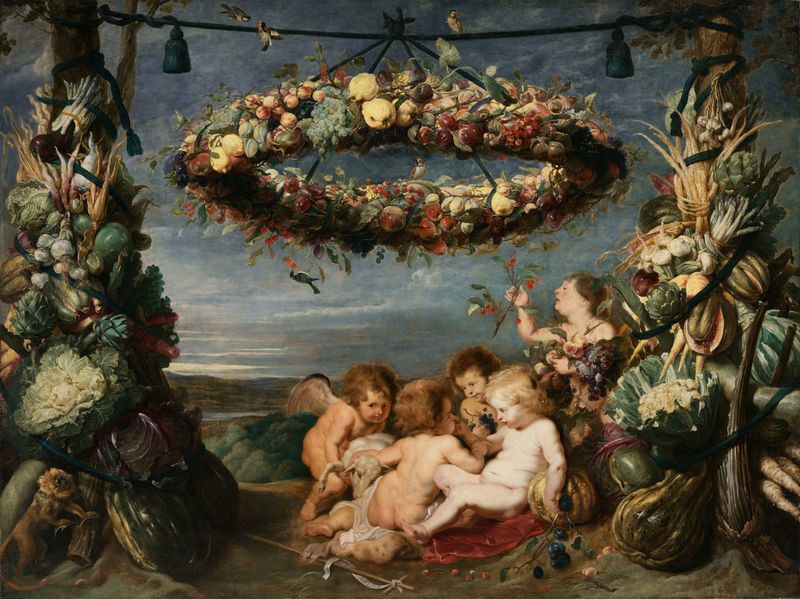
In the quietude of an artist's studio, a forgotten moment becomes eternal, pulsing with the life of colors and textures that awaken the senses. A yearning for the past permeates every detail, capturing not just the objects depicted but the ghosts of the hands that once touched them. Look to the right at the lush, ripe fruits—plump pears and vibrant grapes—juxtaposed against the starkness of dead game, each element meticulously arranged. The warm, golden tones of the vegetables and the earthiness of the game stand in striking contrast, drawing your gaze across the canvas.
Notice how the light falls upon the shimmering coat of the game, illuminating the rich hues of browns and reds, inviting contemplation of both life and death. Every inch is a testament to the artist's mastery over texture and composition, harmonizing the disparate elements into a poignant tableau. As you take in the scene, consider the emotional tension between abundance and mortality. The lavish fruits symbolize life's fertility, while the dead game evokes fragility and inevitable decay.
This duality encapsulates the cycle of existence, reminding us that beauty often coexists with sorrow. The careful placement of each item speaks to a deeper narrative of yearning—an unfulfilled desire not just for sustenance, but for the fleeting moments that define our lives. Frans Snyders created this work in 1614, during a period when he flourished in Antwerp, a hub of artistic innovation. The Baroque movement was gaining momentum, emphasizing dramatic contrasts and heightened realism.
Snyders was deeply influenced by the vibrant market culture of his time, merging the everyday with the extraordinary. His exploration of still life paved the way for future generations, encapsulating the visceral connection between art, life, and the human experience.