Still Life with Watermelon — History & Facts
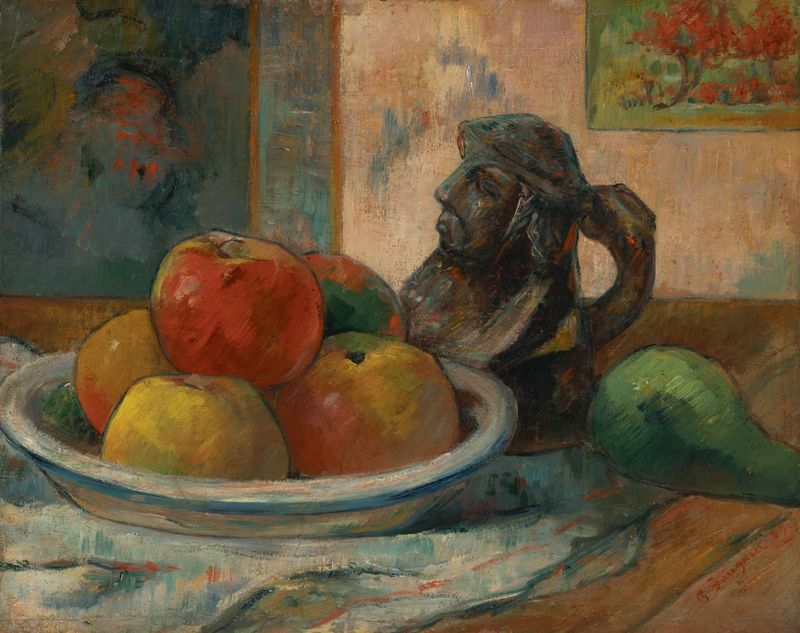
Could a single brushstroke hold eternity? In Still Life with Watermelon, the quiet yet vibrant hues evoke a profound yearning that transcends mere representation, inviting contemplation on the fleeting nature of life and abundance. Look to the center at the luscious watermelon, its green rind and crimson flesh seemingly spilling out of the canvas. Notice how the sunlight catches the surface, illuminating the seeds like tiny, dark jewels embedded in the fruit. The delicate play of light and shadow reveals the artist’s meticulous technique, creating a sense of vitality that makes the scene pulse with life.
Surrounding this central focus are various fruits, each rendered with a precision that highlights their unique textures and colors, orchestrating a harmonious composition. Beneath the surface of this still life lies a rich tapestry of contrasts. The vibrant watermelon, a symbol of summer and leisure, stands in stark contrast to the muted tones of the surrounding fruits, suggesting the fleeting joys of life. The artist’s choice to include imperfections in the fruit reminds us that beauty often exists in transience and decay.
Each element speaks to an emotional tension—between abundance and loss, between stillness and the inevitable passage of time. In 1822, Sarah Miriam Peale was at the forefront of American still life painting, creating a body of work that celebrated both the ordinary and the extraordinary. Painted during her time in Philadelphia, when art began to flourish in the young nation, her work reflects the burgeoning interest in capturing the beauty of the natural world, as well as her own personal quest for artistic recognition in a male-dominated art scene.