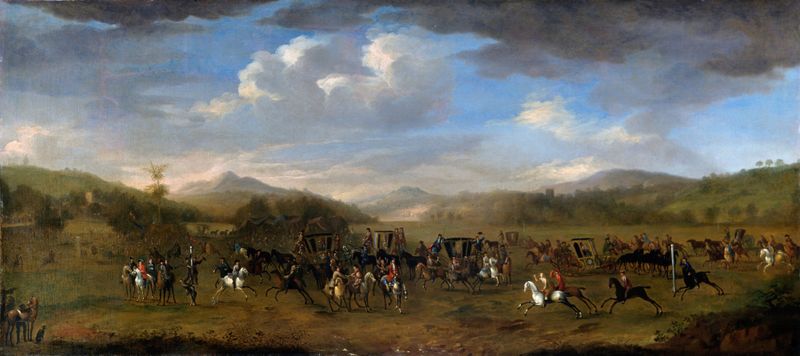
Stonehenge with a carriage and travellers on horseback — History & Facts
Can paint confess what words never could? In the silent brushstrokes of a canvas, the timeless yearning for connection and understanding emerges, echoing across centuries. Look to the center where the ancient stones stand, each monolith a testament to both endurance and mystery. The muted greens and browns of the landscape cradle the weathered structure, while the soft, golden light bathes the scene, hinting at dusk or dawn—moments that feel both final and hopeful. Notice how the carriage, with its passengers cloaked in rich hues, juxtaposes the stillness of the stones, creating a dialogue between the transient and the eternal. Upon closer inspection, the travelers’ postures tell a story of exploration and uncertainty.
Their horses seem to lean towards the stones, perhaps drawn by an unseen force, embodying a collective longing for answers that history has yet to reveal. In contrast, the static stones remain impassive, guardians of secrets that transcend the human experience, suggesting a tension between ambition and the eternal truths of the earth. James Ross painted this work during a period marked by Romantic exploration and a fascination with ancient monuments. While the exact date remains unknown, it reflects a time when artists were captivated by nature’s power and history's allure.
This fascination mirrored the broader cultural movement toward introspection and the sublime, as societies sought to understand their place in the world amidst rapid changes.