Storm Clouds over a Dutch Town — History & Facts
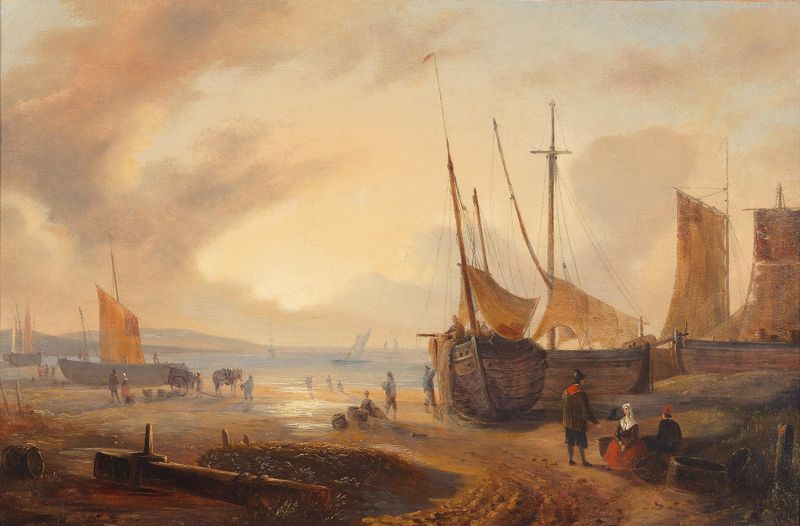
In the quiet embrace of a gathering storm, we are confronted with the divine tensions that lie between nature and humanity. There is beauty in the chaos, a sublime reminder of our fragility amidst the grandeur of the universe. Look to the horizon, where ominous gray clouds swirl and threaten to pour forth their fury upon the quaint town below. Notice how the storm’s shadows deepen the hues of the buildings, their soft façades contrasting sharply with the tempest.
The artist’s deft brushwork conveys a palpable sense of movement, inviting the viewer to feel the impending drama of nature, while the delicate touches of light peek through the clouds, hinting at hope amidst despair. This juxtaposition of serenity and turmoil resonates deeply within the viewer, revealing the emotional weight of human existence. The townsfolk, rendered mere silhouettes, appear dwarfed by the towering clouds, representing the insignificance of mankind in the face of nature's grandeur. The tension between the darkening sky and the warm glow of the town illustrates a universal struggle—the search for solace in an unpredictable world. During the time this piece was created, Georg Gillis van Haanen was exploring themes of light and atmosphere in his landscapes.
Though the exact date remains undetermined, it is likely he painted this work in the mid-19th century, a period marked by rapid industrialization in Europe. His focus on the sublime beauty of nature reflected a broader Romantic movement, emphasizing emotional experience and the transcendental qualities of the natural world.