Straatgezicht te Den Haag — History & Facts
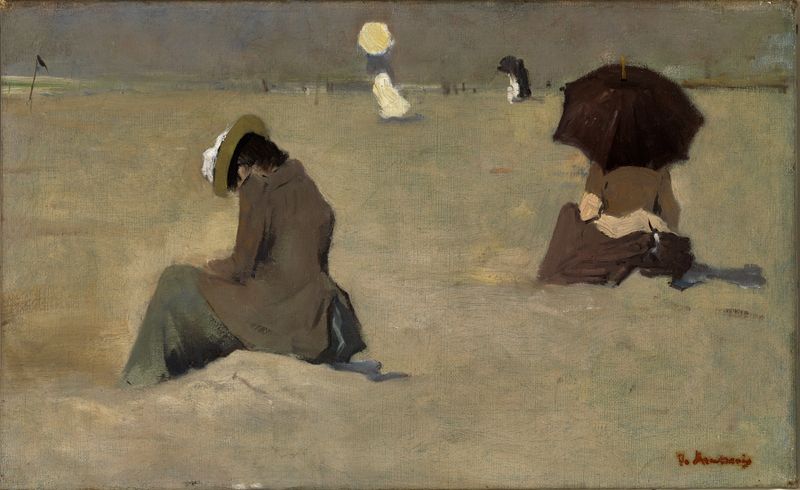
Where does light end, and longing begin? In Straatgezicht te Den Haag, the ethereal glow of the street beckons us to explore the intersection of reality and desire. Look to the right at the delicate interplay of shadow and light dancing along the cobblestones, where a gentle afternoon sun casts long shadows from the buildings. The soft brushstrokes create a palpable texture, reminiscent of a dream, while the muted palette of browns and greens evokes a sense of nostalgia. Notice how the figures are poised, almost frozen in time, each one contributing to the narrative without uttering a word, drawing us deeper into the scene’s quiet mystery. Beneath the surface, this painting speaks volumes about the human condition.
The light filtering through the trees not only illuminates the path but also symbolizes hope and faith amid life’s uncertainties. The solitary figures suggest isolation, yet their orientation toward the radiance hints at a collective yearning for connection. This contrast between light and shadow encapsulates the dichotomy of existence, where beauty and melancholy intertwine. Floris Arntzenius painted this artwork around 1874 in The Hague, during a period when he was honing his distinctive style that blended impressionistic elements with a keen sense of realism.
The Dutch art scene at the time was evolving, grappling with a post-impressionist approach that sought to capture fleeting moments of everyday life. Arntzenius was both influenced by and contributed to this movement, reflecting not just the physical landscape but also the emotional landscapes of his subjects.