Street in Damvillers — History & Facts
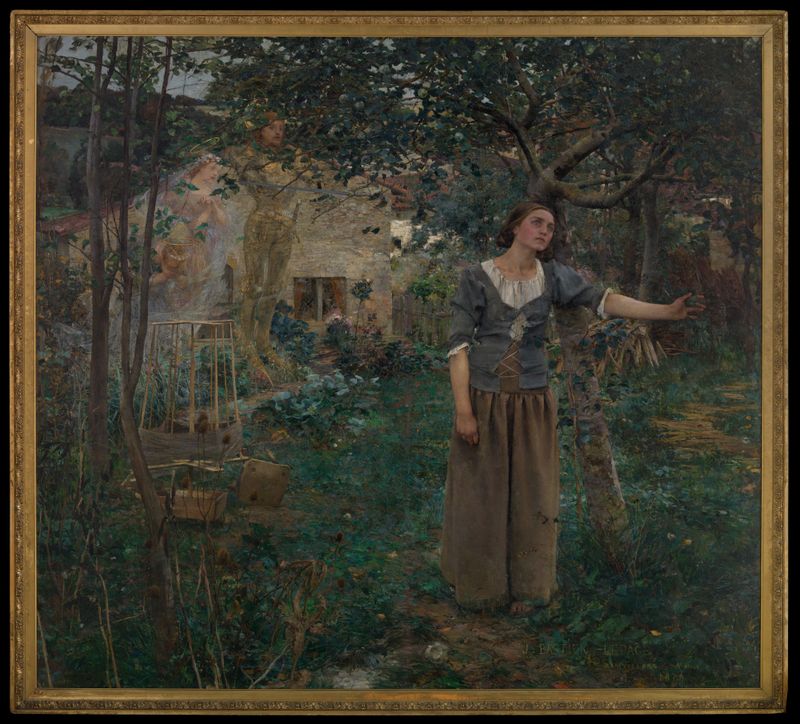
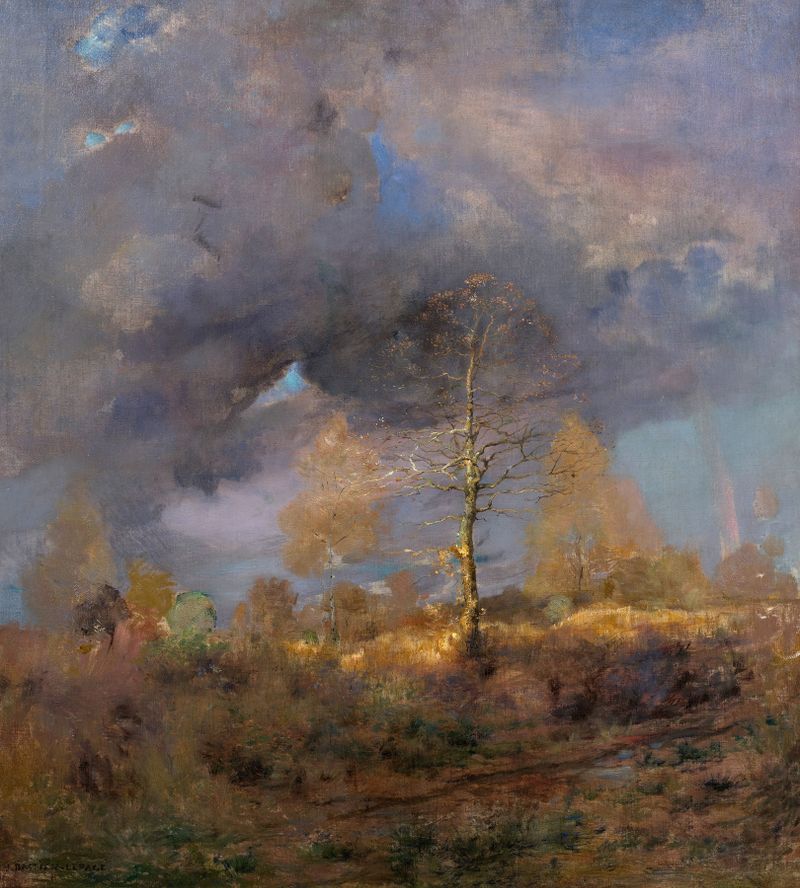
When did color learn to lie? The question lingers in the air as one gazes upon the serene yet troubling portrayal of a quiet street, where the hues whisper secrets beneath a tranquil facade. Look to the left at the weathered bricks, their warm ochres merging into a cool, muted gray as shadows stretch across the cobblestones. The artist employs a delicate interplay of light and texture, inviting the viewer's eye to follow the path that disappears into the distance, hinting at journeys unmade. Each brushstroke is deliberate, building layers of emotion as the delicate foliage above sways ever so gently, an echo of the life that teems beyond the confines of the canvas. Bastien-Lepage captures more than just a street; he reflects a tension between stillness and restlessness, between the seen and the unseen.
The abandoned façade suggests neglect, yet the vibrant greens overhead pulse with the vitality of nature, symbolizing hope amid decay. In this landscape, one senses the poignant juxtaposition of solitude and the quiet stories that are woven into the fabric of a community. Here, colors may lie, but they also reveal the deep emotional truths hidden beneath the surface. In 1882, while living in France, the artist painted this work during a time of artistic transition, embracing realism and the influence of Impressionism.
As the art world began breaking free from classical constraints, he sought to encapsulate the beauty of ordinary life, merging a sense of nostalgia with the rawness of contemporary experience. This piece stands as a testament to that evolving vision, reflecting personal and cultural narratives that resonate even today.