Stürmische Landschaft — History & Facts
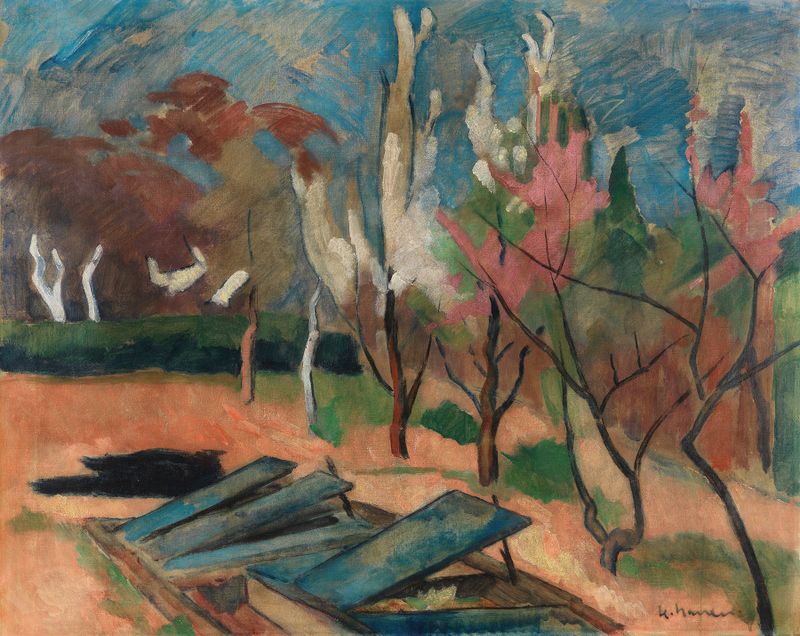
Who listens when art speaks of silence? In Stürmische Landschaft, the tempestuous energy of nature unfurls before us, inviting contemplation of the balance between chaos and tranquility. Look to the left at the dark, swirling clouds that writhe against a tumultuous sky, their weight suggesting an impending storm. The palette is a striking blend of deep blues and grays, contrasted sharply by the vibrant greens of the landscape below. Notice how the brush strokes are both frantic and deliberate, guiding your gaze toward a subtle interplay of light illuminating the horizon, where the storm meets the earth.
This gentle glow hints at the resilience of life amid turmoil, a whisper amid the roar. As the eye wanders, hidden meanings emerge within the tempest. The stark contrast between the roiling sky and the firm ground suggests a struggle between inner and outer worlds — a reflection of human emotion tethered to nature's whims. The wildness above can be seen as a symbol of unrestrained passion, while the grounded land beneath represents the stability we seek.
This tension raises questions about our own balance in the face of life's inevitable storms. In 1908, Heinrich Nauen painted this work during a period marked by a shift in artistic movements, as German Expressionism began to take root. Living in the heart of a rapidly changing world, he grappled with themes of nature and emotion that resonated deeply in his personal life. This piece captures not only the external tumult of his era but also his inner quest for harmony amid chaos.