Strook kloskant met blaadjesrand — History & Facts
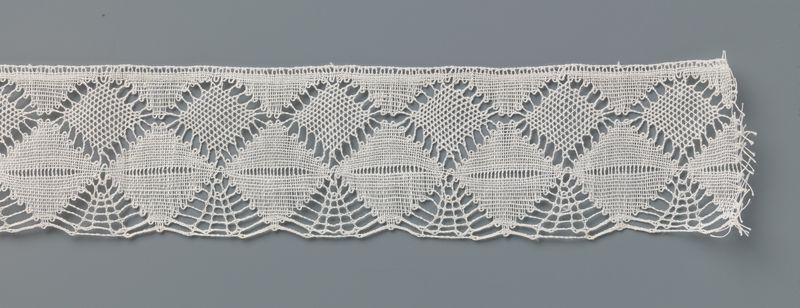
Can beauty exist without sorrow? In the delicate lacework of Strook kloskant met blaadjesrand, one can sense an intricate dance between fragility and fear, where elegance masks an underlying tension. Look closely at the finely crafted edges of the lace, where the leaves emerge like whispers from the fabric’s surface. The interplay of light and shadow enhances the texture, creating a mesmerizing shimmer that draws the eye. Notice how the intricate patterns twist and spiral, inviting both admiration and contemplation.
The subtle hues woven into the design breathe life into each intricate detail, suggesting that beauty is not merely surface deep, but rather a complex interplay of emotions. As you explore the piece further, consider the contrast between the delicacy of the lace and the possible fears of impermanence it embodies. Each leaf motif, though graceful and serene, may hint at the fragility of life itself. The craftsmanship evokes a sense of nostalgia, perhaps referencing the painstaking effort involved in its creation, underscoring the tension between art and time.
In this, one can sense the shadows of vulnerability lurking behind its beauty, creating a poignant narrative that resonates with the viewer. This work emerged during a time of significant change for Wilhelmina Cornelia Schutten-Putters, who painted it in the late 1920s. The post-World War I era was marked by a resurgence of artistic exploration, with many artists seeking to blend traditional craftsmanship with contemporary themes. Living in the Netherlands, Schutten-Putters contributed to a revival of lace-making, reflecting her connection to both heritage and modernity amidst societal shifts.