Stryjski Park in Lviv — History & Facts
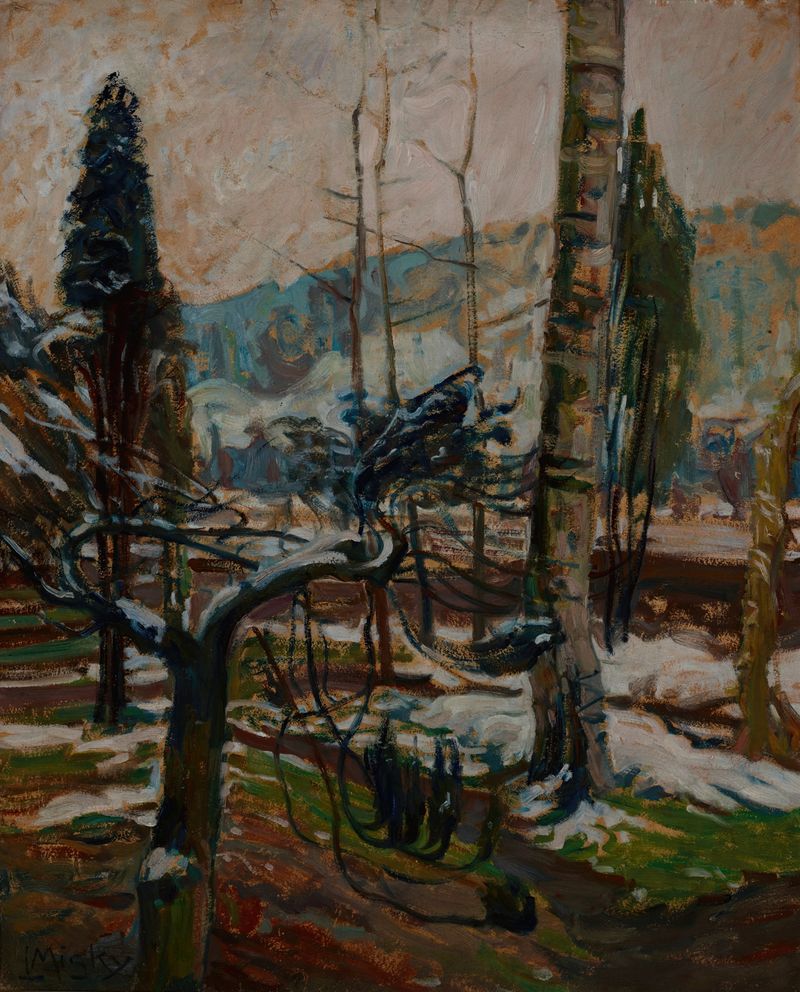
Could beauty survive in a century of chaos? Amidst the turmoil of a post-war world, the essence of obsession threads through every leaf and shadow in this artful portrayal of a serene park. Look to the foreground, where verdant grass unfurls like soft velvet beneath the gnarled branches of ancient trees. The artist’s brush captures the play of sunlight filtering through the leaves, creating a dappled pattern that dances on the ground. The subdued color palette, a mix of earthy greens and muted browns, evokes an atmosphere of introspection, while the delicate strokes give life to the swaying grasses, inviting viewers to lean in closer and connect with nature’s tranquility. Hidden within the scene lies a profound contrast between the park's idyllic beauty and the looming specter of societal upheaval.
Each tree stands as a testament to resilience, their roots embedded deep within a landscape scarred by history. The meticulously painted blossoms whisper of fragile hope, hinting at the obsession to preserve beauty amidst despair—a reminder that life perseveres in unexpected ways. The artist's choice of perspective draws the viewer’s eye into a gentle embrace of nature, suggesting that even in chaos, solace can be found. Ludwik Misky created this work between 1917 and 1921, during a time of significant change in Europe.
As Lviv grappled with the aftermath of World War I and the shifting boundaries of nationhood, Misky sought refuge in the beauty of local landscapes. His art was a response to the surrounding turmoil, reflecting a desire to capture moments of peace and continuity amid the chaos that defined his era.