
Study for "The Sleeping Beauty": Head of a Maiden — History & Facts
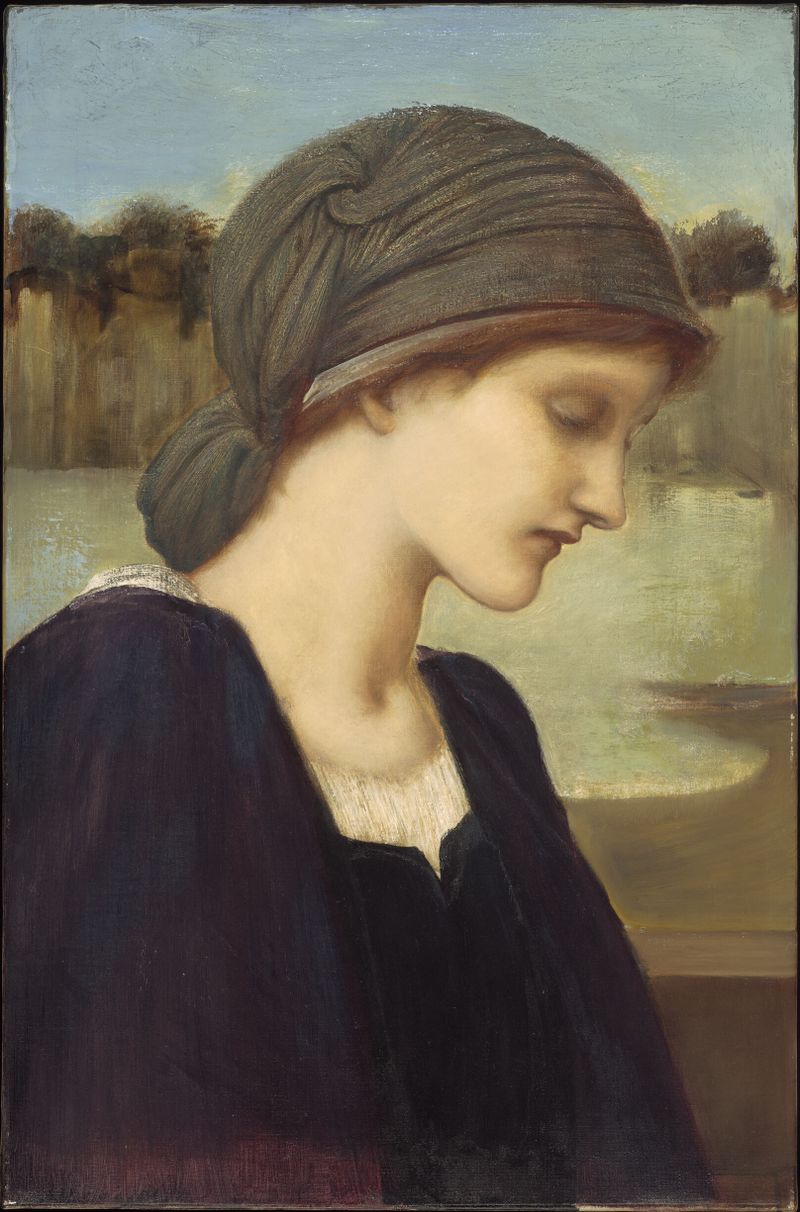
In a fleeting moment of connection, a gaze can encapsulate the essence of awe and beauty, stirring emotions buried deep within us. Look closely at the head of the maiden, where delicate features come alive with an ethereal glow. The artist’s meticulous strokes capture a sense of serenity, framed by cascading waves of hair that spiral like soft whispers. The rich, muted palette of greens and golds creates a dreamlike atmosphere, inviting you to linger in this enchanted realm.
Subtle highlights dance across her forehead, illuminating the quiet strength in her expression, while shadows caress her cheeks, deepening the sense of mystery. Upon closer inspection, one could interpret the maiden’s downcast eyes as a reflection of both vulnerability and strength. The symmetrical composition suggests harmony, yet the tension in her pose hints at a deeper longing, an awakening that hasn’t yet arrived. A juxtaposition exists between the ensorcelled beauty she embodies and the stillness of her surroundings, evoking a timeless narrative of desire and dreams, suspended in a moment of waiting. In 1885, Edward Burne-Jones was deeply entrenched in the Pre-Raphaelite movement, which championed a return to the detail and vivid colors of earlier art.
Working in his studio in London, he was known for his fascination with myth and romance, evident in this study that precedes his famous work, The Sleeping Beauty. The cultural climate of the time was ripe with a growing interest in fantasy and narrative, positioning Burne-Jones as a pivotal figure in the evolution of symbolic art.
More Artworks by Edward Burne-Jones
Browse all →
More Portrait Art
Browse all →
Las meninas
Diego Velázquez

Self-portrait with a Bandaged Ear and Pipe
Unidentified artist

Girl with a Pearl Earring
Johannes Vermeer

The Sampling Officials of the Amsterdam Drapers’ Guild, Known as ‘The Syndics’
Rembrandt van Rijn

The Hundred Guilder Print: the man seen on the back in the lower left corner
Rembrandt van Rijn

Portrait of Dr Gachet
Vincent van Gogh