Flamma Vestalis — History & Facts
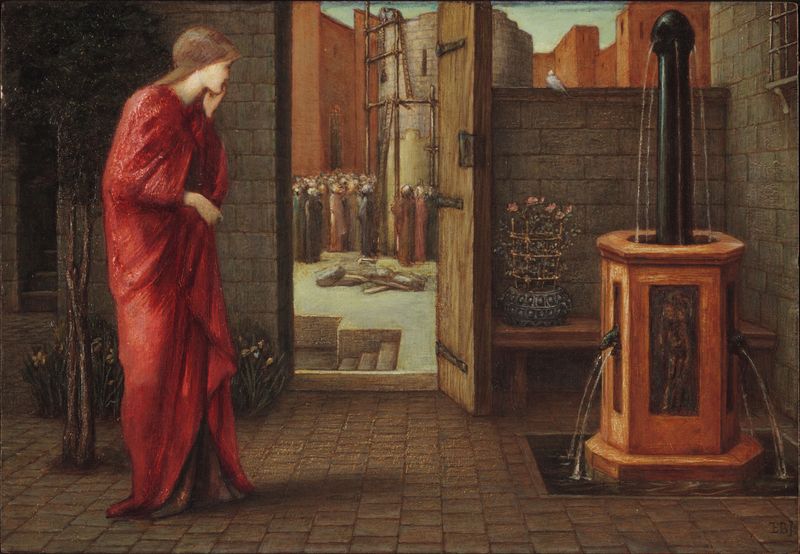
In the hands of a skilled artist, the mundane transforms into the extraordinary, revealing hidden realms of beauty and emotion. Look to the center of the composition where a figure stands poised in a flowing garment, vibrant with reds and golds. The intricate detail of the fabric seems to dance with the light, drawing your gaze like a flame flickering in the darkness. Notice how the surrounding elements, delicate floral motifs and shadowy shapes, frame her presence, creating a symphony of harmony and tension — an embodiment of the transformative journey from chaos to clarity. In this work, the contrast between the ethereal figure and her chaotic surroundings evokes a dialogue about inner strength and transformation.
The floral motifs symbolize both beauty and fragility, while the rich colors suggest passion and vitality. Each brushstroke captures the essence of movement, as if to remind us that within turmoil lies the potential for rebirth and renewal, a testament to resilience. Created during the late 19th century, this piece reflects Edward Burne-Jones’s deep involvement in the Pre-Raphaelite movement, where art sought to return to medieval themes and the essence of beauty. At this time, he was exploring personal and thematic interests in mythology and spirituality, influenced by the artistic currents of the day.
The world around him was one of change, as industrialization swept through society, prompting a yearning for deeper meaning in the chaos of modern life.