
Suez — History & Facts
In the stillness of Suez, the viewer is confronted with an echoing sense of loneliness, a moment suspended in time that invites contemplation. Each brushstroke tells a story, whispering secrets of solitude amidst grand landscapes. Look to the horizon, where the sky meets the water in a gentle embrace of muted blues and browns. The subtle gradations of color capture the fading light of day, casting elongated shadows across the sand-dusted ground.
Notice how the towering structures rise against this tranquil backdrop, their ancient stones etched with the weight of history, while figures in the foreground sit small and isolated, emphasizing the vastness around them. Within this desolate scene lie undercurrents of isolation and longing. The juxtaposition of the monumental architecture against the smallness of human figures speaks to the overwhelming nature of both nature and civilization. The silent figures, lost in their surroundings, reflect a yearning for connection in a space that feels both awe-inspiring and hauntingly empty, inviting viewers to ponder their own place within the world. David Roberts created Suez in 1840 during a period marked by his travels through the Middle East and his engagement with Romanticism.
At that time, he was establishing himself as a leading painter of landscapes, capturing exotic locales with meticulous detail. The artwork reflects not only his personal journey but also the Western fascination with the East, merging the artist's experiences with the cultural narratives of the era.
More Artworks by David Roberts
Browse all →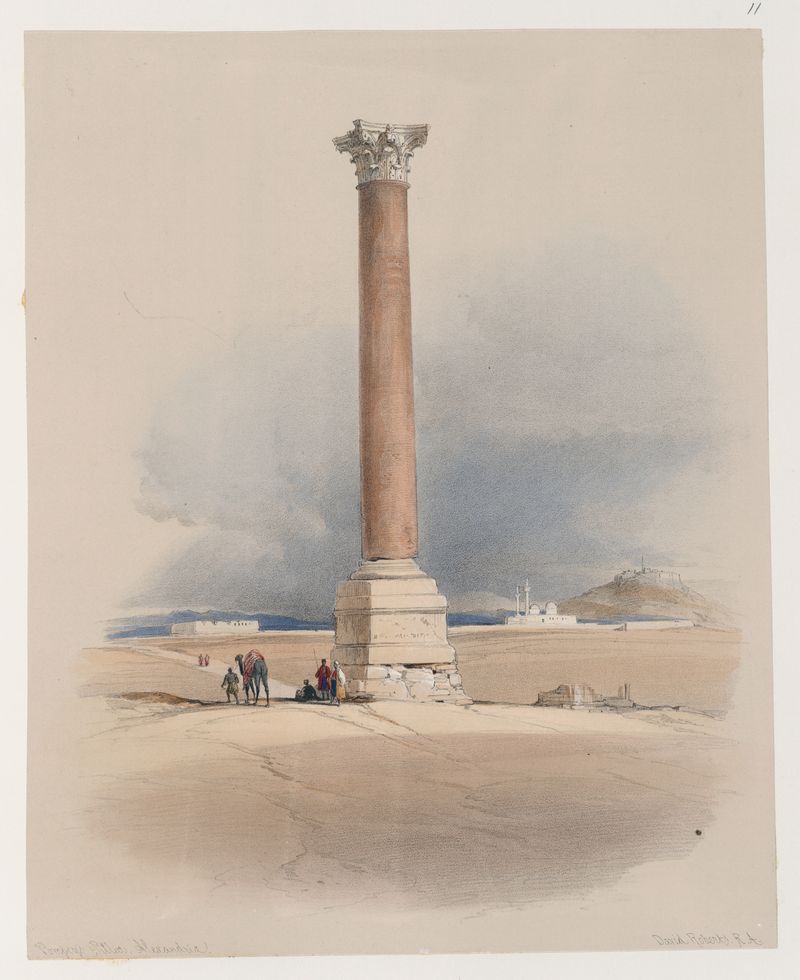
Pompey’s Pillar, Alexandria.
David Roberts

Approach to the Fortress of Ibrim.
David Roberts

Karnac [Karnak]. Nov. 29th, 1838.
David Roberts
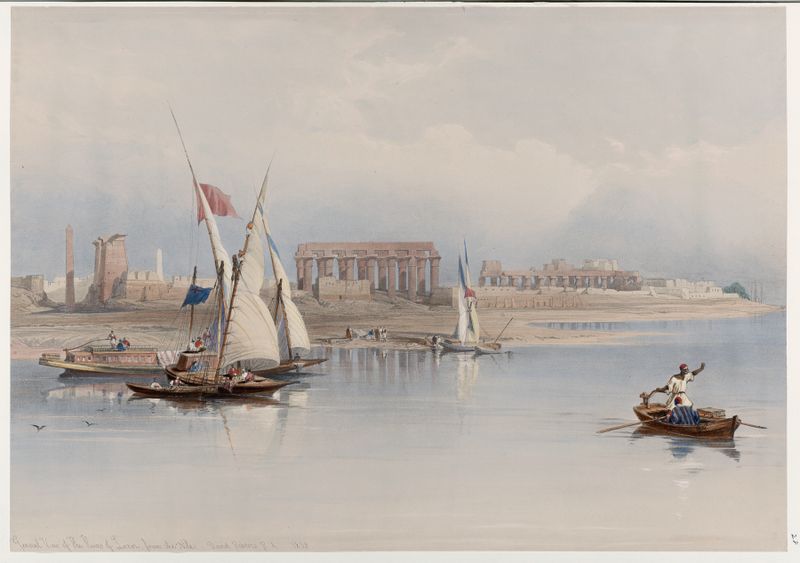
General view of the ruins of Luxor, from the Nile. 1838.
David Roberts

Statues of Memnon at Thebes, during the inundation.
David Roberts

Entrance to the tombs of the kings of Thebes. Bab-el-Malouk [Bîbân al-Mulûk].
David Roberts

The Fortress of the Alhambra, Granada
David Roberts
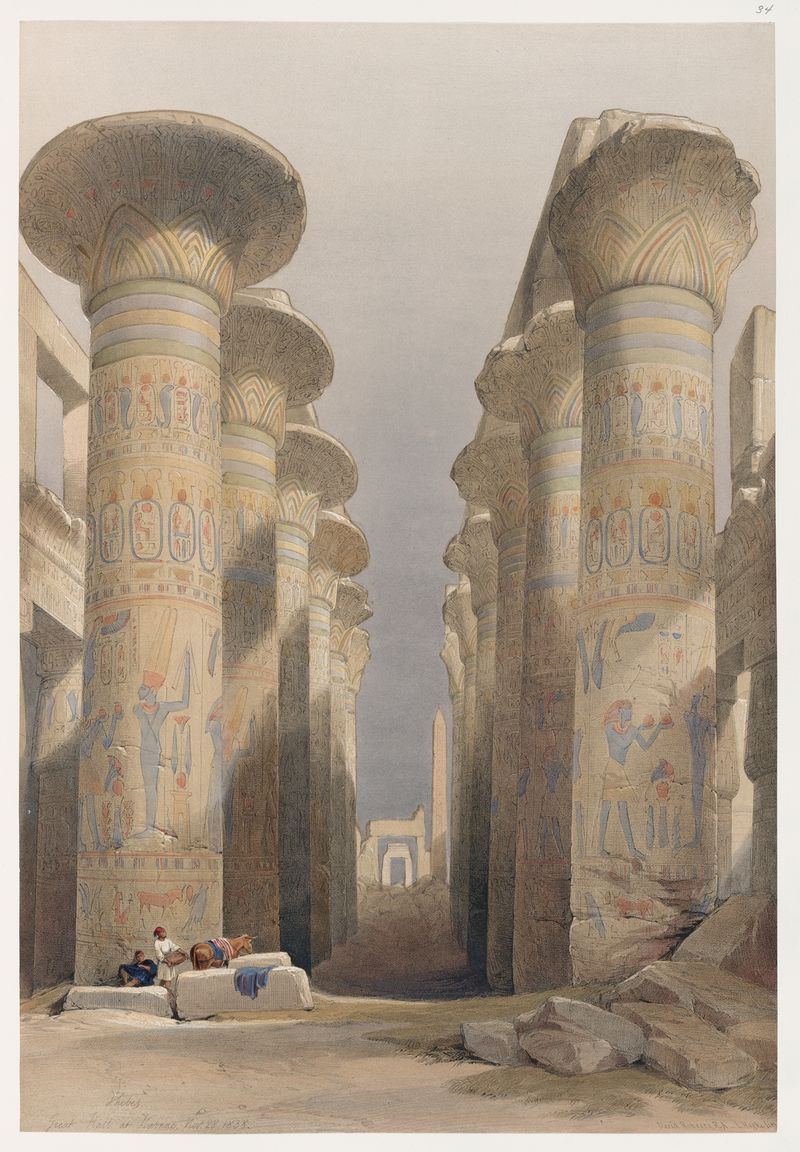
Thebes. Great Hall at Karnak. Nov. 28, 1838.
David Roberts
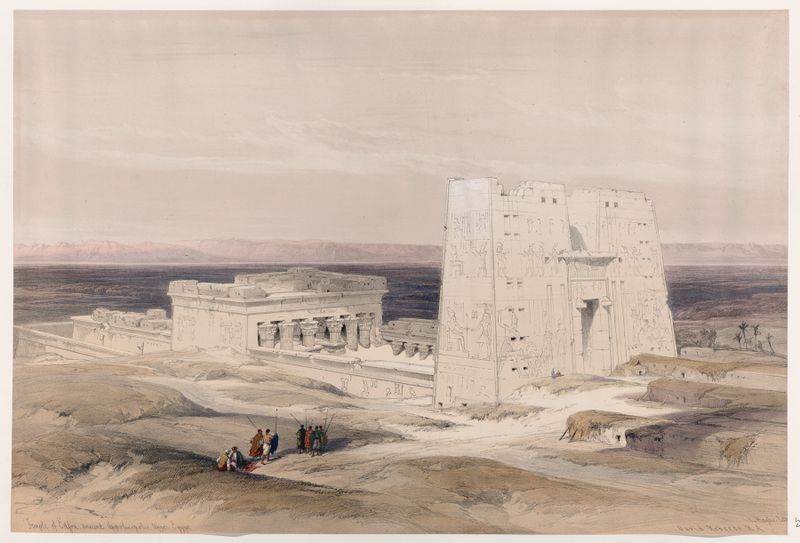
Temple of Edfou [Idfû], ancient Appolinopolis, Upper Egypt.
David Roberts

Temple of Kalabshee [Kalabsha, Kalâbishah], Nubia. Nov. 1838.
David Roberts





