Säulen im Park der Villa Lante in Bagnaia — History & Facts
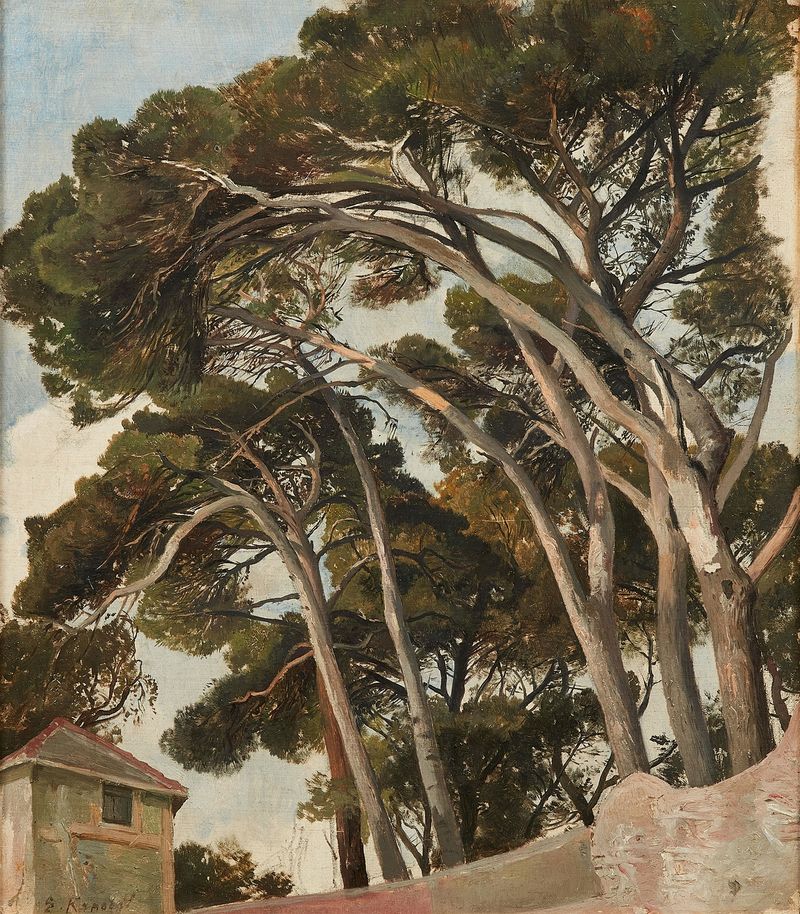
Could beauty survive in a century of chaos? In Säulen im Park der Villa Lante in Bagnaia, serenity reigns amidst the whispers of history, inviting us to contemplate the power of reflection. Look to the left of the canvas, where the elegant columns rise from the lush greenery, standing as timeless sentinels against the encroaching shadows. Notice how the dappled sunlight filters through the foliage, illuminating the textured stone with a warm, golden hue. The interplay between light and shade creates a delicate balance, as the vibrant greens of the park juxtapose with the muted grays of the architecture, drawing the eye deeper into the composition. The columns, while sturdy and imposing, evoke a sense of nostalgia and fragility, as if echoing the fleeting moments of beauty that reverberate through time.
Each vine that climbs toward the structure carries the weight of nature's reclamation, suggesting that amidst human achievements, the natural world continually seeks to intertwine with art. This subtle tension between permanence and decay invites viewers to reflect on their own relationship with beauty, and how it persists even in the face of life's uncertainties. In 1898, when this piece was painted, Edmund Friedrich Kanoldt was exploring themes of harmony and tranquility, resonating with the broader art movement that sought to depict idyllic landscapes at a time of societal upheaval. Living in Germany, Kanoldt was influenced by the ideals of the late Romantic period, and this painting reflects his fascination with the serene beauty found in historical settings like Villa Lante, a reminder of a more peaceful past in a rapidly changing world.