Sulla via di Romagnolo — History & Facts
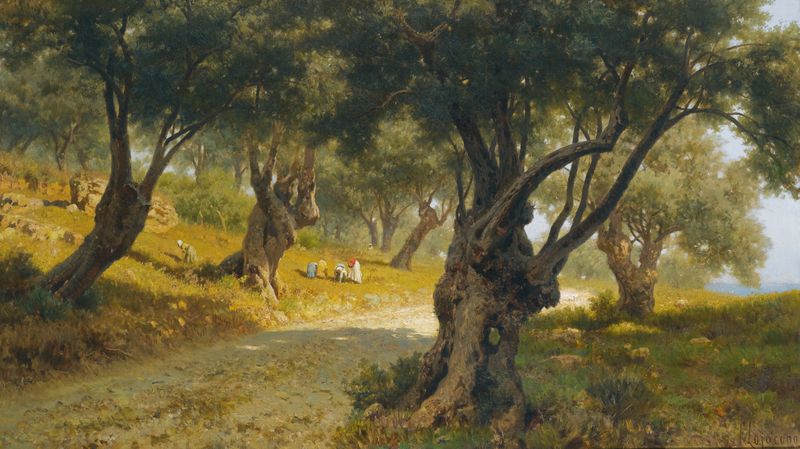
When did color learn to lie? For within this canvas, hues swirl and twist, seducing the eye into a labyrinth of emotions where madness subtly beckons. Focus on the vibrant oranges and deep blues that dance across the landscape, creating a chiaroscuro of light and shadow. Look closely at the expressive brushstrokes that breathe life into the scene, guiding your gaze along the undulating hills. The trees, almost sentient in their forms, sway in a frantic rhythm, as if caught in a tempest of thought.
There is an urgency in the colors that resonates with the viewer, inviting an exploration into the depths of this chaotic yet mesmerizing world. At first glance, one might be captivated by the beauty of the landscape, but deeper inspection reveals an underlying tension. The wildness of the color palette suggests a struggle, a frantic dance of nature teetering on the brink of madness. Each stroke carries a whisper of chaos, hinting at the artist's own turbulent state of mind.
The interplay between the serene scenery and the violent application of paint mirrors the delicate balance between sanity and insanity, drawing viewers into a dialogue on perception itself. Lojacono painted this work during a time when Italy was experiencing a resurgence of artistic exploration in the late 19th century. Living in Sicily amidst the burgeoning Romantic movement, he was influenced by both the beauty of the landscape and the chaotic emotional undercurrents of his surroundings. This creation reflects not only his personal journey but also the broader tensions within the artistic community, as artists sought to break free from classical conventions and give voice to their inner worlds.