Summer — History & Facts
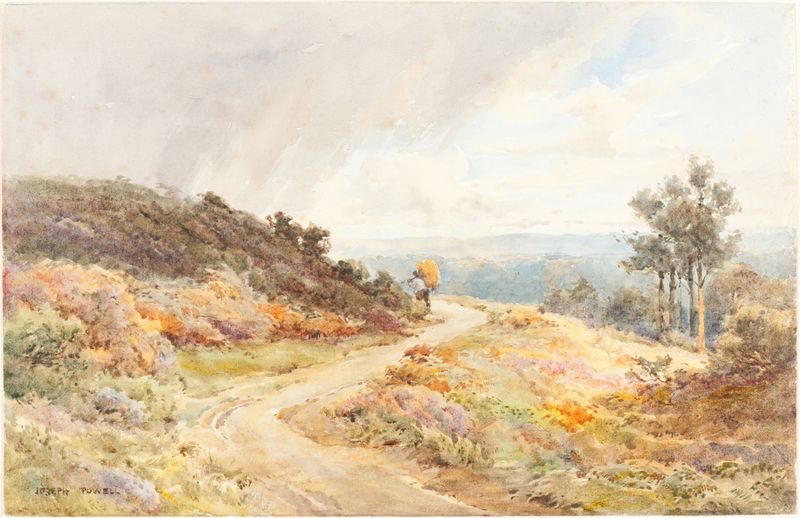
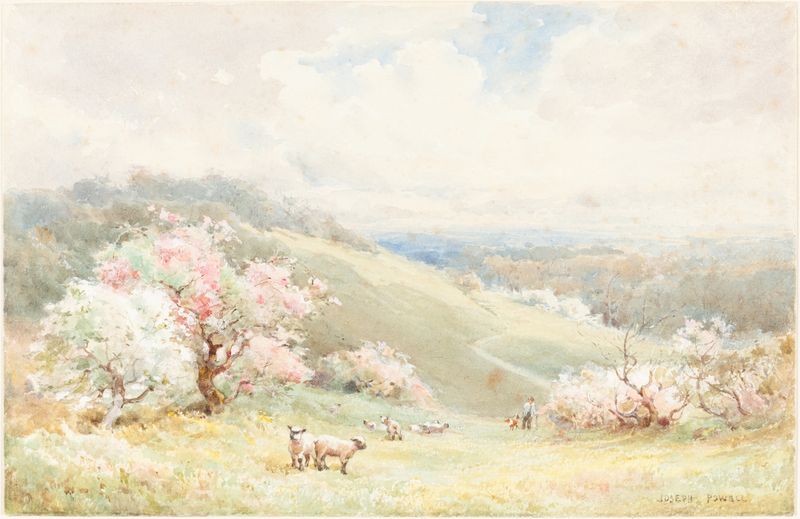
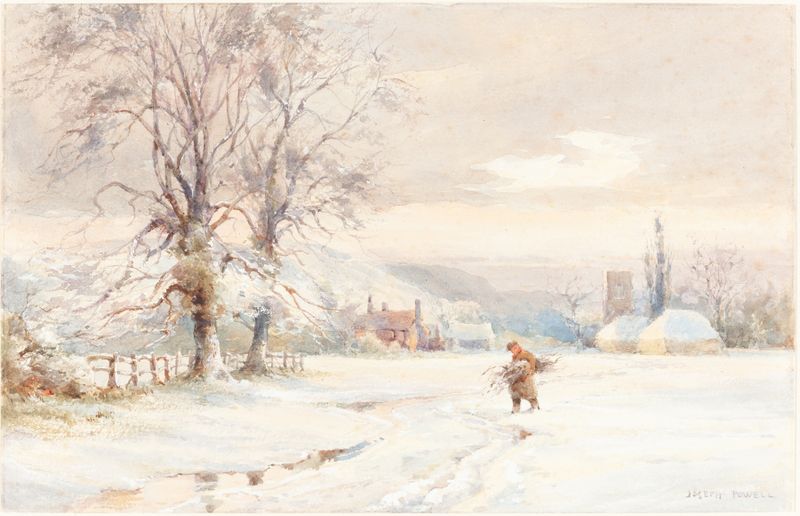
In Summer, Joseph Rubens Powell captures the profound essence of solitude, reminding us that even in warmth, loneliness can linger like a persistent shadow. Look closely at the foreground, where vibrant, golden hues blend seamlessly with soft greens, creating a lush tapestry of nature that seems to pulse with life. The brushstrokes are animated yet deliberate, guiding the viewer’s eye across the canvas. Notice how the light filters through the foliage, casting delicate patterns that evoke both serenity and a sense of longing.
The juxtaposition of the vivid colors and the absence of figures hints at a landscape yearning for companionship, amplifying the emotional depth of the scene. The interplay of light and shadow suggests an internal struggle—the tranquility of summer masking an undercurrent of isolation. Each brushstroke speaks to the conflicts of existence, where nature thrives while human connection falters. The absence of people within this idyllic setting raises questions about presence and absence, hinting at a longing for connection amidst overwhelming beauty.
In this way, the painting transforms the ordinary into the extraordinary, illuminating the solitude that often accompanies the human experience. Powell produced Summer during a time when American art was evolving, grappling with themes of identity and nature. Little is documented about his life when he painted this piece, but it is believed to coincide with the late 19th century, a period rich with impressionistic influences. As artists sought to capture the essence of modern life, Powell’s work emerges as a poignant reflection on the interplay between nature and the human soul.