Summer by the Meuse — History & Facts
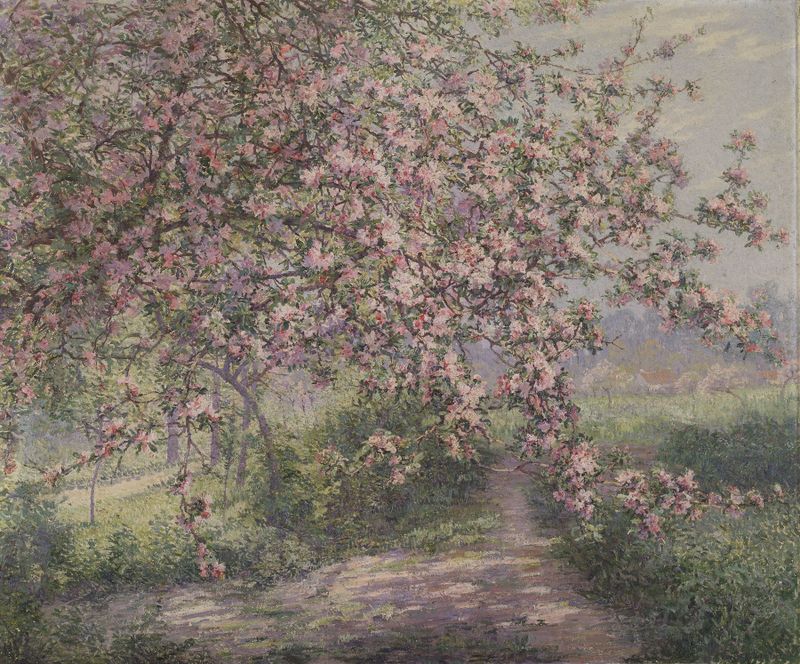
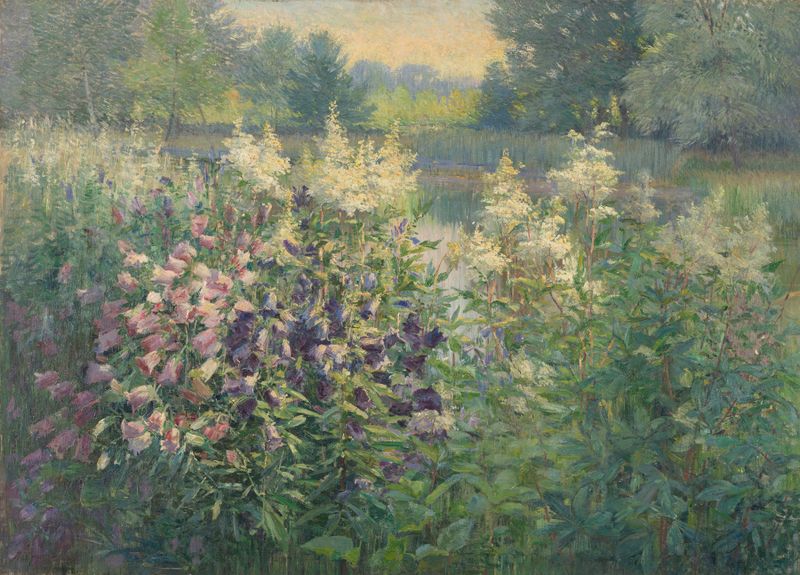
Could beauty survive in a century of chaos? In Summer by the Meuse, a tranquil moment invites us to ponder the solitude that often accompanies serenity. Look to the left, where the gentle ripples of the river reflect soft hues of blue and green. The light dances on the water's surface, creating a shimmering pathway that draws the eye toward the lush banks on the right. Notice how the artist employs a delicate blend of impressionistic brushstrokes, infusing the scene with both vitality and a fleeting sense of transience, as if time itself is suspended in this idyllic summer day. At first glance, the painting exudes warmth and harmony, yet a closer inspection reveals an undercurrent of isolation.
The solitary figure by the river, absorbed in contemplation, hints at an emotional distance that contrasts with the vibrant world surrounding them. The interplay of light and shadow not only emphasizes the beauty of the landscape but also evokes a longing that permeates the scene, inviting the viewer to reflect on the complexities of solitude amidst nature's bounty. Juliette Wytsman-Trullemans painted Summer by the Meuse in 1911 during a period of significant change in both her life and the art world. Living in Belgium, she was influenced by the Impressionist movement, which was gaining popularity across Europe.
This work reflects her mastery of capturing fleeting moments, as well as her introspective approach to themes of solitude and the emotional weight of beauty against a backdrop of looming uncertainty in the early 20th century.