Summer Evening — History & Facts
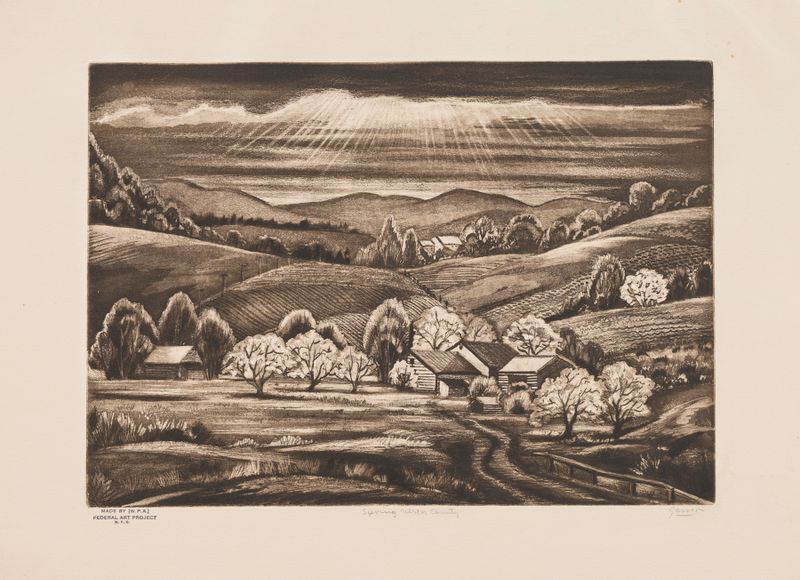
In the stillness of a summer evening, we find a world suspended, where the vibrancy of life mingles with an air of anticipation. Every stroke of paint captures a fleeting moment, an invitation for movement to unfold beneath the surface. Look to the center, where the warm hues of sunset dance across the sky, blending yellows, oranges, and soft pinks. Notice how the figures, seemingly caught in time, convey a sense of longing and connection, their postures poised yet relaxed.
The gentle brushwork creates a rhythm that echoes the serene atmosphere, drawing the eye to the horizon where land meets sky, imbued with a sense of infinite possibility. Yet, beneath this tranquil exterior lies a deeper tension. The contrasting blue shadows hint at the encroaching night, a reminder of time’s relentless march. The figures, though engaged in quiet companionship, reveal an underlying wistfulness — the unspoken words linger between them like whispers in the breeze, suggesting stories untold and dreams deferred.
This complexity invites contemplation about the transient nature of such idyllic moments. During the years between 1935 and 1943, the artist crafted this piece while navigating the tumult of a changing world. Living in a time marked by shifting social and political landscapes, his work reflected a desire for solace and connection. Drawing inspiration from the idyllic scenes of his surroundings, he merged the personal and the universal into a visual testament to the quiet beauty of life amid chaos.