
Summer landscape — History & Facts
In that space of quiet introspection, a truth emerges, laid bare on the canvas, inviting us to contemplate nature's enduring beauty and its fleeting essence. Focus on the gentle hues that wash over the landscape; the soft greens intermingling with the vibrant yellows of summer fields. Notice how the light cascades across the horizon, illuminating the scene with an ethereal glow. The composition leads your eye through the undulating hills, inviting a sense of movement, while the brushstrokes convey both tenderness and vitality, encapsulating a moment that feels both serene and alive. Within this idyllic panorama, contrasts emerge: the stillness of nature juxtaposed against the vitality of summer's bloom.
Hidden details, like the delicate sway of wildflowers or the distant, shadowy outlines of trees, evoke a deeper emotional resonance, whispering of life’s transient nature. The harmonious palette captures a sense of peace, yet the viewer senses an undercurrent of longing, a reminder that such moments, though perfect, are always ephemeral. Created in 1858, during a period of burgeoning European Romanticism, Jan Jacob Coenraad Spohler painted this work as he explored the intricacies of landscape and emotion. Living in the Netherlands, Spohler was part of a movement that sought to express the deeply felt connection between humanity and nature, a reflection of both personal sentiment and wider cultural shifts towards valuing individual experience in art.
More Artworks by Jan Jacob Coenraad Spohler
Browse all →
Figures on a Dutch frozen waterway
Jan Jacob Coenraad Spohler
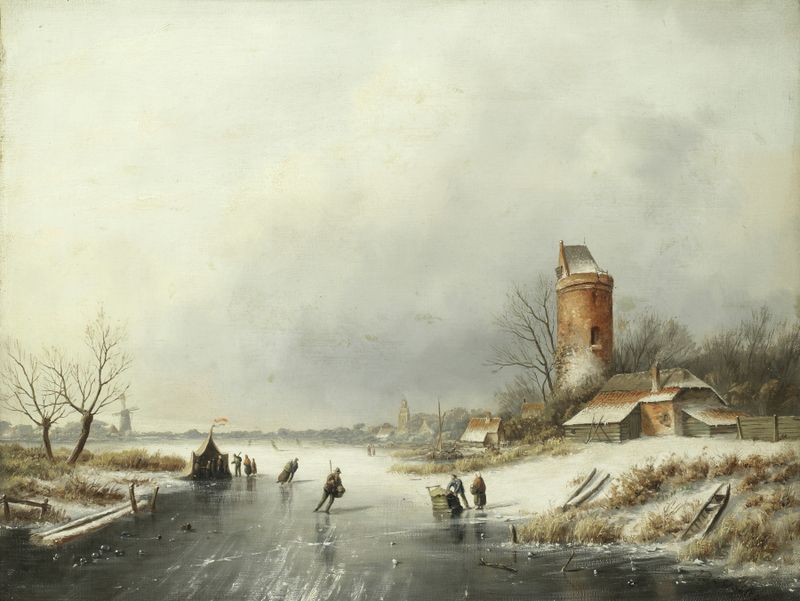
A winter landscape with figures on the ice
Jan Jacob Coenraad Spohler
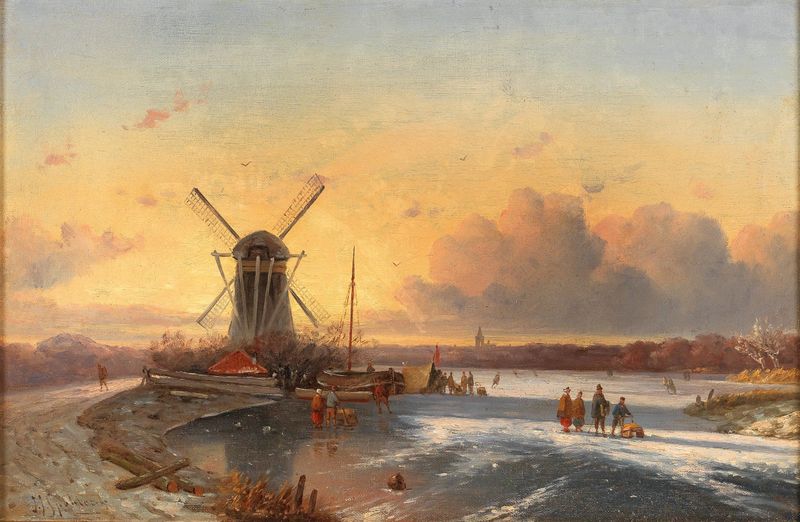
Fun On The Ice
Jan Jacob Coenraad Spohler

Winter landscape with skaters beside a windmill
Jan Jacob Coenraad Spohler
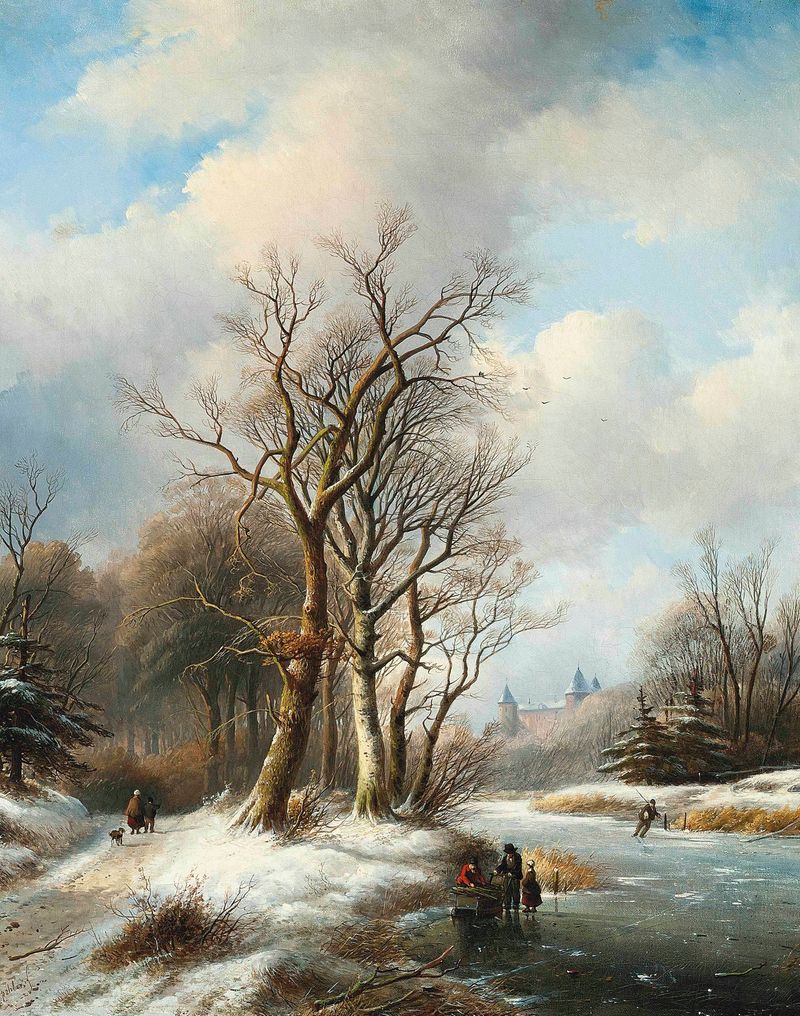
Figures on a frozen waterway, a castle beyond
Jan Jacob Coenraad Spohler
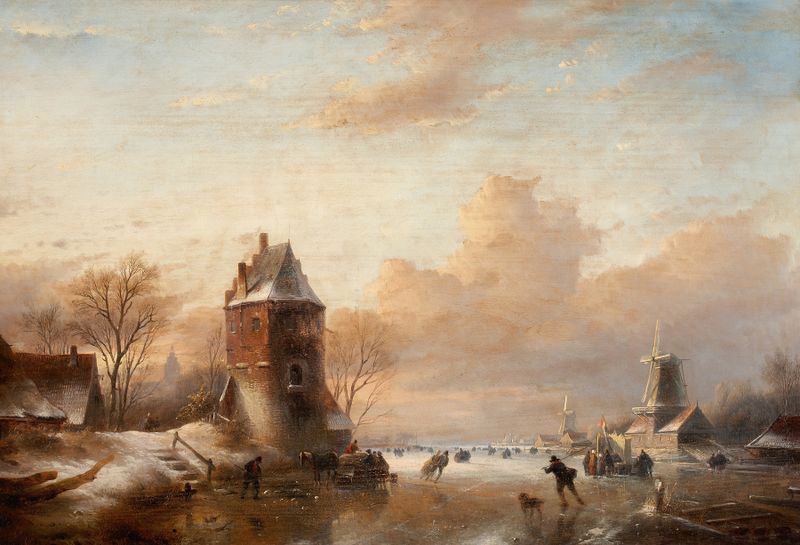
Winter Landscape with Windmills and Skaters
Jan Jacob Coenraad Spohler

Skating Pleasures
Jan Jacob Coenraad Spohler

Holländische Flusslandschaft
Jan Jacob Coenraad Spohler
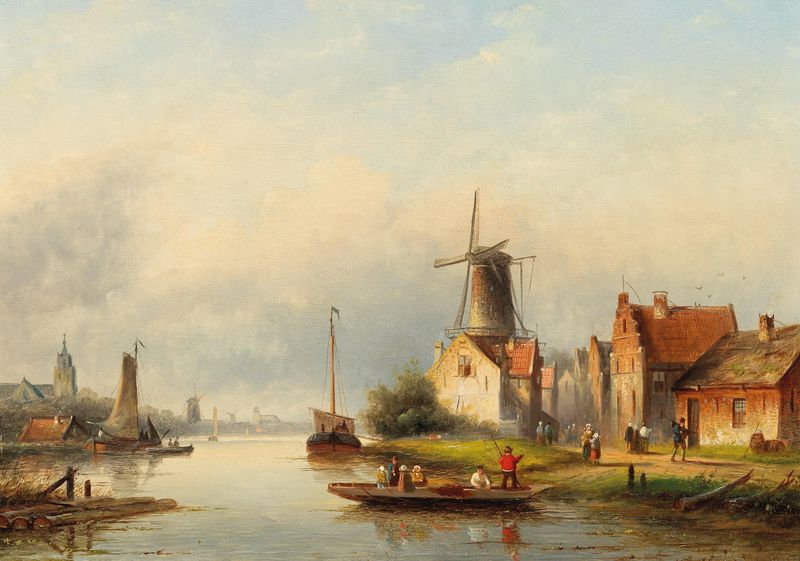
Fishermen On The Canal
Jan Jacob Coenraad Spohler
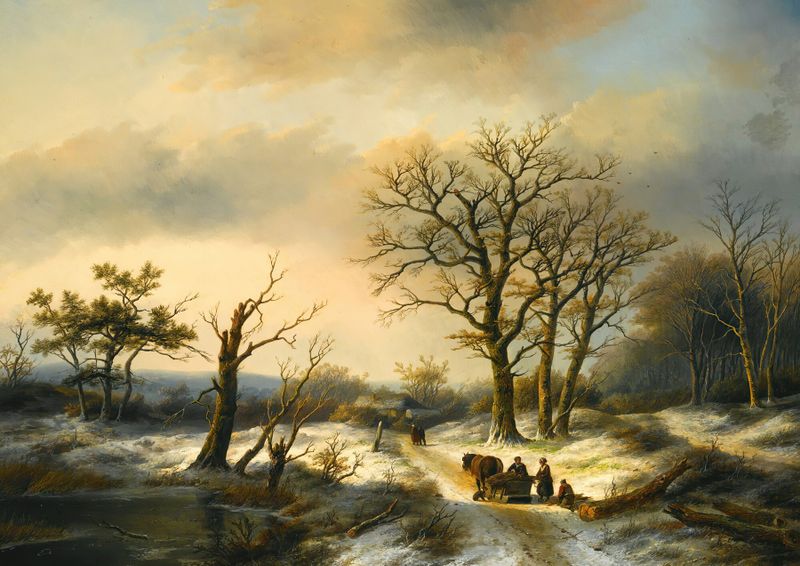
Wood Gatherers On A Snowy Path
Jan Jacob Coenraad Spohler





