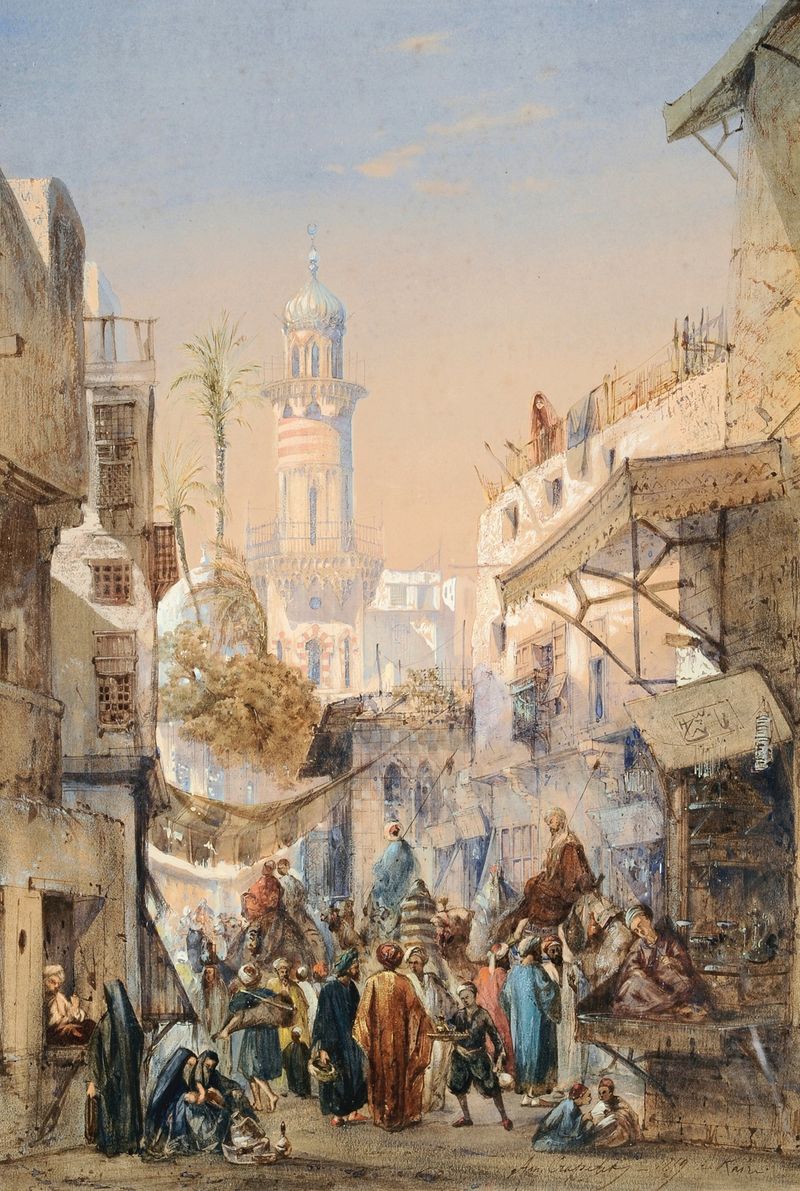
Sunset in Egypt, with two Bedouins on camels — History & Facts
Can beauty exist without sorrow? The twilight hues of the desert sky whisper a tale where hope and yearning intertwine, inviting the viewer to reflect on the duality of existence. Look to the lower left at the two Bedouins, their silhouettes stark against the vibrant palette of oranges and purples that dominate the canvas. The camels they ride appear both majestic and gentle, as if cradled by the vastness of the desert. Notice how Crapelet uses soft brush strokes to blend the sky into the horizon, creating a seamless transition that evokes serenity.
Each color is deliberately chosen to conjure warmth and depth, contrasting against the cooler shadows of the dunes that surround the figures. The juxtaposition of man and nature speaks volumes—these travelers, though seemingly at peace, traverse an endless expanse under a setting sun, hinting at life’s impermanence. The camels, symbols of endurance, tread upon the shifting sands, representing the passage of time and the burdens we carry. Yet, there is a profound sense of hope in their journey, as the horizon promises new beginnings despite the day's end.
The emotional tension captured in this moment resonates with the viewer, prompting introspection. Crapelet created this artwork during a time when artists began to embrace the romanticism of landscape painting, seeking to depict emotional truths through nature. While the exact date remains unknown, it is evident that he was influenced by the burgeoning interest in the exotic East, as well as the growing movement towards portraying the sublime in ordinary moments. His work reflects a period of artistic exploration and personal reflection, where beauty serves as both a solace and a reminder of the bittersweet nature of life.