
Tabatinguera Bridge — History & Facts
This sentiment echoes through the brushstrokes of a work that captures longing and connection in its quiet embrace. In the realms of creativity, desire often speaks louder than words, inviting the viewer to delve deeper into the human experience. Look to the sweeping arches of the bridge, elegantly rendered against a vibrant backdrop. Your gaze is drawn first to the bridge's intimate embrace with the landscape, where earthy tones collide with the vivid greens of nature.
The light dances across the water’s surface, creating an interplay of reflections that pulse with a sense of life. The artist's deliberate choice of color and form enhances the emotional weight of this scene, suggesting both stability and a yearning for connection. As you explore the painting further, notice the subtle tension in the composition—how the bridge, though sturdy, serves as a passage rather than a destination. This duality reflects the universality of desire: the longing for connection and the fear of isolation.
The surrounding landscape, lush yet distant, amplifies this sentiment, hinting at the world beyond, always just out of reach. In these details lies a profound commentary on how we navigate our own desires and relationships. Almeida Júnior created this piece during a formative period in Brazilian art, when national identity began to flourish through local themes and subjects. Working in Brazil during the late 19th century, he was influenced by the social changes of his time, striving to capture the essence of Brazilian life and landscape.
This painting stands as a testament to that pursuit, reflecting both personal and collective aspirations, even as the world outside continued to evolve.
More Artworks by Almeida Júnior
Browse all →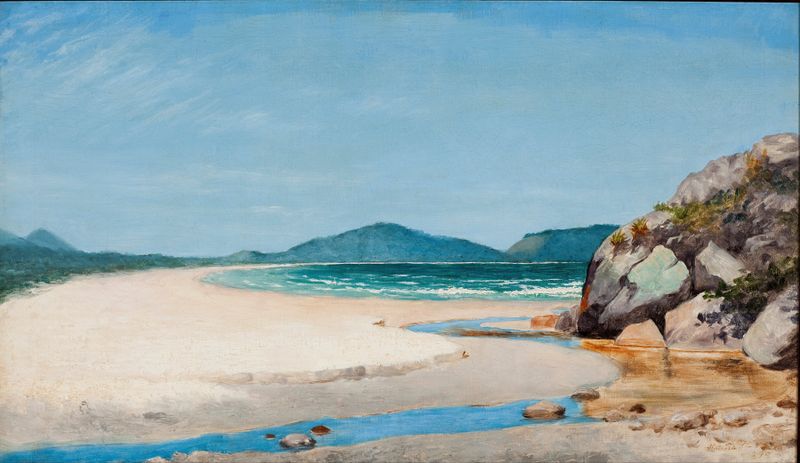


More Architecture Art
Browse all →
The statue of Liberty
Frédéric Auguste Bartholdi

View of Houses in Delft, Known as ‘The Little Street’
Johannes Vermeer

View of Houses in Delft, Known as ‘The Little Street’
Johannes Vermeer

The Cathedral in Rouen. The portal, Grey Weather
Claude Monet

The yellow house
Vincent van Gogh

The Church in Auvers-sur-Oise, View from the Chevet
Vincent van Gogh