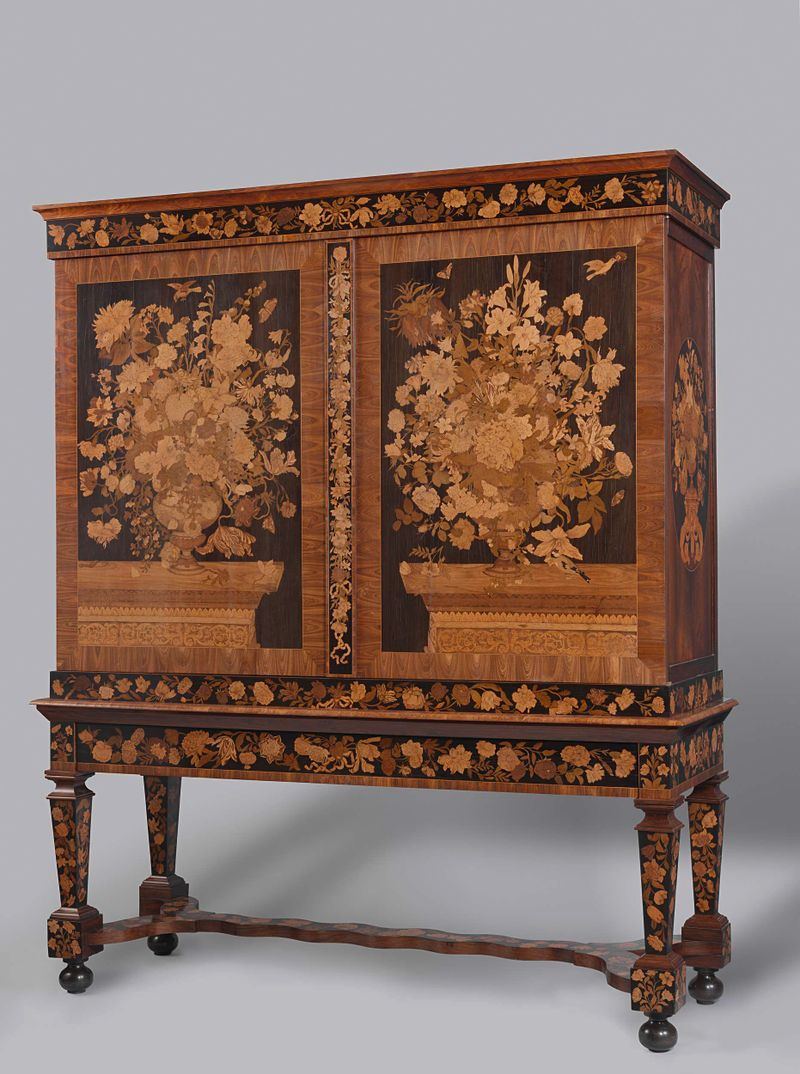
Table with a Basket with Flowers — History & Facts
In the quiet embrace of a dimly lit room, beauty entwines with loss, evoking the bittersweet passage of time through an arrangement of flowers. The vase, a vessel of fleeting splendor, holds within it a delicate reminder of both vibrant life and inevitable decay. Focus on the lush bouquet in the center, where every petal seems to whisper an unspoken story. The artist’s meticulous brushstrokes create a lifelike texture, inviting the viewer to run fingers over the soft hues of the blossoms.
Notice how the light dances upon the glass of the vase, casting soft shadows that play across the table's surface. Rich, earthy tones ground the composition, while subtle highlights breathe life into the scene, balancing the fragility of the floral arrangement with the sturdy simplicity of the table beneath it. Yet, beneath this beauty lies an undercurrent of melancholy. The flowers, while stunning, suggest a transitory nature, their vibrant colors a fleeting echo of what was once alive.
The empty spaces around the vase might symbolize absence, amplifying the sense of longing that permeates the work. In this stillness, one can feel the weight of unexpressed emotions, as if each blossom carries a secret, urging the viewer to reflect on their own encounters with beauty and loss. Jan van Mekeren painted this piece around the turn of the 18th century, a period when still-life works were flourishing in the European art scene. Living in the Netherlands, he was influenced by the traditions of his contemporaries yet sought to infuse his work with a personal touch, capturing the ephemeral nature of existence and the profound depth of human emotion amid the everyday.