Tafellaken — History & Facts
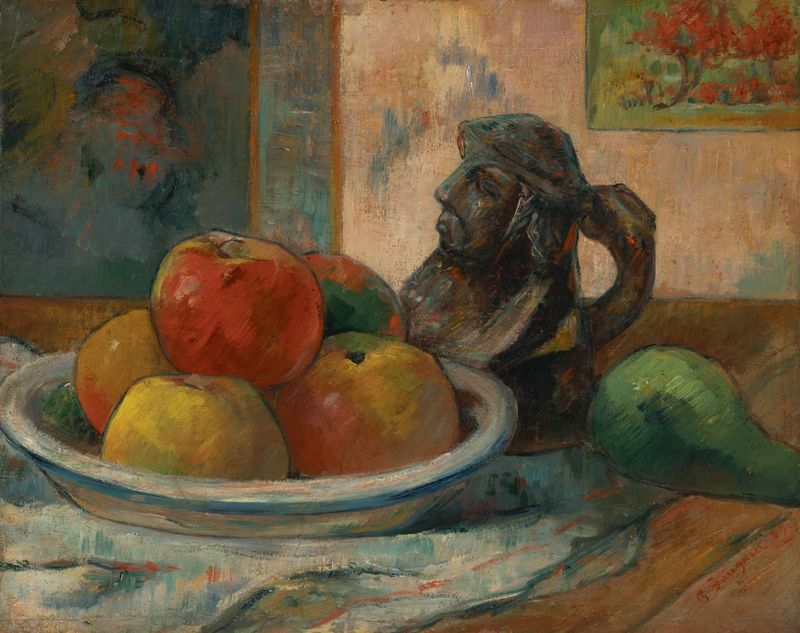
Did the painter know this moment would outlive them? Captured upon a linen canvas, the essence of yearning is distilled into every brushstroke, echoing a world forever lost yet lingering in memory. Look to the center of the composition, where a meticulously arranged tablecloth unfurls in delicate folds, its patterns inviting the eye to wander. The rich, earthy hues mingle with splashes of bright color in the fruits scattered across the surface, providing a striking contrast that draws attention. The light falls gently across the scene, highlighting the textures of fabric and fruit, while shadow plays at the edges, suggesting a depth that invites contemplation. The painting reveals a tension between abundance and transience.
The vibrant fruit, ripe with promise, signifies the fleeting joys of life, while the immaculate cloth speaks to the desire for permanence amidst inevitable change. Each element, from the intricate stitching to the subtle reflections, offers an intimate glimpse into the emotions and aspirations of the unknown artist, emphasizing the universal human longing for connection and the passage of time. Created in 1717, this work emerges from a period marked by artistic flourishing in Europe, particularly in still life. The unknown artist likely navigated a market increasingly enamored with domestic scenes and the beauty of everyday objects.
This backdrop of innovation and emerging styles allowed the artist to encapsulate a moment that transcends time, revealing shared human experiences through simple yet profound imagery.