Tafellaken — History & Facts
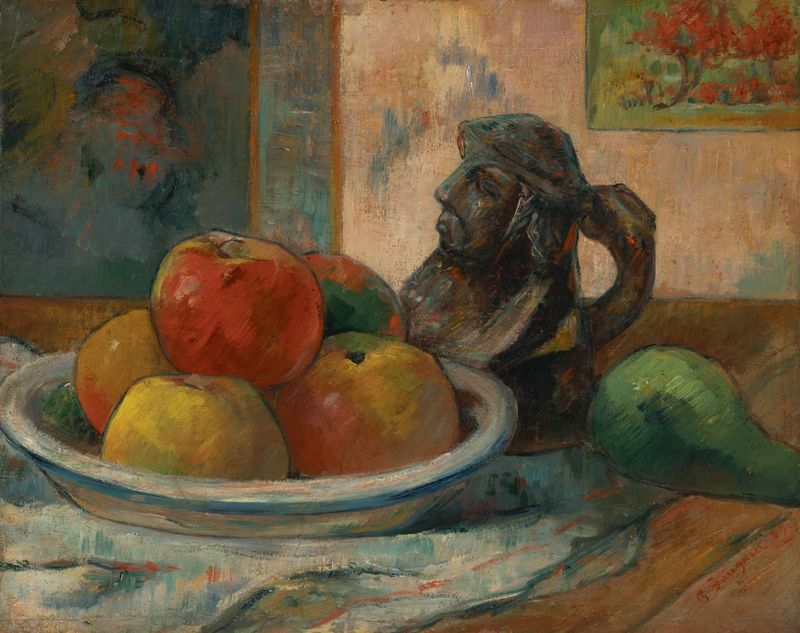
Could beauty survive in a century of chaos? A simple tablecloth, elegantly draped, evokes a profound stillness amidst the tumult of existence. Look to the center where the soft fabric cascades gracefully, its texture captured with meticulous brushstrokes that mimic the weight and fall of linen. The interplay of light and shadow dances across the surface, revealing subtle folds and creases that suggest an intimate moment suspended in time. Surrounding the cloth, delicate objects—a vase, a bowl, perhaps remnants of a meal—invite you to explore their textures and colors, creating a harmonious composition that balances simplicity with richness. Within this intimate arrangement lies a poignant contrast: the fragility of beauty against the backdrop of a world often defined by conflict and despair.
The muted palette resonates with a sense of nostalgia, hinting at the absence of life and the stories left untold. Each object carries the weight of history, suggesting a narrative of domesticity and connection, while the void of the empty spaces around them amplifies the sense of loss and yearning. Painted between 1630 and 1660, the unknown artist worked during a period marked by social upheaval and artistic transformation. The Dutch Golden Age was flourishing, yet beneath the surface, tensions were simmering.
In this atmosphere of uncertainty, the artwork serves as a quiet testament to the resilience of beauty, inviting viewers to pause and reflect amid a chaotic world.