
Tal mit Fabrik und Festgebäude — History & Facts
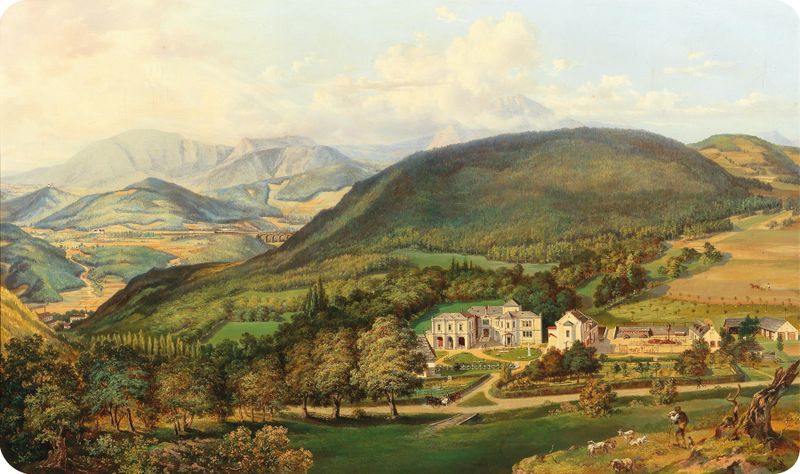
In an age where reality often blurs into illusion, one finds solace in the meticulously crafted images that reveal deeper truths beneath their surfaces. Focus on the structure at the center of the canvas, a grand factory building that stands resolute against the backdrop of a dynamic sky. Notice how the artist employs a palette of muted greens and grays, allowing the industrial edifice to emerge as a monument to human ingenuity. The interplay of light and shadow enhances the building’s angular forms, while wispy clouds seem to dance overhead, creating a dialogue between nature and industry that invites contemplation. As you explore the painting, subtle contrasts unfold.
The solidity of the factory speaks to progress and industrialization, yet it coexists with the ethereal quality of the sky, suggesting a tension between the permanence of man-made structures and the ever-changing nature of the world around them. This duality reflects the illusion of stability in a world rife with transformation, echoing the fleeting essence of our memories and aspirations. Created during a time of significant industrial advancement, the work captures the essence of the late 19th to early 20th century. Carl Thöndel, a lesser-known figure, painted this piece amidst the changing tides of art, where realism began to intertwine with modernist ideas.
His exploration of illusion and perception aligns with the broader questions artists were grappling with at the time, as they sought to depict the impacts of technology on society.
More Artworks by Carl Thöndel
Browse all →
More Architecture Art
Browse all →
The statue of Liberty
Frédéric Auguste Bartholdi

View of Houses in Delft, Known as ‘The Little Street’
Johannes Vermeer

View of Houses in Delft, Known as ‘The Little Street’
Johannes Vermeer

The Cathedral in Rouen. The portal, Grey Weather
Claude Monet

The yellow house
Vincent van Gogh

The Church in Auvers-sur-Oise, View from the Chevet
Vincent van Gogh