Terrasse Der Klosterkirche Sant’onofrio Al Gianicolo In Rom — History & Facts
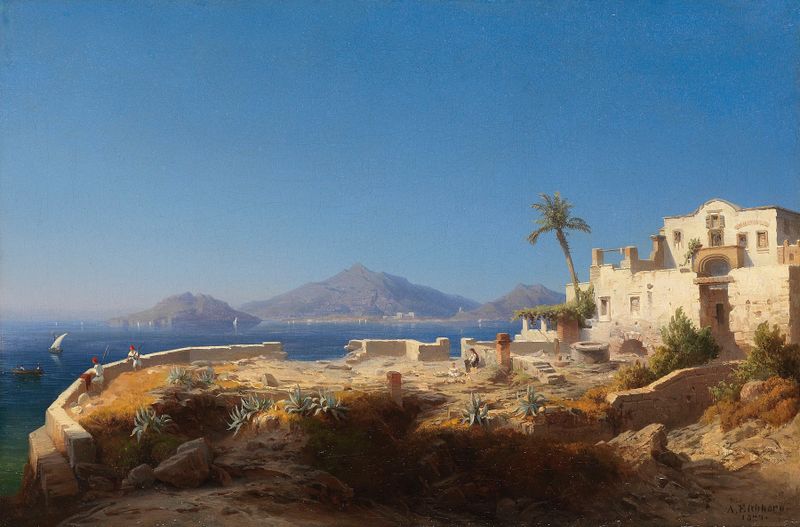
Could a single brushstroke hold eternity? In moments of quiet reflection, melancholy seeps through art, inviting us to ponder the weight of time suspended within a frame. Focus your gaze at the tranquil expanse of the terrace, where subdued colors whisper stories of solitude. Notice how the soft hues of faded greens and muted browns create a sense of harmony, enveloping the viewer in a serene embrace. The intricate details of the architectural elements draw your eye, leading you to the delicate interplay of light and shadow that dances across the stone surface, evoking a feeling of nostalgia for moments long past. Yet amidst this calm, a quiet tension emerges.
The empty benches suggest the absence of life, hinting at stories untold and conversations never spoken. The towering trees stand sentinel, their branches reaching out like yearning hands, embodying both protection and isolation. It is a scene of longing, where the stillness resonates with a palpable sense of loss, as if the very air is thick with memories. Albert Eichhorn created this contemplative piece during a time when the art world was exploring impressionistic techniques, allowing for a more emotive and subjective representation of landscapes.
Working in Rome, he captured the essence of the terrace at a time when traditional forms were giving way to more personal expressions. This period marked a shift towards a deeper exploration of emotion in art, a movement that Eichhorn embraced in his rendering of this evocative scene.