The Abandoned House — History & Facts
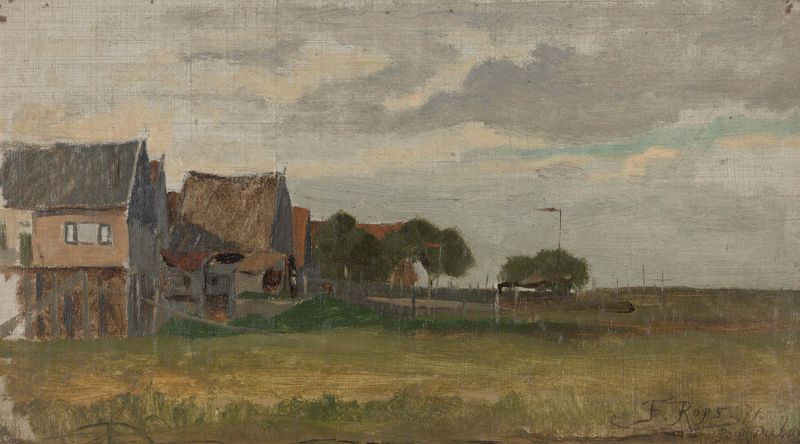
Is this a mirror — or a memory? In The Abandoned House, the boundaries between the past and the present blur, inviting us to question the nature of truth itself. Look to the center, where the haunting silhouette of a dilapidated home stands against a backdrop of a stormy sky. The muted palette of grays and browns evokes a sense of desolation, while the delicate brushwork captures the intricate decay of the structure. Notice how the light fractures through the clouds, spilling over the house like a melancholic embrace, illuminating the dust motes that seem to float in the air, each representing fragments of forgotten stories. The emotional tension in this piece lies in its contrast: the beauty of artistry against the backdrop of decay.
The house, once a sanctuary, now embodies abandonment and loss, while the surrounding landscape, wild yet beautiful, suggests a return to nature's reclaiming power. Here, memories linger in the shadows, whispering tales of joy and sorrow intertwined. The delicate balance between nostalgia and melancholy defines this poignant exploration of impermanence. Félicien Rops painted The Abandoned House during a period of introspection in the late 19th century, as he navigated personal and artistic challenges in Belgium.
This was a time of great change in the art world, with movements such as Symbolism emerging, encouraging artists to delve into themes of melancholy and the subconscious. Rops, driven by a fascination with the darker aspects of life, poured his experiences into this evocative piece, marking a significant moment in his evolving artistic journey.