The Aberdulais Falls, Wales — History & Facts
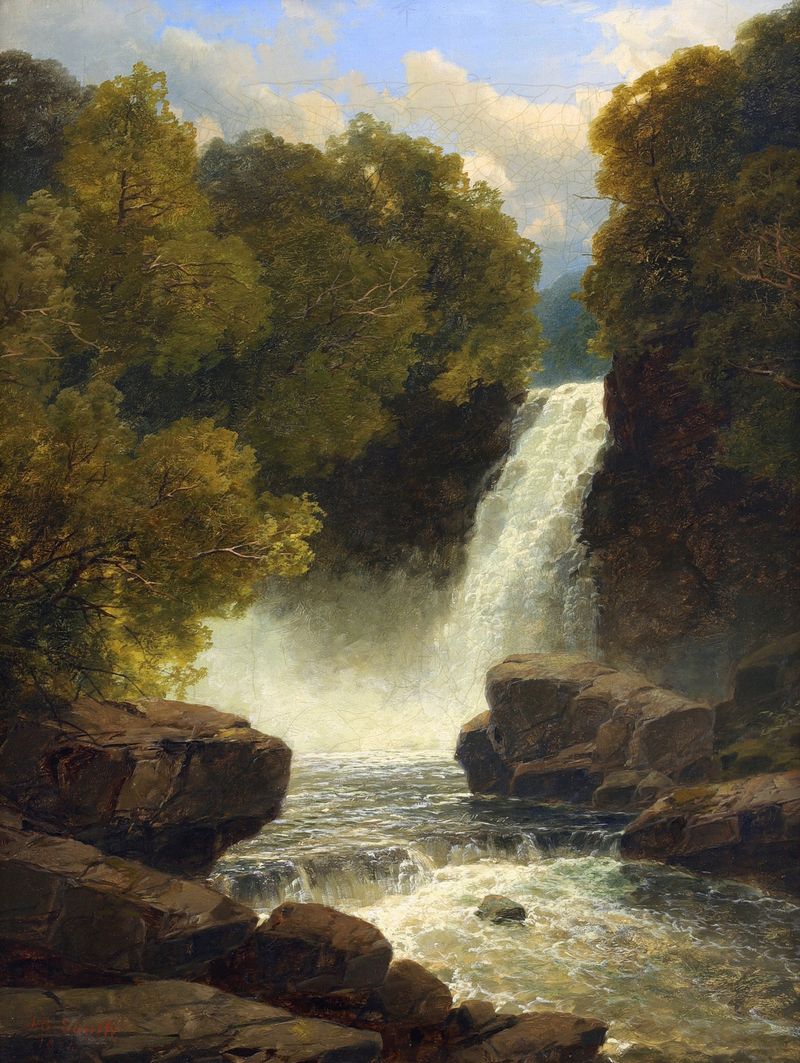
This delicate balance evokes a sense of reverence for nature, where faith meets the sublime. The interplay of water and light within the landscape invites contemplation, drawing us deeper into the heart of the scene. Look to the foreground, where the cascading waters of the Aberdulais Falls dominate the composition, their movement captured with a rhythmic fluidity. The artist employs a rich palette of greens and earthy browns, contrasting against the silvery sheen of the water, guiding the viewer’s gaze to the shimmering highlights that dance across the surface.
Notice how the soft, muted clouds provide a gentle backdrop, allowing the vibrant colors of the foliage and the waterfall's foam to pulsate with life, creating a dynamic yet serene atmosphere. The painting embodies a duality between chaos and tranquility, as the turbulent water symbolizes life's challenges while the lush surroundings offer a sense of peace and renewal. The careful attention to detail in the foliage and rocks reveals the artist's deep appreciation for the natural world, suggesting a faith in its restorative powers. This interplay of elements speaks to the viewer’s own journey through life's tempestuous waters, reminding us of the beauty that often lies alongside strife. In 1874, the artist created this piece during a transformative period for landscape painting, blending realism with romanticism.
Residing in Wales, Smith sought to capture the raw beauty of his surroundings at a time when such depictions were gaining popularity. The era was marked by a growing appreciation for nature as a reflection of human emotion, reinforcing a spiritual connection to the land that remains resonant to this day.