
The Alhambra in Granada — History & Facts
This lingering thought evokes the ethereal quality of the world we dream of but seldom grasp. It is within this delicate interplay that Emile Vloors invites us to explore the essence of the Alhambra, a symbol of beauty and history, rendered with a whisper of romanticism. Look closely at the vibrant hues that dance across the canvas, guiding your gaze from the intricate arabesques of the architecture to the tranquil water pools reflecting the grand towers. The light, soft and diffused, bathes the scene, imparting a dreamlike quality that blurs the line between reality and imagination.
The meticulous brushwork and color choices create a harmonious balance, where each element seems to breathe, filled with the quiet energy of centuries past. Beneath the surface, the painting encapsulates not just the grandeur of the Alhambra, but also a deeper longing for the past—its beauty tinged with nostalgia. The serene water mirrors the castle, suggesting a duality of existence; the lasting legacy of a bygone era juxtaposed with the ephemerality of life itself. The silent pathways invite contemplation, evoking a sense of serenity that resonates with the viewer’s own dreams and desires. In 1901, Vloors captured this moment in the Alhambra while in the throes of an artistic revival across Europe, where artists sought to invoke a sense of wonderment through their work.
His fascination with the interplay of light and architecture reflects a broader yearning of the time, as artists explored new ways to translate historical significance into modern expressions. This painting stands as a testament to both the enduring allure of the Alhambra and the artist's own quest for inspiration.
More Artworks by Emile Vloors
Browse all →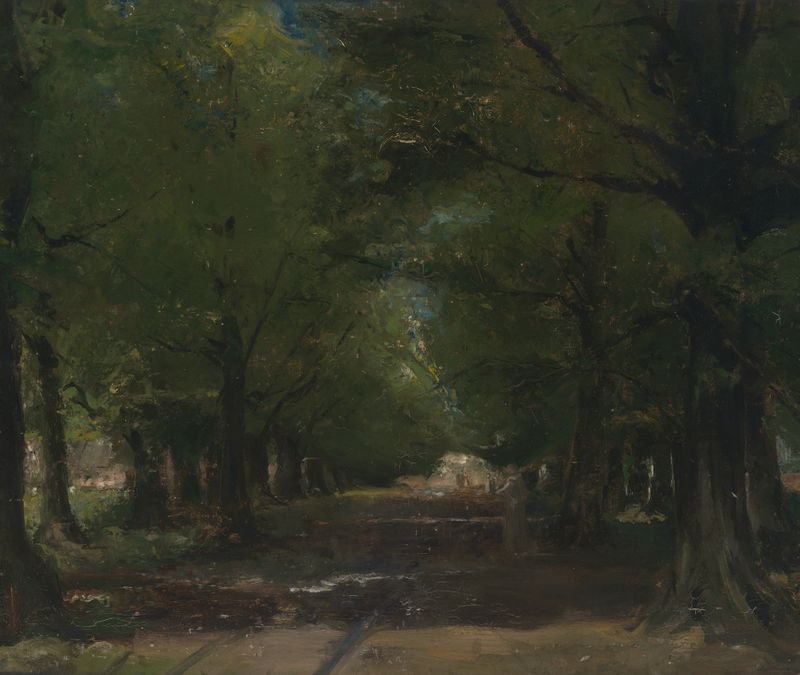
More Architecture Art
Browse all →
The statue of Liberty
Frédéric Auguste Bartholdi

View of Houses in Delft, Known as ‘The Little Street’
Johannes Vermeer

View of Houses in Delft, Known as ‘The Little Street’
Johannes Vermeer

The Cathedral in Rouen. The portal, Grey Weather
Claude Monet

The yellow house
Vincent van Gogh

The Church in Auvers-sur-Oise, View from the Chevet
Vincent van Gogh