The Apple Seller — History & Facts
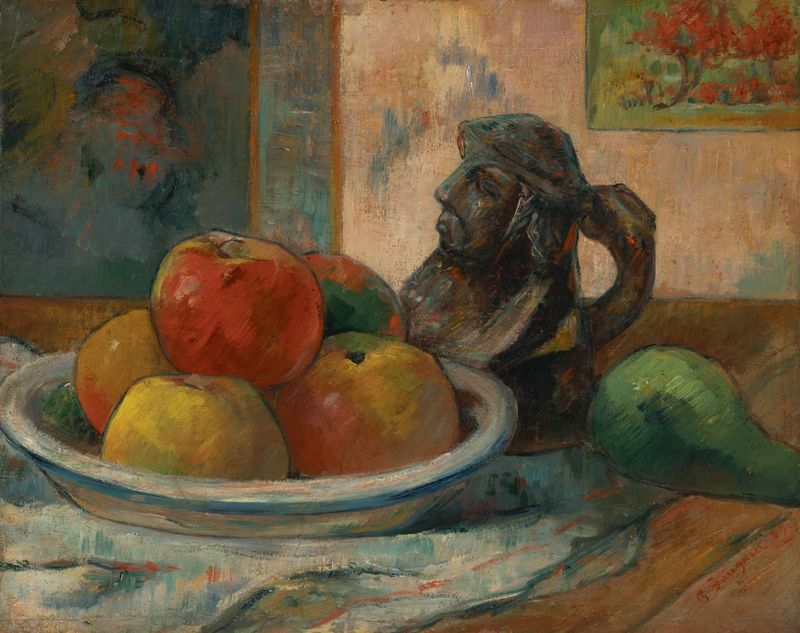
In the silent embrace of a still life, mortality whispers through vibrant forms, commanding reflection on the fleeting nature of existence. Look closely at the rich palette that Gustav Süs employs; the deep reds and greens of the apples are not merely fruit, but symbols of life and decay. Notice how the light caresses their surfaces, highlighting each curve and shadow, creating an almost palpable tension between their luscious appeal and the inevitability of their decay. A simple wooden table grounds the composition, contrasting the vibrant fruit with a sense of solidity and permanence that challenges the transient nature of the apples themselves. The juxtaposition of color and form reveals deeper insights about life and its brevity.
Each apple, pristine in appearance, serves as a reminder of both abundance and mortality. The careful arrangement suggests a moment frozen in time, yet the weight of what lies beneath—the inevitable decline—tugs at the viewer's consciousness. The soft shadows play across the scene, illustrating that even in vibrancy, there lies the lurking presence of decay, prompting contemplation on what we choose to cherish. Süs painted this work during a time when many artists were embracing themes of realism and still life, reflecting the world around them.
Though the exact date remains uncertain, the artist's focus on ordinary subjects was part of a broader movement in the late 19th century that sought to find beauty in simplicity. Amid the burgeoning industrial age, his work resonates with the notion of capturing fleeting moments, underscoring the delicate balance between life’s joys and its transitory nature.