The Ascent of Vesuvius — History & Facts
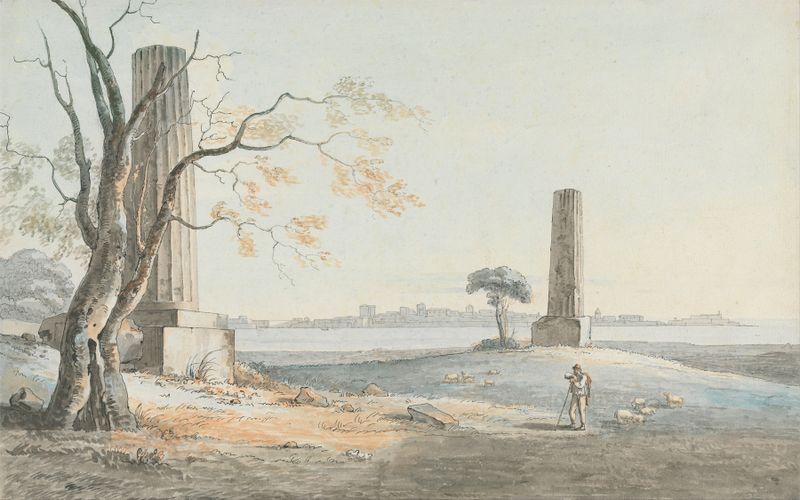
When did color learn to lie? In the dance of hues, reality and illusion weave a delicate tapestry that questions perceptual truths. Focus on the radiant foreground, where vibrant greens and deep blues converge, creating an illusion of lush landscape that lures the viewer in. Notice how the peaks of Vesuvius rise majestically in the background, cloaked in swirling clouds that blur the line between the real and the imagined. The technique of layering pigments effortlessly captures the shifting light, enhancing the overall sense of movement and life, while the sky serves as a dramatic canvas—a juxtaposition of serenity and foreboding. Hidden within the vibrancy is a tension that speaks to nature’s duality.
The gentle beauty of the verdant fields contrasts sharply with the ominous presence of the volcano—a reminder of the destructive force lurking beneath the surface. Each stroke holds significance, revealing how beauty often masks danger, encouraging reflection on the fragility of existence. The color palette, rich yet deceptive, evokes emotions of both wonder and apprehension, leaving the viewer in a state of contemplation. Henry Tresham created this work between 1785 and 1790, during a period when the Romantic movement began to take hold in Europe.
This era was marked by a growing fascination with nature, the sublime, and individual emotion. Tresham was influenced by the picturesque landscape tradition, seeking to capture the beauty of the natural world while hinting at the underlying chaos, as society grappled with the tensions of enlightenment and the rise of industrialization.