The Berkeley Hunt, 1842: Full Cry — History & Facts
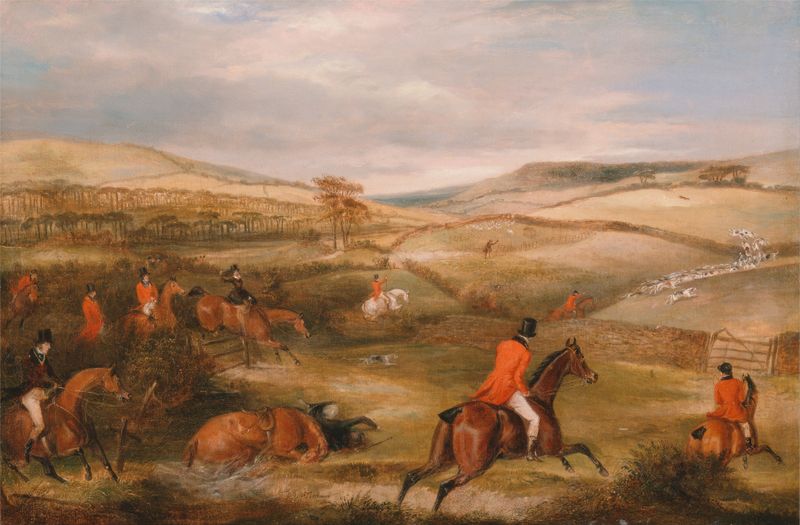
What if silence could speak through light? In the intricate dance of hue and shadow, The Berkeley Hunt, 1842: Full Cry evokes a world where nature's fragility whispers amidst the chaos of the hunt. Look at the center of the canvas, where the hounds surge forward with primal energy, their bodies sculpted in a blend of browns and whites that contrast sharply against the lush greens of the countryside. Notice how the light catches the fur of the lead hound, creating a moment of brilliance in an otherwise tumultuous scene. The distant figures of riders emerge from the background, their forms swathed in muted colors, yet their urgency is palpable, drawing the viewer's eyes across the composition. As you delve deeper, consider the relationship between the hunters and hounds: a delicate balance of power and vulnerability.
The fervor of the chase is underscored by the tranquility of the serene landscape—a reminder of nature's duality. The tension between movement and stillness is echoed in the soft clouds above, which seem to pause, capturing an ephemeral moment just before the storm of activity unfolds. Francis Calcraft Turner painted this scene in 1842, during a time when hunting was not merely a sport but a cultural statement among the British gentry. He was working in England amidst a rising interest in the Romantic movement, exploring themes of nature and human emotion, capturing both the exhilarating spirit of the hunt and the inherent vulnerability of life surrounding it.