The Bridge — History & Facts
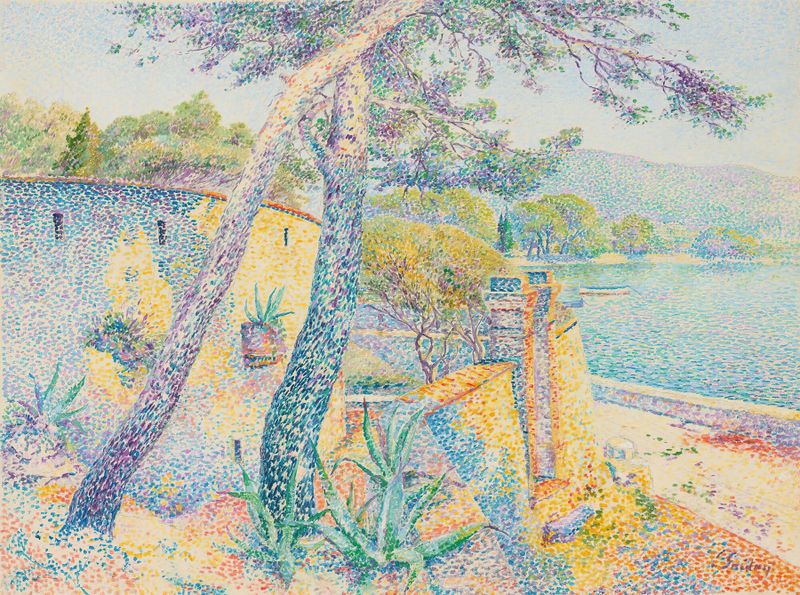
The reflection of the tumultuous river captures the essence of an untamed spirit, creating a dialogue between the chaotic and the serene. Look to the right at the bridge, its arches defined by bold strokes that seemingly dance with the water below. Notice how the vibrant hues of blue and green intertwine, crafting a vivid depiction of the flowing river, while the sun casts dapples of light that shimmer across the surface. The artist's technique blends thick impasto with fine lines, allowing the texture to evoke the physicality of nature itself, inviting viewers to step closer and feel the pulse of the scene. Beneath the surface, the painting speaks of contrasts: stability versus fluidity, permanence against transience.
The bridge stands as a steadfast symbol of connection, while the river flows endlessly beneath, reminding us of life’s continual change. Look closely, and you might discern figures on the bridge, their gestures frozen in time, silently echoing the universal struggle to find balance amidst chaos. Louis Gaidan created this artwork during a period of personal exploration and artistic experimentation, likely between the late 19th and early 20th centuries. Emerging from a time when the art world was increasingly embracing Impressionism and post-Impressionism, the artist sought to capture the essence of movement and emotion, reflecting the vibrant energy that surrounded him.
In a world transforming rapidly, The Bridge stands as a testament to both his individuality and the compelling narratives of his time.