The Canal—Morning Effect — History & Facts
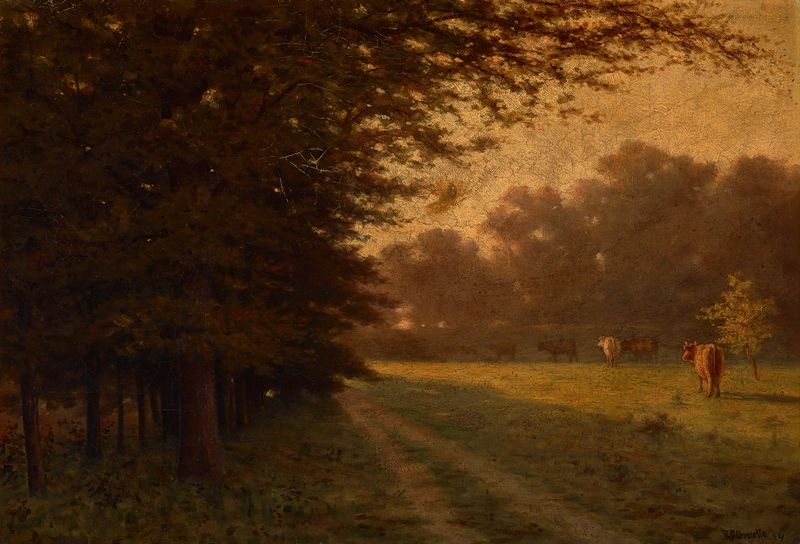
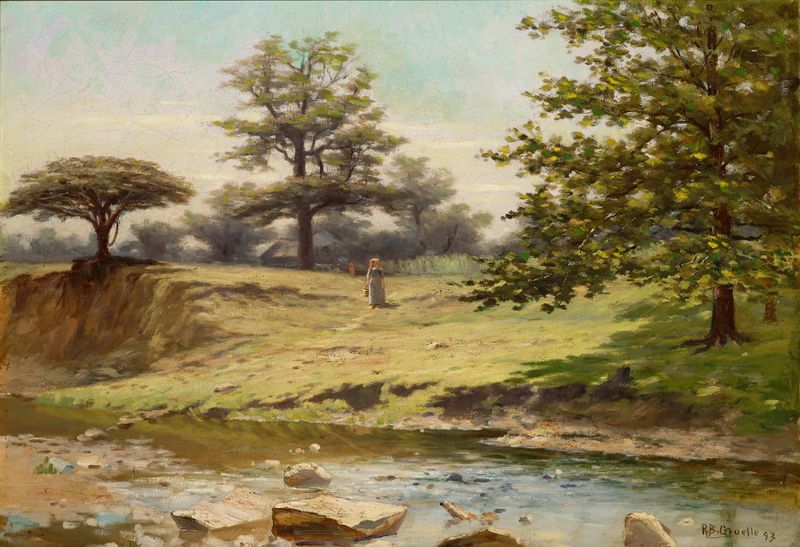
In this tranquil moment, the stillness of the morning water holds secrets of a world in transition, the whispers of movement hidden beneath its surface. Look to the bottom right, where the gentle ripples of the canal weave a delicate tapestry, each shimmer a fleeting gesture of life. The artist employs a soft, muted palette, blending greens, blues, and hints of warm sunlit tones to capture the essence of dawn. The interplay of light and shadow creates a sense of depth, drawing the viewer’s gaze towards the distant horizon, where trees stand like guardians against a waking sky. As you absorb the scene, consider the emotional undercurrents at play.
The calm waters represent both a moment of respite and the inevitability of change, suggesting that beneath this serene facade, life is ever moving. The reflection of the trees on the surface hints at a duality — what is seen and what is concealed. There’s a fragile balance here, where tranquility meets the pulse of nature, urging the observer to recognize the beauty in this transient phase. In 1894, Gruelle created this piece during an era marked by the burgeoning Impressionist movement, which sought to capture spontaneous moments of everyday life.
Living in the United States, he was influenced by European artistic trends that emphasized the effects of light and atmosphere. This painting represents a quiet yet profound exploration of the natural world, highlighting Gruelle's commitment to expressing the subtleties of movement within stillness.