
The Cathedral at Siena — History & Facts
What secret hides in the quiet of the canvas? In The Cathedral at Siena, the solitude of a grand structure speaks volumes about the isolation that often accompanies beauty. Look to the left at the impressive facade of the cathedral, where intricate details emerge in muted tones, inviting you to trace the delicate carvings that speak of devotion and craftsmanship. Notice how the light seems to dance upon the stone, casting shadows that elongate like whispers across the cobblestones. The composition draws you in, with the towering arches framing the sky, yet the empty streets emphasize a poignant stillness, as if the building itself is waiting for company. Deeper within the scene lies an emotional tension, a contrast between the magnificence of the architecture and the absence of life that surrounds it.
The cathedral, a symbol of faith and community, stands in stark opposition to the solitude of its setting, evoking a sense of longing for connection. The few scattered figures appear lost in their own worlds, mere echoes of the vibrant life that once filled the space, amplifying the loneliness intrinsic to both the viewer and the artist. Telemaco Signorini painted this work during the late 19th century, a period marked by the rise of realism and a shift towards capturing the nuances of everyday life. Influenced by the artistic movements of his time, he sought to convey the depth of human experience, often reflecting on themes of solitude and isolation.
This painting, created amidst a backdrop of industrialization and societal change, encapsulates the artist's desire to explore not only the external beauty of his subjects but the internal landscapes of the human spirit.
More Artworks by Telemaco Signorini
Browse all →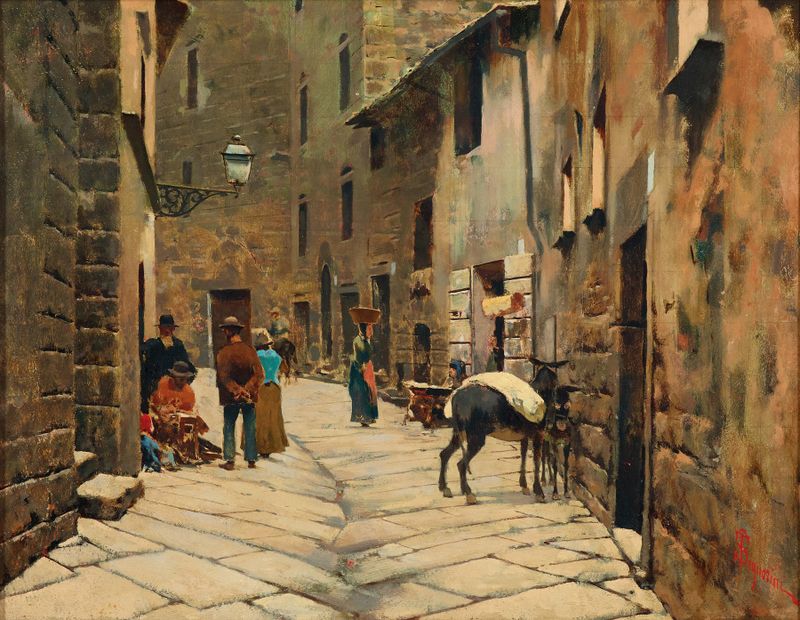
More Architecture Art
Browse all →
The statue of Liberty
Frédéric Auguste Bartholdi

View of Houses in Delft, Known as ‘The Little Street’
Johannes Vermeer

View of Houses in Delft, Known as ‘The Little Street’
Johannes Vermeer

The Cathedral in Rouen. The portal, Grey Weather
Claude Monet

The yellow house
Vincent van Gogh

The Church in Auvers-sur-Oise, View from the Chevet
Vincent van Gogh