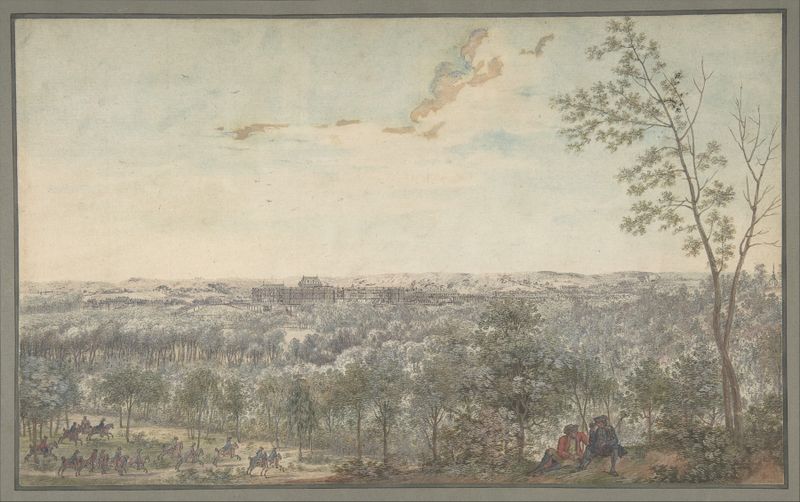
The Château de Versailles Seen from the Gardens — History & Facts
A soft mist drapes over the gardens of Versailles, the air thick with the weight of history and unspoken heartaches. The grand façade of the château looms in the distance, an overbearing symbol of grandeur and loss. In the foreground, the meticulously manicured hedges frame the view, their lush green contrasting with the pale stone, while the stillness of the scene hints at the reverberations of long-ago laughter and forgotten whispers. Look to the left at the vibrant flowers peeking through the foliage, their colors a burst of life amidst the rigid symmetry of the landscape.
Notice how the dappled light filters through the trees, creating a play of shadow and illumination that invites the eye to wander deeper into the scene. The composition strikes a delicate balance, leading the viewer’s gaze toward the château, yet holding it captive in the serenity of the gardens—a juxtaposition of nature's beauty against the cold solidity of man-made splendor. Yet beneath this idyllic surface lies a profound sense of loss—of a time when the gardens were alive with royal revelry, of a court that no longer exists. The lush greenery, while vibrant, speaks of decay; it’s a reminder that even the most opulent spaces are subject to the passage of time.
The empty benches scattered throughout suggest past gatherings now turned to memory, echoing the solitude that envelops the grounds. Created in 1779, this artwork emerged during a period of profound transformation in France, just before the revolutionary fervor would sweep through and alter the very essence of monarchy and privilege. Lespinasse, working at a time when the grandeur of Versailles was waning, captured not just a view but the emotional weight carried by each brick and blossom, reflecting a world on the cusp of change.