
The Church at Dixmude, West Flanders — History & Facts
In The Church at Dixmude, a haunting stillness lingers over the ruins, echoing fears of loss and the passage of time. The church, with its crumbling facade, stands as a solemn witness to history, urging us to confront the fragility of existence. Look to the left at the dilapidated architecture, where shadows dance across the weathered stones, capturing the play of light in a poignant embrace. Notice how the artist's brushstrokes evoke a sense of decay; the soft grays and muted earth tones create an atmosphere that is both melancholic and reflective.
The composition draws your eye along the empty path leading to the church, inviting you to ponder the stories once held within its walls. Delve deeper into the details: the scattered remnants of life, the wild grass reclaiming the space, and the distant horizon that hints at a world beyond. Each element resonates with an underlying tension—the juxtaposition of architectural grandeur against nature’s quiet encroachment speaks to the cycles of life and death. This contrast raises questions about permanence and impermanence, urging viewers to confront their own fears of oblivion. In 1863, David Roberts created this work amid a turbulent period in Europe, marked by political upheaval and cultural transformation.
Living primarily in London at the time, he was deeply influenced by Romanticism and the desire to capture the sublime. This painting reflects his ongoing exploration of architectural beauty and decay, while also serving as a meditation on memory and the relentless march of time.
More Artworks by David Roberts
Browse all →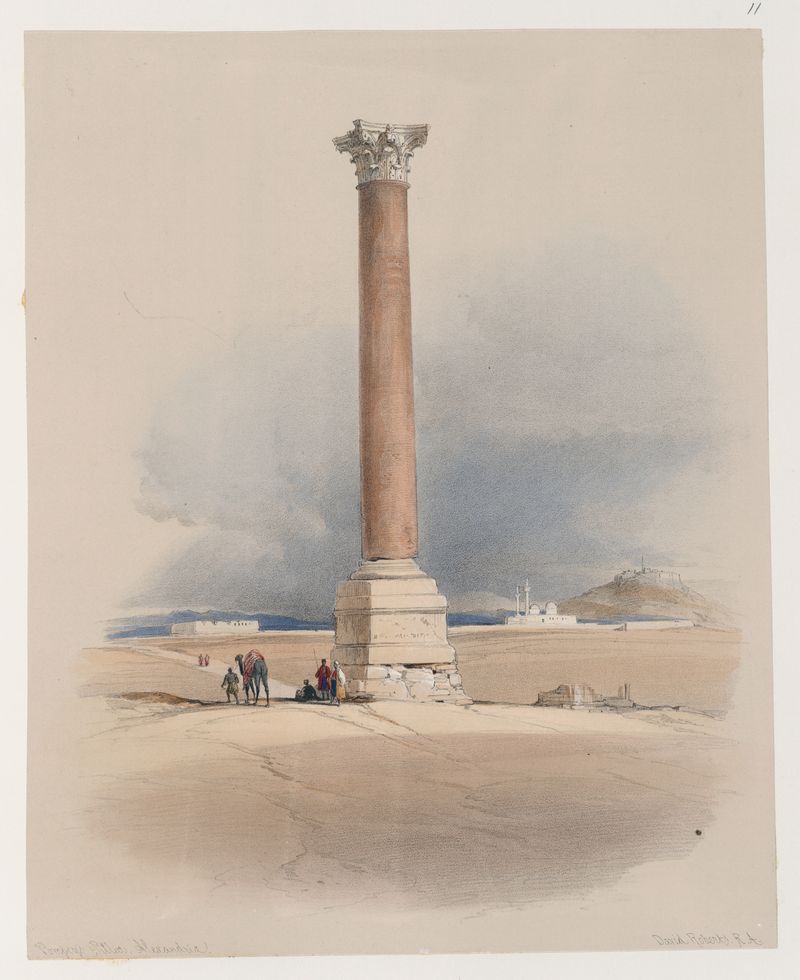
Pompey’s Pillar, Alexandria.
David Roberts

Approach to the Fortress of Ibrim.
David Roberts

Karnac [Karnak]. Nov. 29th, 1838.
David Roberts
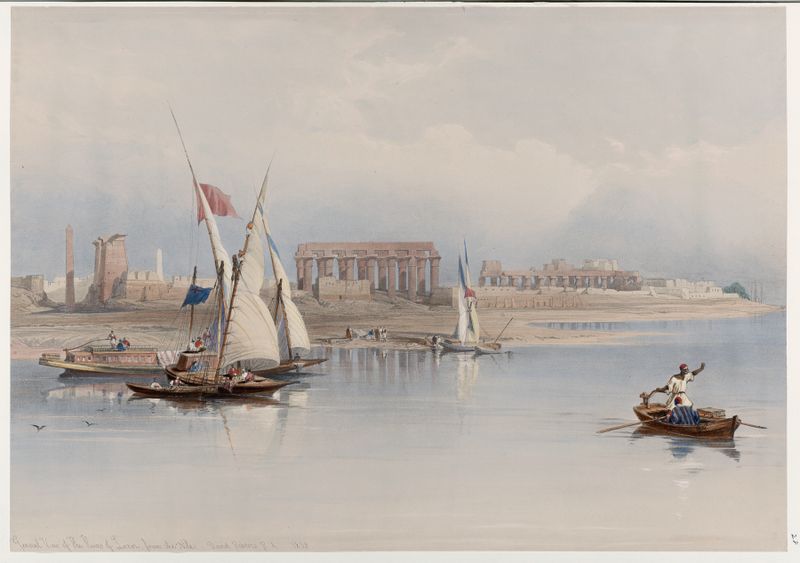
General view of the ruins of Luxor, from the Nile. 1838.
David Roberts

Statues of Memnon at Thebes, during the inundation.
David Roberts

Entrance to the tombs of the kings of Thebes. Bab-el-Malouk [Bîbân al-Mulûk].
David Roberts

The Fortress of the Alhambra, Granada
David Roberts
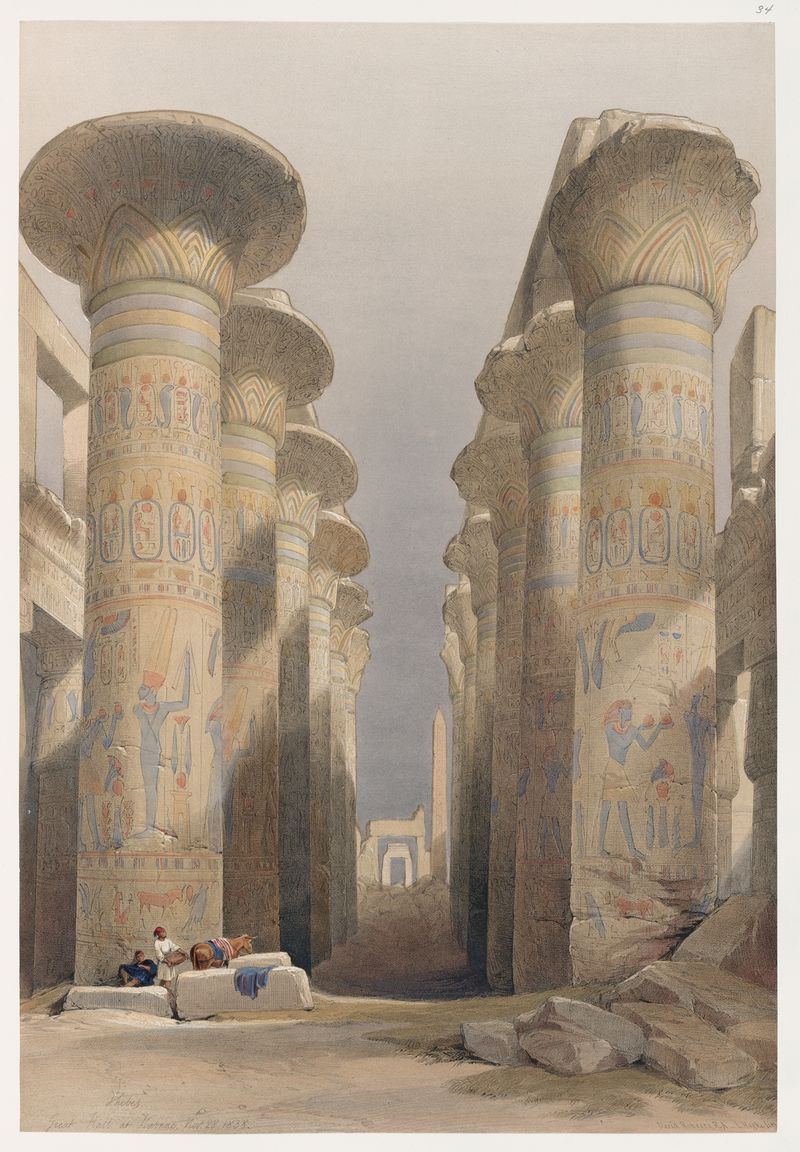
Thebes. Great Hall at Karnak. Nov. 28, 1838.
David Roberts
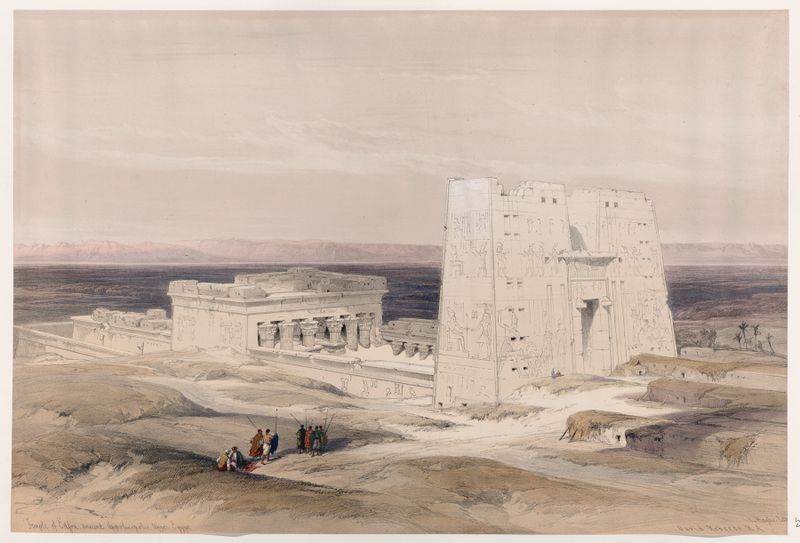
Temple of Edfou [Idfû], ancient Appolinopolis, Upper Egypt.
David Roberts

Temple of Kalabshee [Kalabsha, Kalâbishah], Nubia. Nov. 1838.
David Roberts
More Architecture Art
Browse all →
The statue of Liberty
Frédéric Auguste Bartholdi

View of Houses in Delft, Known as ‘The Little Street’
Johannes Vermeer

View of Houses in Delft, Known as ‘The Little Street’
Johannes Vermeer

The Cathedral in Rouen. The portal, Grey Weather
Claude Monet

The yellow house
Vincent van Gogh

The Church in Auvers-sur-Oise, View from the Chevet
Vincent van Gogh