
The Citadel of Cairo, residence of Mehemet Ali. — History & Facts
What if silence could speak through light? In the hushed grandeur of a bygone era, memory unfurls in vivid splendor, echoing the whispers of history. Begin your visual journey by focusing on the Citadel, its imposing walls and towers etched against the azure sky. Notice how the warm sunlight pours over the ancient stones, illuminating their textures and casting long shadows that play against the intricate details of the architecture. Look closely at the delicate interplay of light and shadow, which breathes life into the painting, revealing the warmth of the Mediterranean sun and the coolness of the stone, creating a dialogue between presence and absence. Delve deeper into the emotional layers that this masterpiece holds.
The Citadel stands as a symbol of power and resilience, yet it also conveys a sense of solitude, amplifying the silence of history. Consider the subtle hints of activity in the bustling streets below; distant figures fade into the background, embodying the life that once thrived here, juxtaposed against the stillness of the great fortress. This contrast evokes a poignant sense of nostalgia, as if the citadel itself yearns to share its untold stories. During the years 1846 to 1849, the artist was immersed in a world teeming with exploration and cultural exchange.
Painted in Cairo, this work emerged as part of a broader series that sought to capture the exoticism of the East during a period of Western fascination with its landscapes and architecture. The artist’s travels, fueled by a growing interest in Orientalism, reflect not only his personal pursuits but also the shifting dynamics of art, as European artists began to embrace and interpret the beauty of non-Western worlds.
More Artworks by David Roberts
Browse all →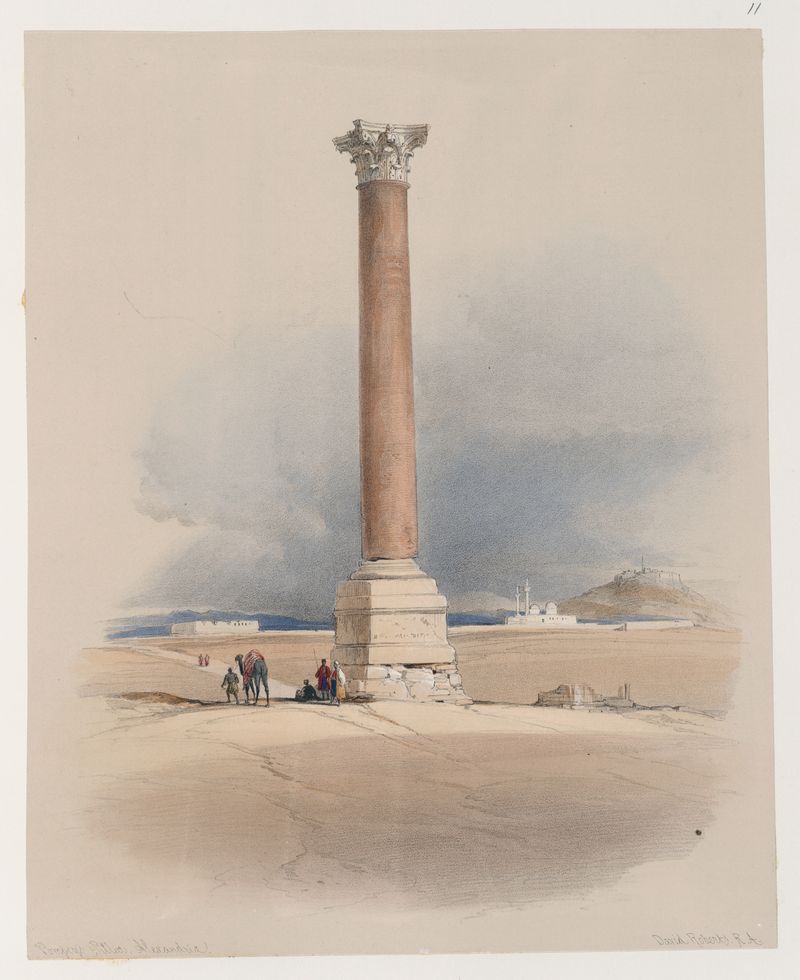
Pompey’s Pillar, Alexandria.
David Roberts

Approach to the Fortress of Ibrim.
David Roberts

Karnac [Karnak]. Nov. 29th, 1838.
David Roberts
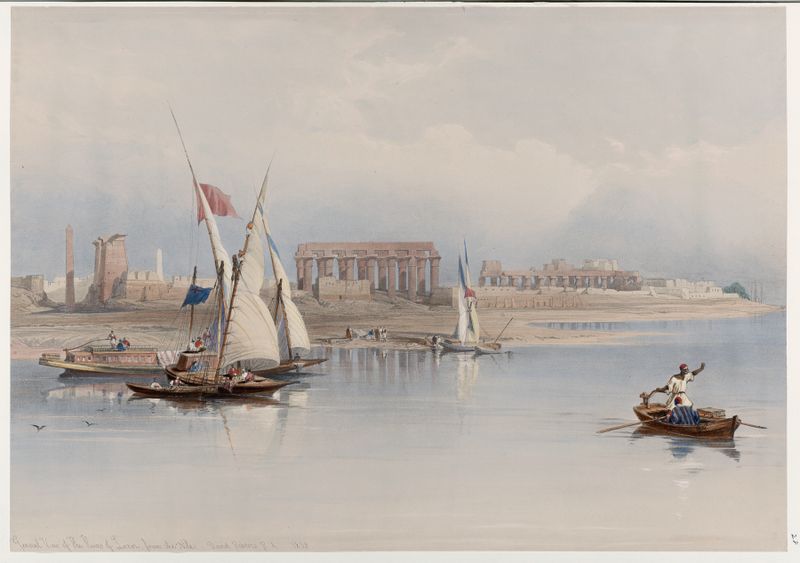
General view of the ruins of Luxor, from the Nile. 1838.
David Roberts

Statues of Memnon at Thebes, during the inundation.
David Roberts

Entrance to the tombs of the kings of Thebes. Bab-el-Malouk [Bîbân al-Mulûk].
David Roberts

The Fortress of the Alhambra, Granada
David Roberts
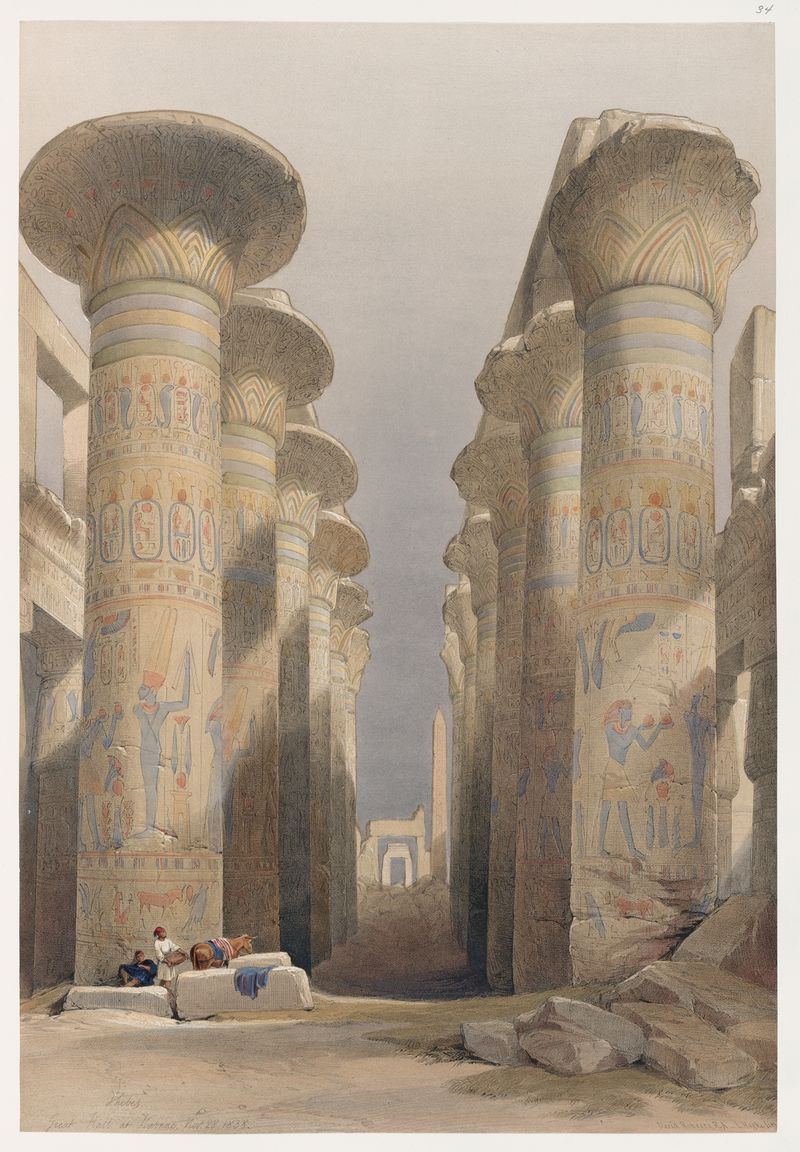
Thebes. Great Hall at Karnak. Nov. 28, 1838.
David Roberts
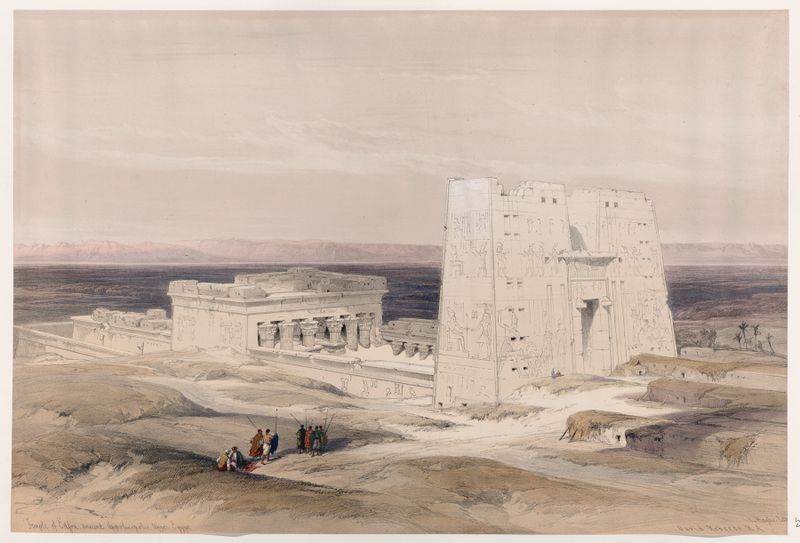
Temple of Edfou [Idfû], ancient Appolinopolis, Upper Egypt.
David Roberts

Temple of Kalabshee [Kalabsha, Kalâbishah], Nubia. Nov. 1838.
David Roberts
More Architecture Art
Browse all →
The statue of Liberty
Frédéric Auguste Bartholdi

View of Houses in Delft, Known as ‘The Little Street’
Johannes Vermeer

View of Houses in Delft, Known as ‘The Little Street’
Johannes Vermeer

The Cathedral in Rouen. The portal, Grey Weather
Claude Monet

The yellow house
Vincent van Gogh

The Church in Auvers-sur-Oise, View from the Chevet
Vincent van Gogh