
The Citadel Of Tangier, Morocco — History & Facts
When did color learn to lie? In The Citadel Of Tangier, Morocco, the artist invites us to question the very nature of perception and reality, suggesting that beauty can both illuminate and obscure. Look to the vibrant hues that dominate the canvas, where earthy ochres and deep azure sky converge. The citadel stands resolute, framed by a cascade of warm sunlight that dances across its fortified walls, creating a striking contrast with the vivid hues of the surrounding landscape. Notice how the artist’s brushwork breathes life into the scene, with fine details capturing the textures of the stone and the intricate patterns of the architecture.
Each stroke is confident, revealing the grandeur of the citadel while simultaneously inviting a sense of intimacy with its surroundings. Yet, beyond the surface allure lies an emotional complexity. The citadel, emblematic of strength and defense, is juxtaposed against the vibrant life teeming around it—a metaphor for the struggle between the human spirit and the rigidity of structure. The shadows cast by the towering walls evoke feelings of protection and confinement, urging the viewer to contemplate the duality of safety and isolation.
This tension resonates with the essence of a place that has historically been a gateway between cultures, suggesting both transcendence and entrapment. In 1837, David Roberts journeyed to North Africa, capturing not just landscapes but the intricate interplay of cultures within them. At a time when the Romantic movement was embracing the exotic and the sublime, he sought to blend reality with a dreamlike quality, opening a dialogue about identity and existence in an increasingly interconnected world. His work reflects a period of artistic exploration, as artists began to embrace travel and the diverse beauty awaiting them beyond familiar shores.
More Artworks by David Roberts
Browse all →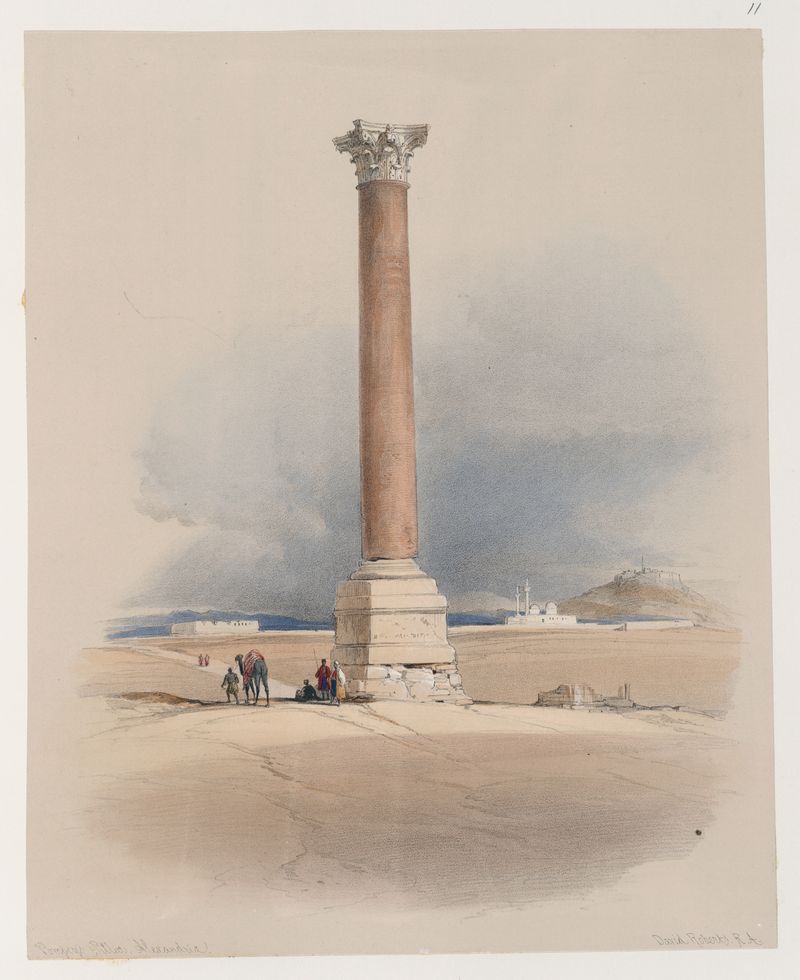
Pompey’s Pillar, Alexandria.
David Roberts

Approach to the Fortress of Ibrim.
David Roberts

Karnac [Karnak]. Nov. 29th, 1838.
David Roberts
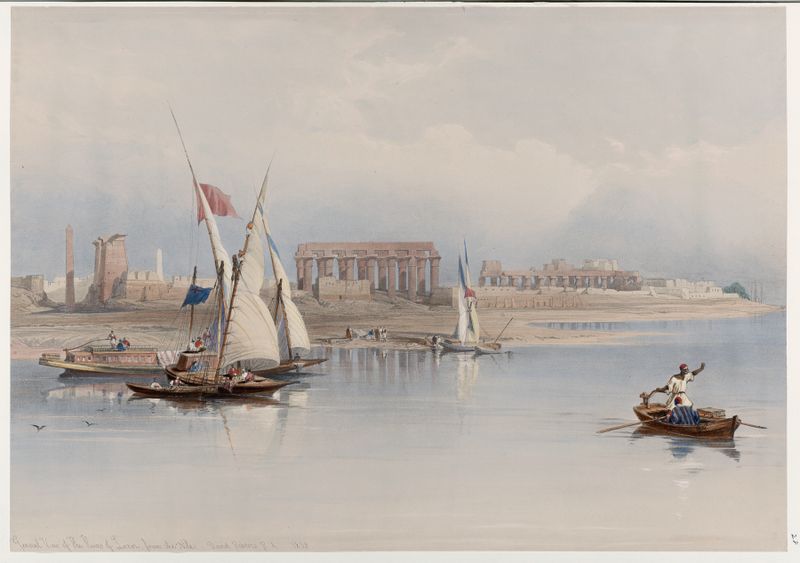
General view of the ruins of Luxor, from the Nile. 1838.
David Roberts

Statues of Memnon at Thebes, during the inundation.
David Roberts

Entrance to the tombs of the kings of Thebes. Bab-el-Malouk [Bîbân al-Mulûk].
David Roberts

The Fortress of the Alhambra, Granada
David Roberts
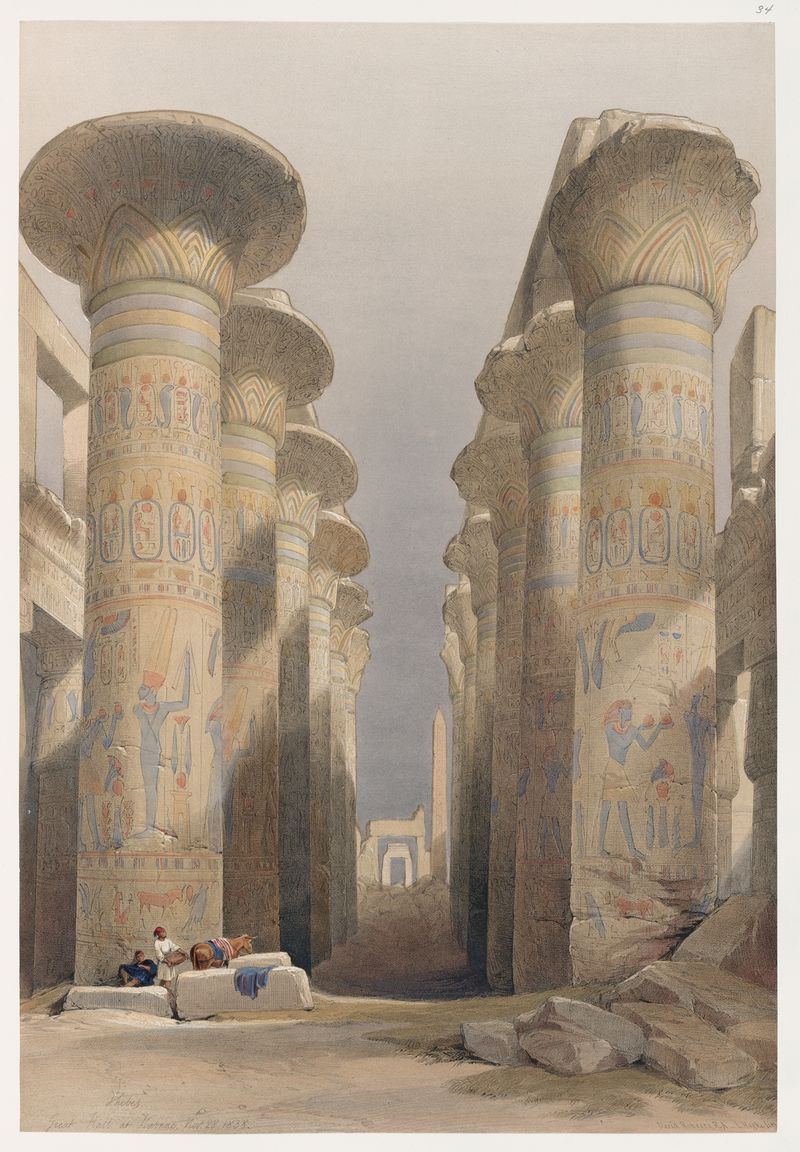
Thebes. Great Hall at Karnak. Nov. 28, 1838.
David Roberts
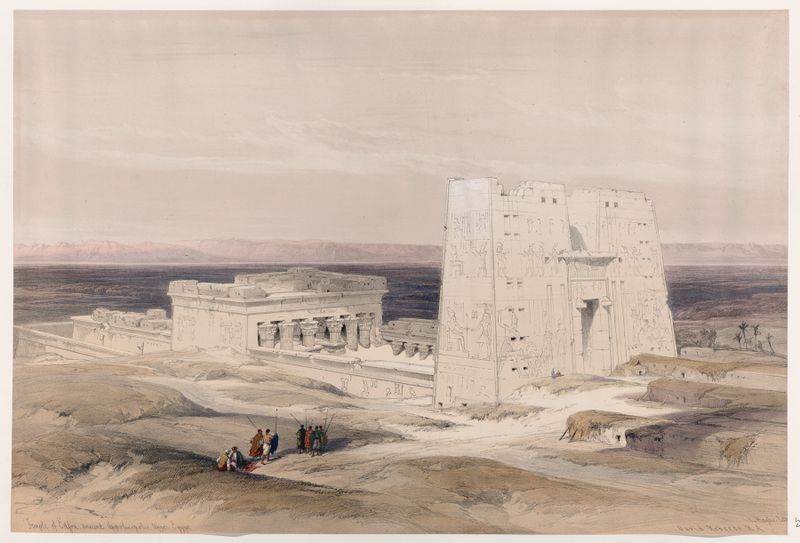
Temple of Edfou [Idfû], ancient Appolinopolis, Upper Egypt.
David Roberts

Temple of Kalabshee [Kalabsha, Kalâbishah], Nubia. Nov. 1838.
David Roberts
More Architecture Art
Browse all →
The statue of Liberty
Frédéric Auguste Bartholdi

View of Houses in Delft, Known as ‘The Little Street’
Johannes Vermeer

View of Houses in Delft, Known as ‘The Little Street’
Johannes Vermeer

The Cathedral in Rouen. The portal, Grey Weather
Claude Monet

The yellow house
Vincent van Gogh

The Church in Auvers-sur-Oise, View from the Chevet
Vincent van Gogh