The Eagle’s Nest, Killarney — History & Facts
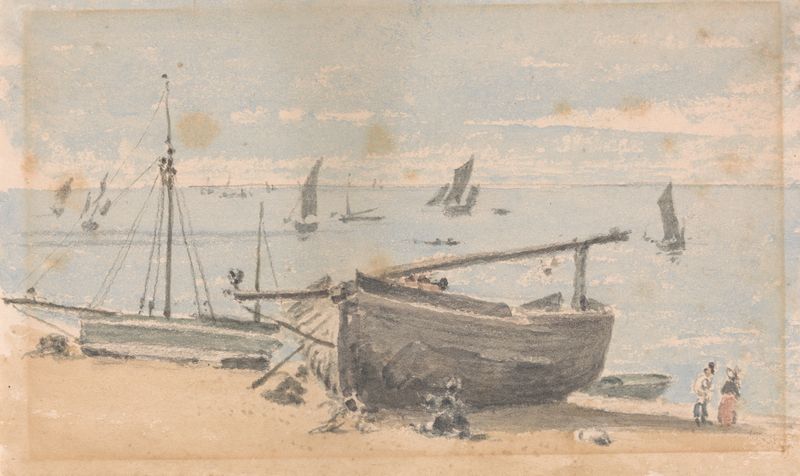
Where does light end, and longing begin? In the delicate interplay of shadow and brightness, The Eagle’s Nest, Killarney invites us to ponder the depths of desire that lie beneath its serene surface. Look to the foreground, where the rugged cliffs rise steeply from the lapping waters, their textures rendered with meticulous detail. The artist employs a rich palette of greens and blues, contrasting the earthy tones of the rocks against the vibrant sky. Notice how the light cascades gently down the slopes, illuminating patches of wild foliage while casting deeper shadows in the crevices, creating a sense of depth and movement throughout the landscape. Here, the juxtaposition of the calm water and imposing cliffs evokes a tension between tranquility and aspiration.
The soaring height of the cliffs suggests an unattainable summit, a metaphor for dreams that linger just out of reach. The shimmering reflections on the lake hint at fleeting moments of clarity, yet the surrounding wilderness remains daunting, emphasizing an inherent struggle between the beauty of nature and our yearning to conquer it. Agostino Aglio painted this work during a time when Romanticism was gaining prominence in Europe, capturing the essence of sublime landscapes. Working in mid-19th century England, Aglio was immersed in a world that celebrated the dramatic and the picturesque.
His own experiences in the vibrant Irish countryside resonated with the ideals of the movement, reflecting both the external beauty of the landscape and the internal yearnings it inspired.