
The Eruption of Vesuvius — History & Facts
In the face of nature’s fury, we find ourselves yearning for beauty amid destruction, for memories etched in the ash of desire. Focus on the vivid hues swirling across the canvas. The fiery oranges and reds of the erupting Vesuvius dominate the horizon, contrasting starkly with the darkened sky, while wisps of smoke curl upward, evoking a sense of both chaos and allure. Notice how the shoreline, illuminated by the molten glow, draws the eye to the silhouettes of figures fleeing amidst the peril, their gestures mirroring desperation and hope.
Each brushstroke captures not only the event but also the emotions stirred by this cataclysmic force. Delve deeper into the painting’s significance, where desire intertwines with fear. The eruption represents the inherent duality of creation and destruction; life blooms in the fertile ashes yet is snuffed out in an instant. The choice of vibrant colors embodies the passionate longing for life itself, while the ominous shadows hint at existential dread.
Here, the beauty of nature’s fury eludes capture, reminding us that even in destruction, there lies an unquenchable thirst for existence. In 1771, Pierre-Jacques Volaire painted this work during a period of heightened interest in the sublime and the natural world, influenced by the Romantic movement's emphasis on emotion and the awe of nature. Living in France, he encountered a society fascinated by the ancient past, especially the tragic stories of cities like Pompeii, whose ruins served as a haunting reminder of life’s fragility. This painting, steeped in both historical reference and personal interpretation, encapsulates a moment where art reflects the tumult of human experience.
More Artworks by Pierre-Jacques Volaire
Browse all →
Eruption of Vesuvius
Pierre-Jacques Volaire
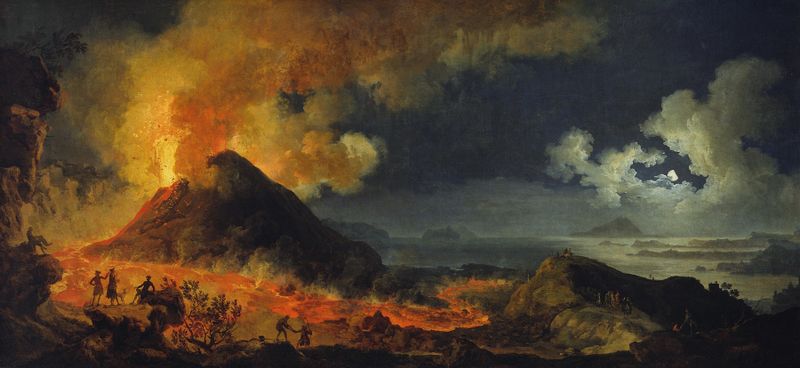
The Eruption of Vesuvius
Pierre-Jacques Volaire
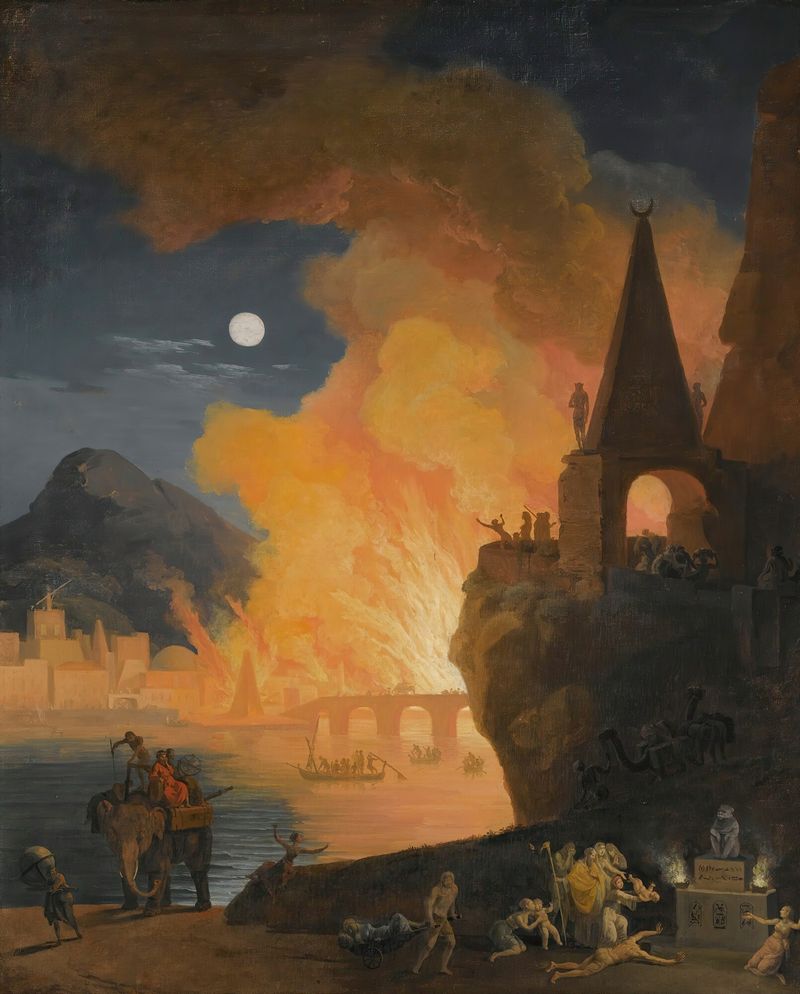
A Nocturnal Landscape With Figures Fleeing The Fire Of Alexandria
Pierre-Jacques Volaire

Mediterranean Harbor Scene
Pierre-Jacques Volaire

The Waterfalls At Tivoli With Figures Resting And Hunting
Pierre-Jacques Volaire
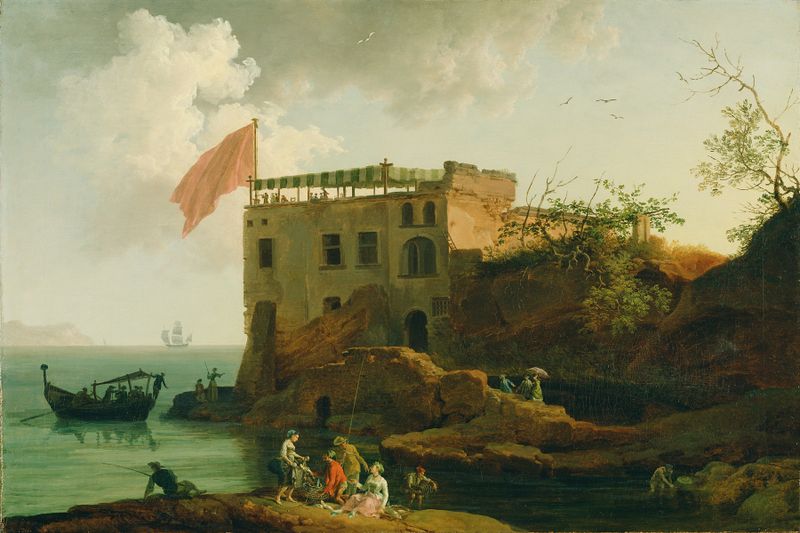
View of Gaiola
Pierre-Jacques Volaire
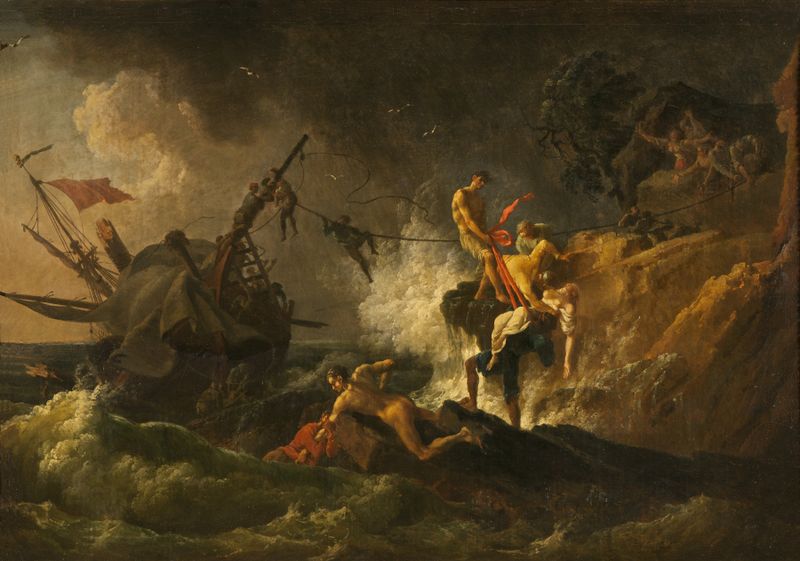
Shipwreck
Pierre-Jacques Volaire
Men near a Fire in the Mountains
Pierre-Jacques Volaire





