
The Fountain on the Prado, Madrid — History & Facts
In the delicate interplay of light and shadow, a world of fragility is unveiled, inviting us to ponder the ephemeral nature of beauty. Look to the center, where the fountain emerges as the heart of the composition, cascading water glistening like jewels under the soft embrace of sunlight. The surrounding flora frames this moment, with verdant greens contrasting against the pale stone, drawing the eye into the tranquil scene. Notice how the artist’s meticulous brushwork captures each droplet, allowing movement to breathe life into the stillness of the canvas. Yet beneath this serene facade lies a tension between permanence and transience.
The gentle flow of water symbolizes life’s fleeting moments, while the sturdy architecture stands as a reminder of human ambition and the passing of time. Even the figures, lost in contemplation, embody a moment of pause within the ever-changing landscape—each face a reflection of thoughts too intimate to capture, the fragility of their own existence hanging in the air. In 1837, David Roberts painted this scene during a period of personal and professional growth. Having traveled extensively across Europe, he found inspiration in the sights of Madrid, where the Romantic movement was beginning to flourish.
This work marked a significant evolution in his style, as he moved toward capturing not just places but the emotions they evoked, cementing his place within the broader narrative of 19th-century art.
More Artworks by David Roberts
Browse all →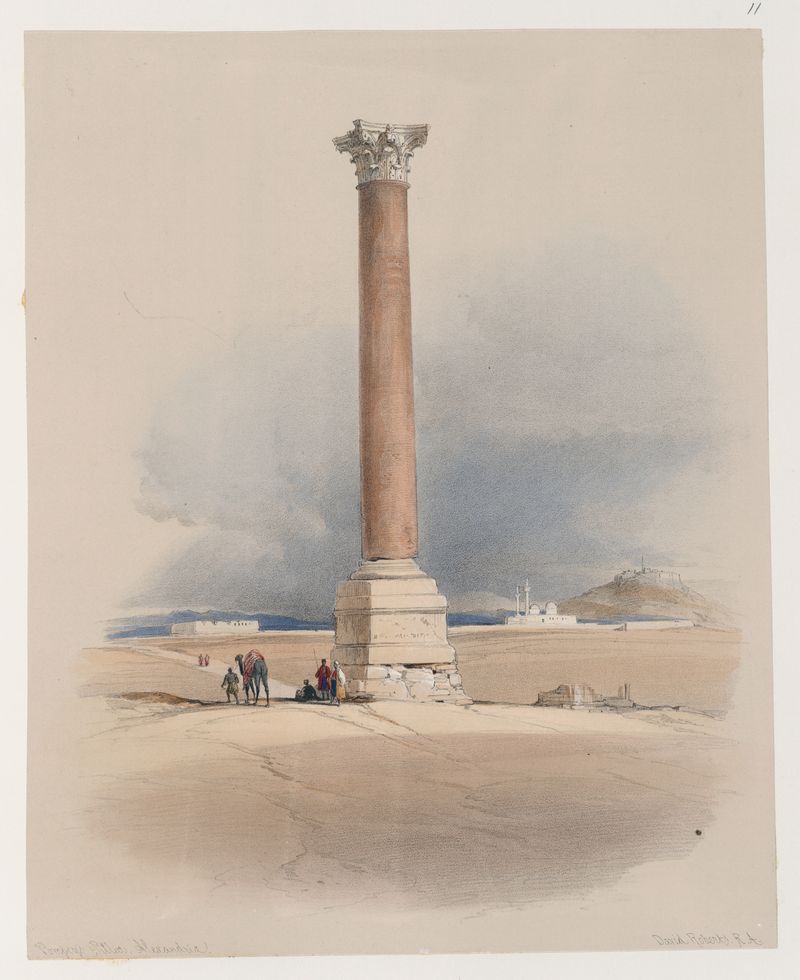
Pompey’s Pillar, Alexandria.
David Roberts

Approach to the Fortress of Ibrim.
David Roberts

Karnac [Karnak]. Nov. 29th, 1838.
David Roberts
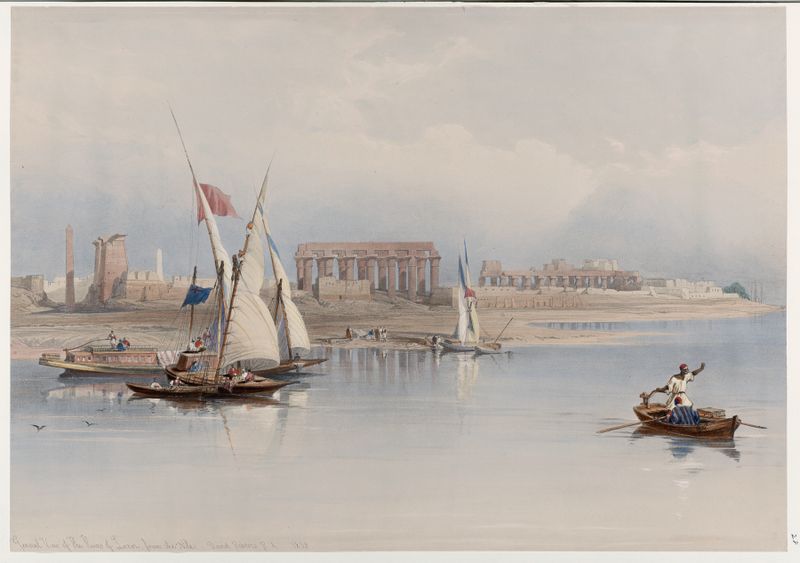
General view of the ruins of Luxor, from the Nile. 1838.
David Roberts

Statues of Memnon at Thebes, during the inundation.
David Roberts

Entrance to the tombs of the kings of Thebes. Bab-el-Malouk [Bîbân al-Mulûk].
David Roberts

The Fortress of the Alhambra, Granada
David Roberts
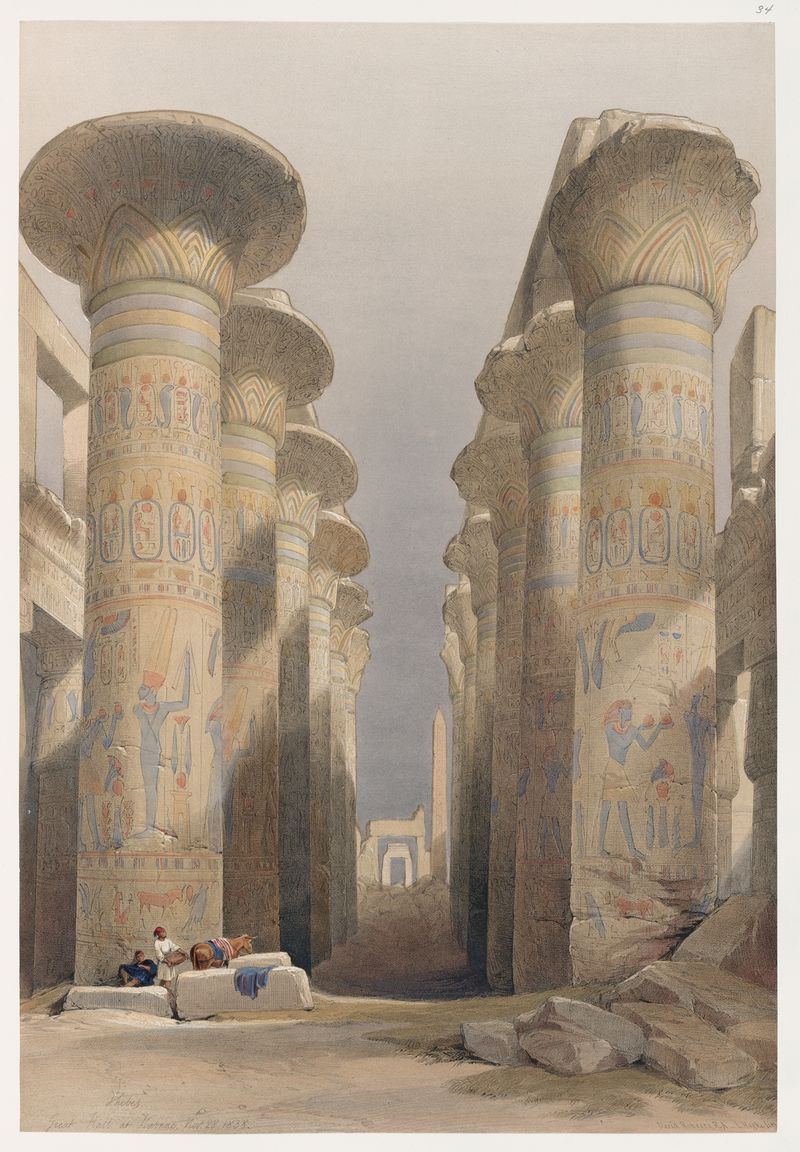
Thebes. Great Hall at Karnak. Nov. 28, 1838.
David Roberts
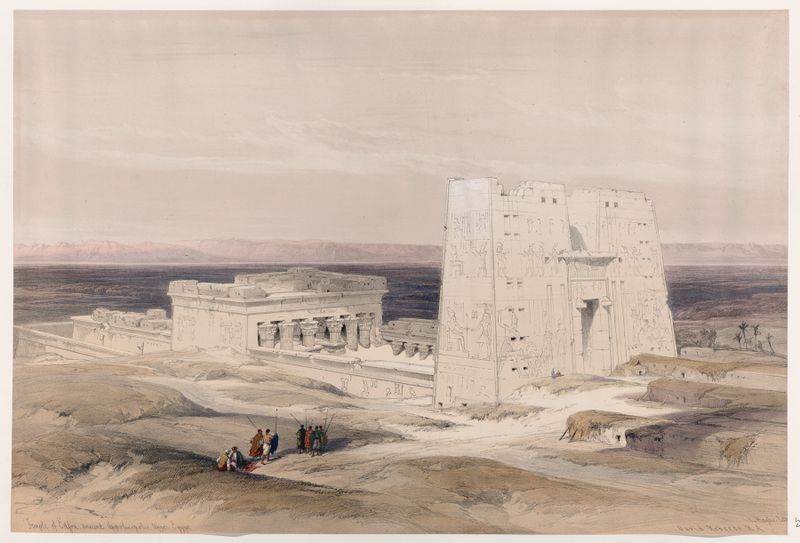
Temple of Edfou [Idfû], ancient Appolinopolis, Upper Egypt.
David Roberts

Temple of Kalabshee [Kalabsha, Kalâbishah], Nubia. Nov. 1838.
David Roberts
More Architecture Art
Browse all →
The statue of Liberty
Frédéric Auguste Bartholdi

View of Houses in Delft, Known as ‘The Little Street’
Johannes Vermeer

View of Houses in Delft, Known as ‘The Little Street’
Johannes Vermeer

The Cathedral in Rouen. The portal, Grey Weather
Claude Monet

The yellow house
Vincent van Gogh

The Church in Auvers-sur-Oise, View from the Chevet
Vincent van Gogh