
The Four Courts, Dublin — History & Facts
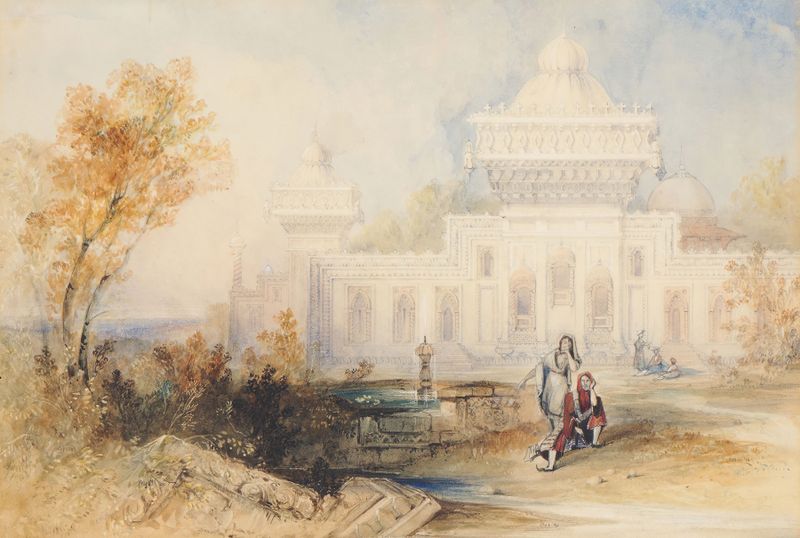
This notion resonates profoundly amidst the complex architecture of divinity, where the spiritual converges with the tangible. Look to the center of the composition, where the majestic Four Courts stand resolute against the backdrop of a muted sky. The artist employs a palette of soft grays and warm earth tones to evoke a sense of timelessness, allowing the viewer's gaze to be drawn toward the intricate details of the domes and columns. Notice how the light subtly bathes the façade, creating a harmonious contrast between shadow and illumination, suggesting a divine presence that seems to bless this monumental structure. Yet, beneath the grandeur lies a tension between permanence and transience.
The gentle ripples in the river reflect the passing clouds, reminding us that even the most formidable edifices are not immune to the passage of time. The viewer might also sense the underlying narrative of the people who inhabit this space—each figure, though small in scale, contributes to the overarching story of justice and order, evoking an emotional connection to the historical significance of this court. In 1840, while residing in Dublin, Dibdin painted this iconic structure during a period of artistic transition in Ireland. The country was grappling with social changes, and the art scene was beginning to embrace a more nationalistic tone.
This work emerged as a reflection of both personal and collective identity, encapsulating the aspirations of a nation striving to reconcile its past with its future.
More Artworks by Thomas Colman Dibdin
Browse all →
More Architecture Art
Browse all →
The statue of Liberty
Frédéric Auguste Bartholdi

View of Houses in Delft, Known as ‘The Little Street’
Johannes Vermeer

View of Houses in Delft, Known as ‘The Little Street’
Johannes Vermeer

The Cathedral in Rouen. The portal, Grey Weather
Claude Monet

The yellow house
Vincent van Gogh

The Church in Auvers-sur-Oise, View from the Chevet
Vincent van Gogh