
The Fürstenberg garden — History & Facts
Sunlight filters through the lush foliage, casting a golden glow over a hidden garden where laughter dances on the air. A young couple, entwined in their joy, explores the vibrant labyrinth of flowers, their fingers brushing against petal and leaf. In this moment of private ecstasy, every gesture is a whisper, every glance a secret shared, as nature envelops them in its embrace. Look to the right at the blooming hydrangeas, their soft blues and pinks bursting with life, inviting the eye to wander deeper into the scene.
Notice how the artist deftly captures the interplay of light and shadow, with sweeping strokes that breathe energy into the leaves overhead. The composition draws you in—a winding path flanked by vivid blooms encourages exploration, while the couple remains the soft focus, a symbol of intimacy within the riot of color. Beneath the surface of this idyllic scene lies a contrast between the vibrancy of youth and the fleeting nature of such moments. The flowers, in full bloom, speak of life’s transience, while the couple’s exuberance hints at a joy that feels both infinite and ephemeral.
In the background, a glimpse of distant trees offers a reminder of the world beyond this secluded paradise, embodying a tension between sanctuary and reality. Tavík František Šimon painted this work in 1911, during a period of creative exploration while he lived in Prague. Influenced by the flourishing Art Nouveau movement and the rich tapestry of Czech culture, he sought to capture the beauty of everyday life infused with poetic sentiment. At this time, the world was on the cusp of change, with the whispers of modernism beginning to stir, an undercurrent that would soon redefine art and its purpose.
More Artworks by Tavík František Šimon
Browse all →
Charles Bridge
Tavík František Šimon
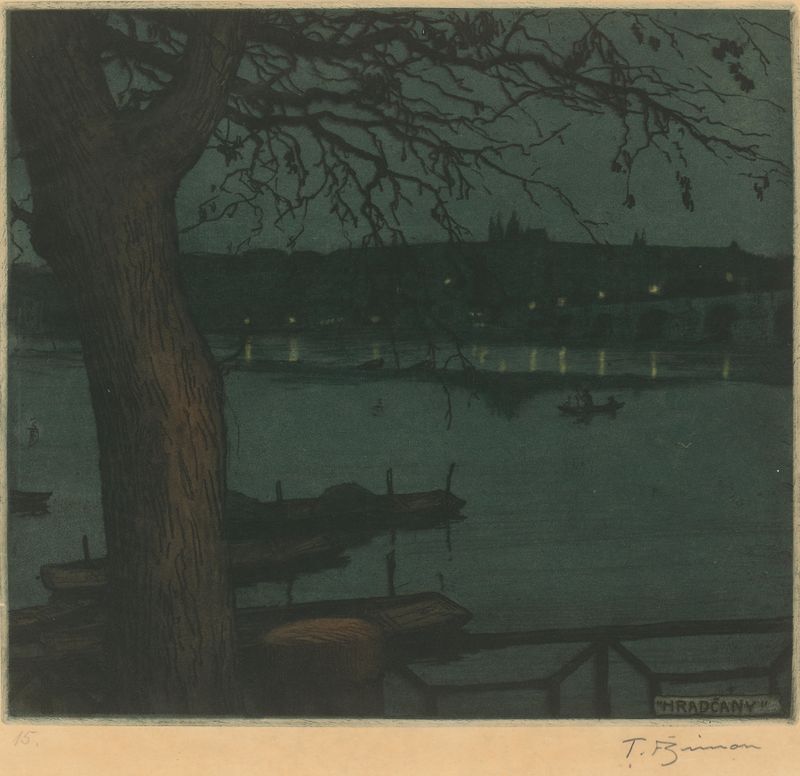
Pohľad na Hradčany z nábrežia
Tavík František Šimon
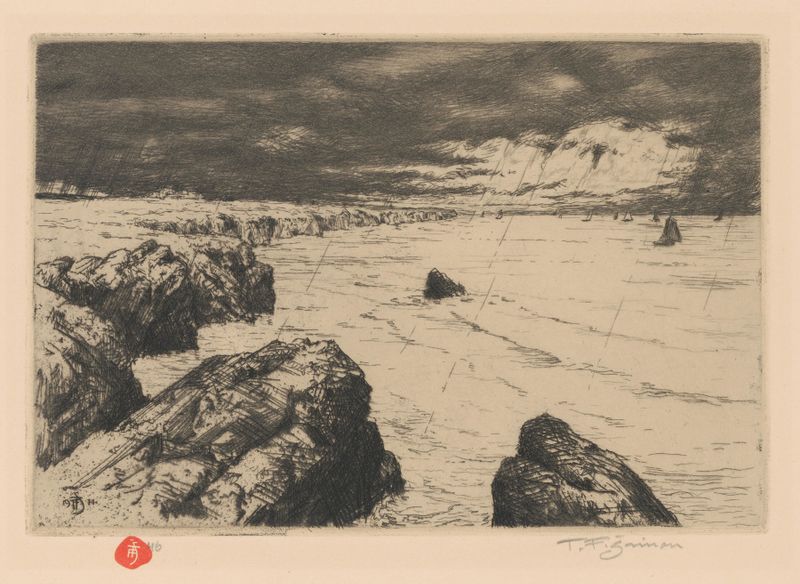
Bretónske brehy
Tavík František Šimon

Staromestská radnica
Tavík František Šimon
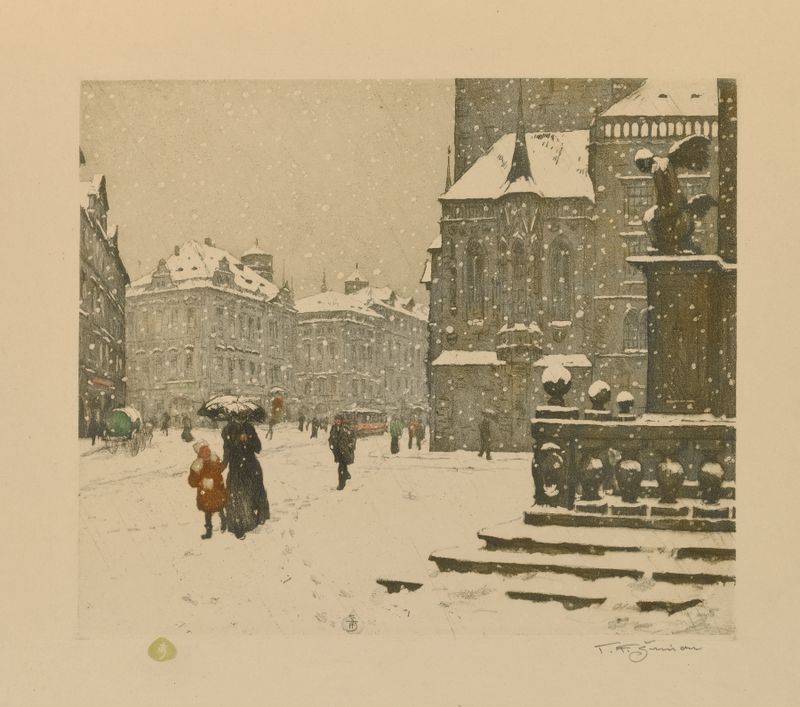
Prague
Tavík František Šimon
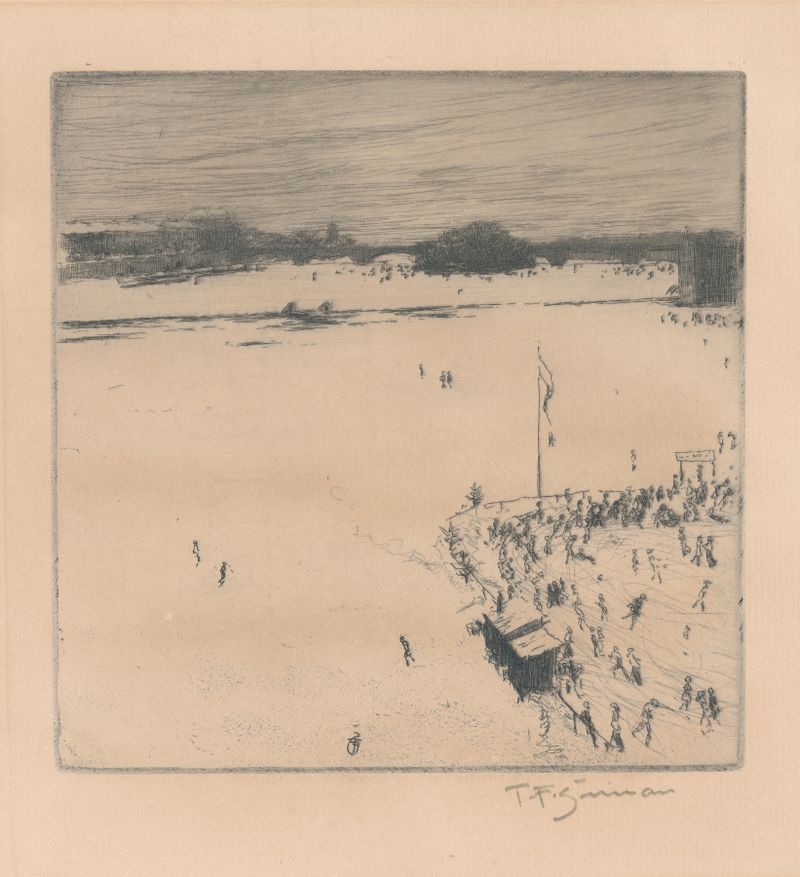
Klzisko pod Karlovým mostom
Tavík František Šimon

The Knights of the Cross Square with the Charles Bridge
Tavík František Šimon

The towers of the Hradčany
Tavík František Šimon

The entrance into the Týn Court
Tavík František Šimon
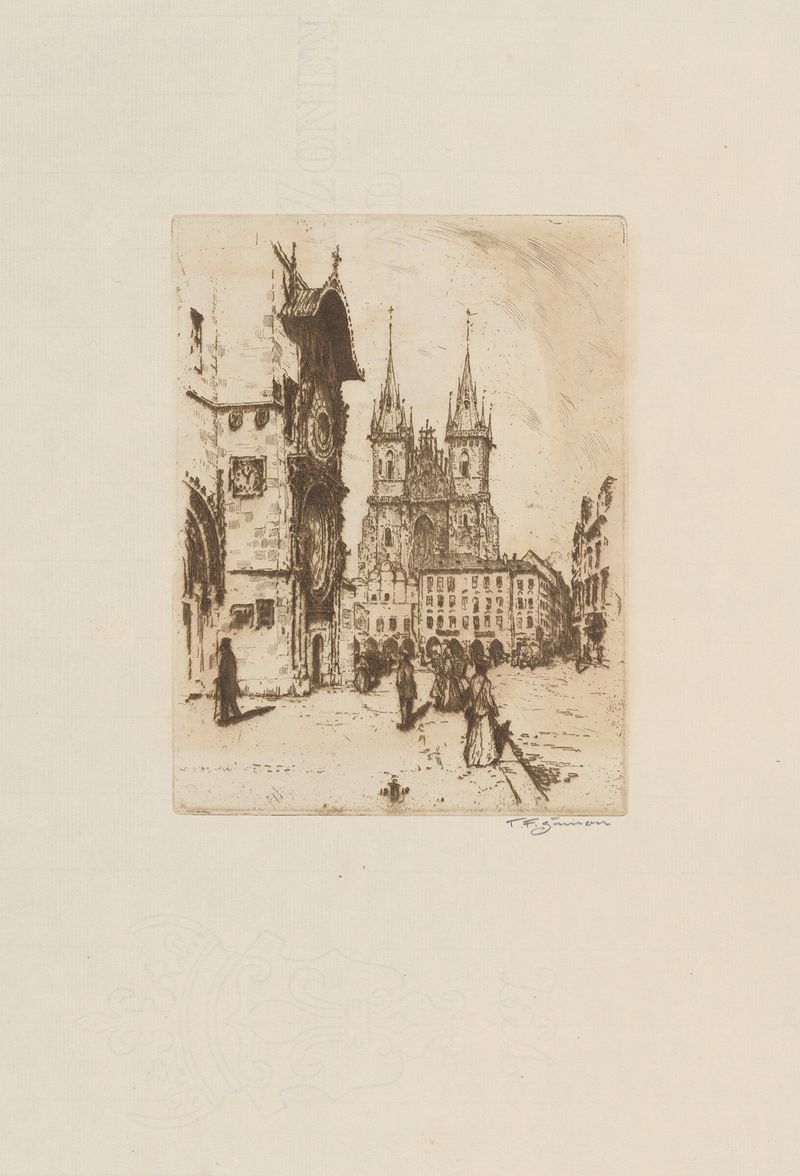
The Old Town City Hall with the Týn Cathedral
Tavík František Šimon





