
The Goatherdess — History & Facts
Who listens when art speaks of silence? In Gerard Bilders’ The Goatherdess, fragility and intimacy intertwine, inviting viewers to pause and reflect on the unspoken narratives of the human experience. Focus on the figure at the center, a goatherdess, exuding tranquility amidst nature’s embrace. Her posture suggests both strength and vulnerability as she cradles a goat, the delicate play of light illuminating her soft features. The muted palette blends earthy greens and browns, evoking a sense of harmony with the pastoral landscape that envelops her.
Pay close attention to the way the gentle brushstrokes capture the texture of her clothing and the animal’s fur, drawing you deeper into the serene moment. Within this peaceful tableau lies a profound commentary on the balance between humanity and nature. The goatherdess symbolizes nurturing yet evokes a sense of solitude, emphasizing the delicate existence of both woman and beast. This duality speaks to the transience of life, inviting contemplation on the fragility of connection and the inherent silence that can accompany it.
The viewer is left considering the quiet struggles and joys that exist just beneath the surface. In 1864, Bilders painted this piece during a time when the Dutch Romantic movement was gaining traction, characterized by a growing appreciation for the natural world. Living in the Netherlands, he found inspiration in the landscapes around him, reflecting a shift toward depicting authentic emotional experiences through art. This painting stands as a testament to his mastery of capturing both the beauty and vulnerability of life, resonating with the viewer long after they have stepped away from the canvas.
More Artworks by Gerard Bilders
Browse all →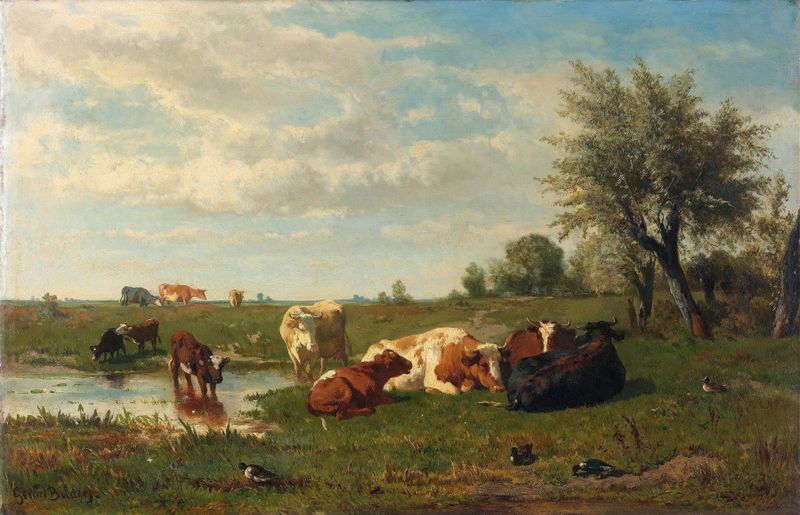
Cows in the Meadow
Gerard Bilders
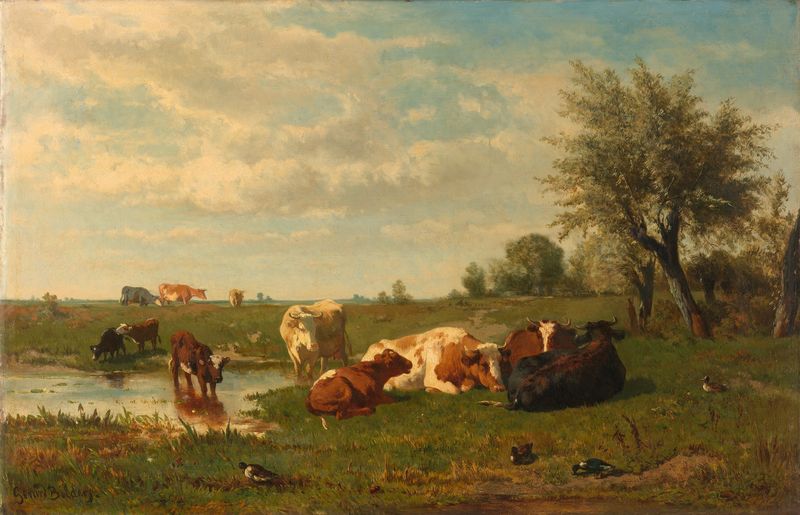
Cows in the Meadow
Gerard Bilders
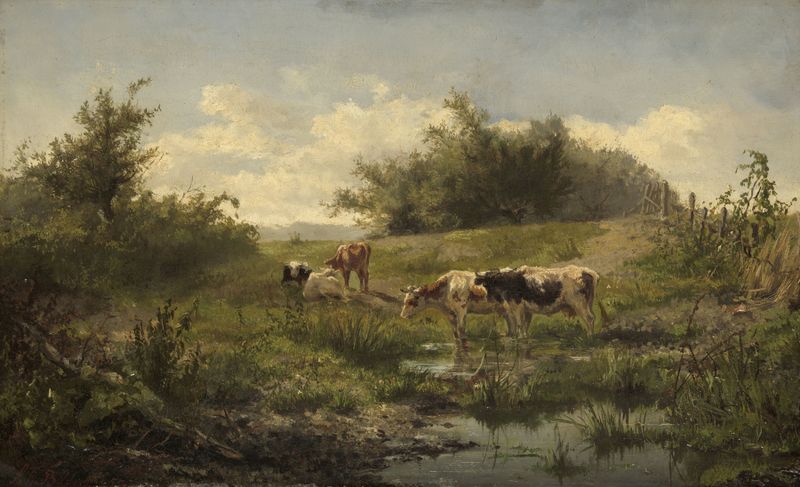
Cows at a Pond
Gerard Bilders
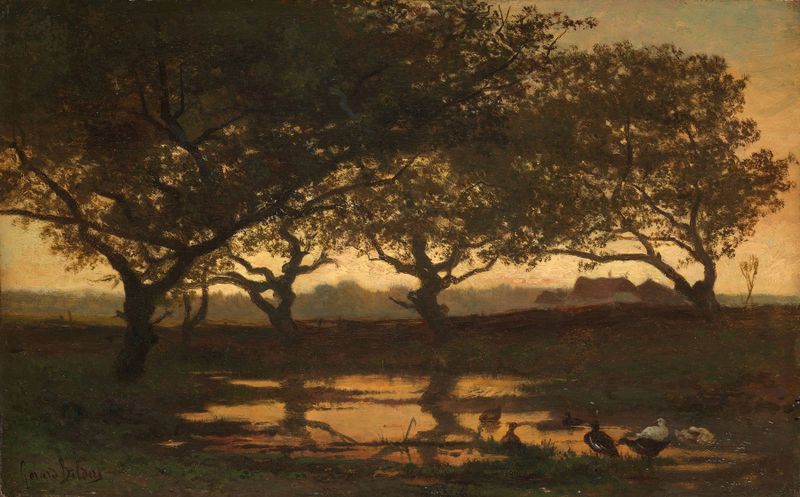
Woodland Pond at Sunset
Gerard Bilders

Cows at a pond
Gerard Bilders

Jacob van Ruisdael Sketching a Watermill
Gerard Bilders
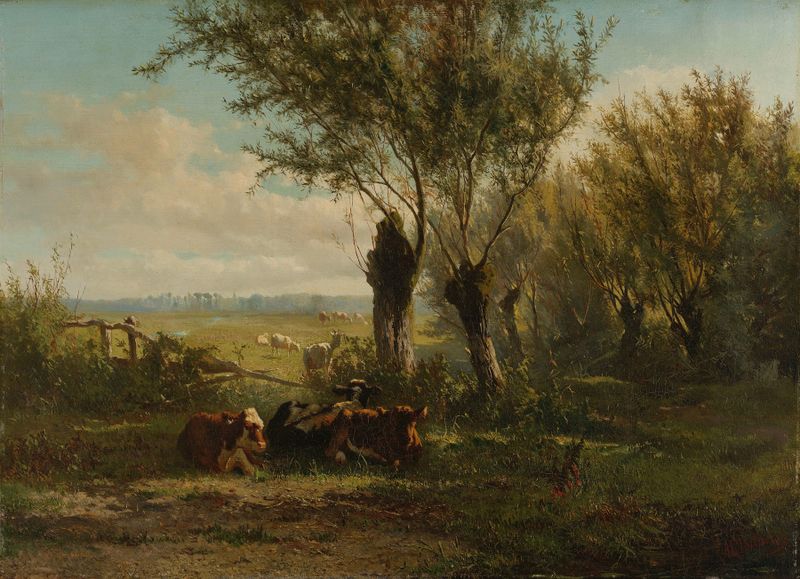
Meadow near Oosterbeek
Gerard Bilders

Woodland Pond at Sunset
Gerard Bilders
Meadow near Oosterbeek
Gerard Bilders
Meadow near Oosterbeek
Gerard Bilders





