
The Good Samaritan — History & Facts
When did color learn to lie? In The Good Samaritan, the vibrancy of paint carries more than mere hues; it whispers the truths and paradoxes of humanity. Look to the center of the canvas where the Samaritan kneels beside the wounded traveler, his hands tenderly cradling the man's head. Notice how the warm light bathes their figures, a stark contrast to the cooler shadows that loom on the edges. Savery employs a rich palette of earthy tones, with reds and ochres that seem to pulse with life, inviting the viewer to experience both empathy and urgency.
The dynamic composition draws the eye toward the focal point of compassion, while the surrounding figures seem to linger in hesitation, emphasizing the act of kindness against a backdrop of indifference. In the small details, the fabric of the Samaritan's cloak appears almost alive, fluttering with movement while the surrounding figures remain static. This juxtaposition highlights the tension between action and inaction, moral obligation and societal apathy. The expressions on the faces of the onlookers—some sympathetic, others indifferent—reflect a broader commentary on human nature: the choice to intervene or to look away, which resonates with the viewer long after the initial gaze. Savery painted The Good Samaritan during a time when the art world was embracing the Baroque style, marked by dramatic narratives and emotional intensity.
Completed after 1633, he was influenced by the socio-political upheavals of the time, including religious and moral reckonings that prompted artists to explore themes of virtue and vice. This work stands as both a reflection of personal belief and a call to action, encouraging viewers to consider their own roles in the tapestry of compassion.
More Artworks by Salomon Savery
Browse all →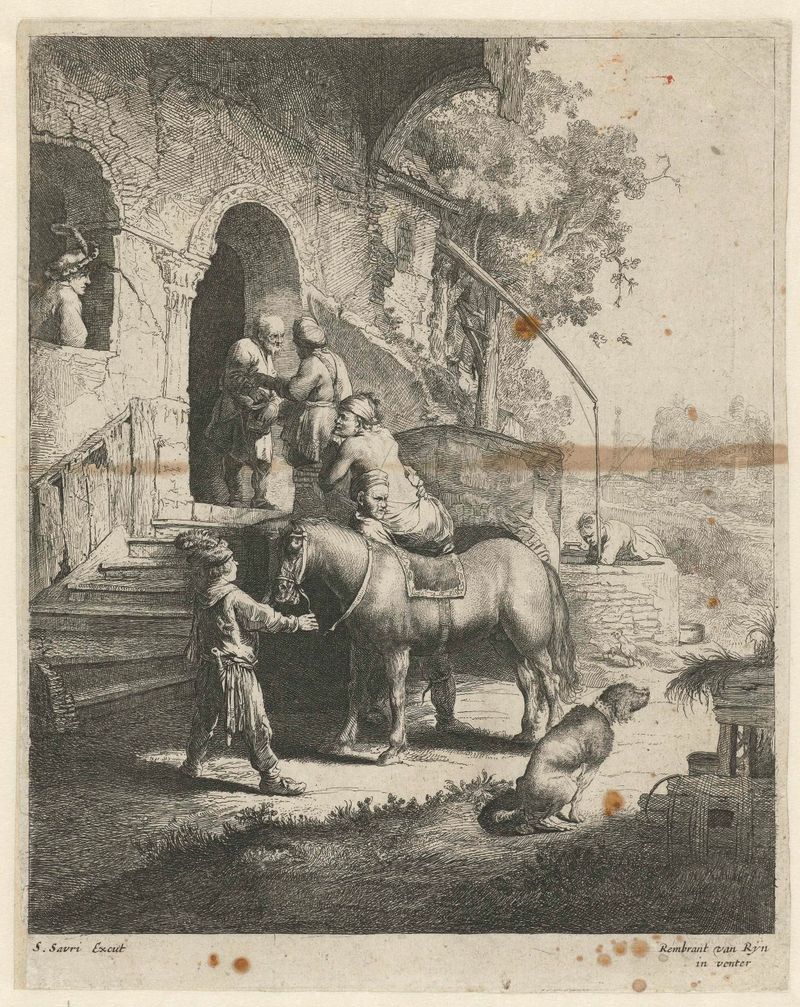
More Religious Art
Browse all →
The Return of the Prodigal Son
Rembrandt van Rijn

The Garden of Earthly Delights
El Bosco

Count Orgaz’ funeral
El Greco

The Hundred Guilder Print: the central piece with Christ preaching, the plate arched
Rembrandt van Rijn

The Descent from the Cross
Rogier van der Weyden

The return of the prodigal son
Rembrandt van Rijn