
The Good Shepherd — History & Facts
Can paint confess what words never could? In a world saturated with noise, the quiet truth of existence often reveals itself through the softest strokes of a brush. Look to the center of the canvas to find the figure of the shepherd, his serene demeanor a beacon of calm amidst the pastoral landscape. Notice how the gentle light bathes him in a warm glow, illuminating his caring expression and the delicate wool of the sheep surrounding him. The rich greens and earthy browns blend harmoniously, invoking a sense of peace and unity with nature, while the distant mountains stand as silent witnesses to this moment of communion. The juxtaposition of man and nature resonates deeply within the piece; the shepherd’s protective gesture symbolizes the nurturing aspect of humanity, contrasting beautifully with the wildness of the landscape.
Each sheep, with its unique posture and gaze, represents individual vulnerability, inviting viewers to consider themes of care and responsibility. The meticulous detail in the shepherd’s cloak and the sheep's wool creates an emotional depth, suggesting that the bonds we form with others are both fragile and essential. Robert Zünd painted this work between 1867 and 1872 during his time in Switzerland, amidst an era that embraced Romanticism's ideals and pastoral themes. As a prominent figure in landscape painting, he sought to merge the beauty of nature with profound human connections, reflecting a world grappling with industrial change yet yearning for simplicity and truth.
More Artworks by Robert Zünd
Browse all →
Blick Von Schönbühl Auf Den Vitznauerstock
Robert Zünd
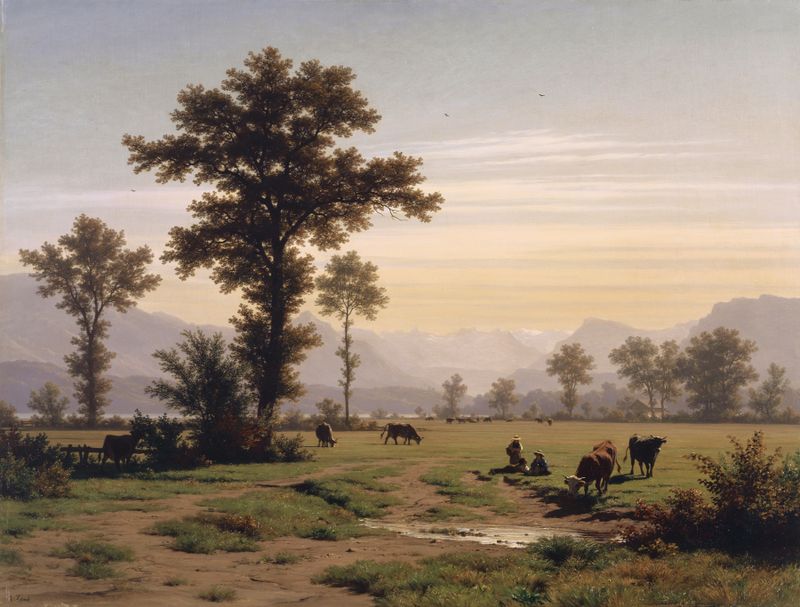
Landscape near Lucerne
Robert Zünd
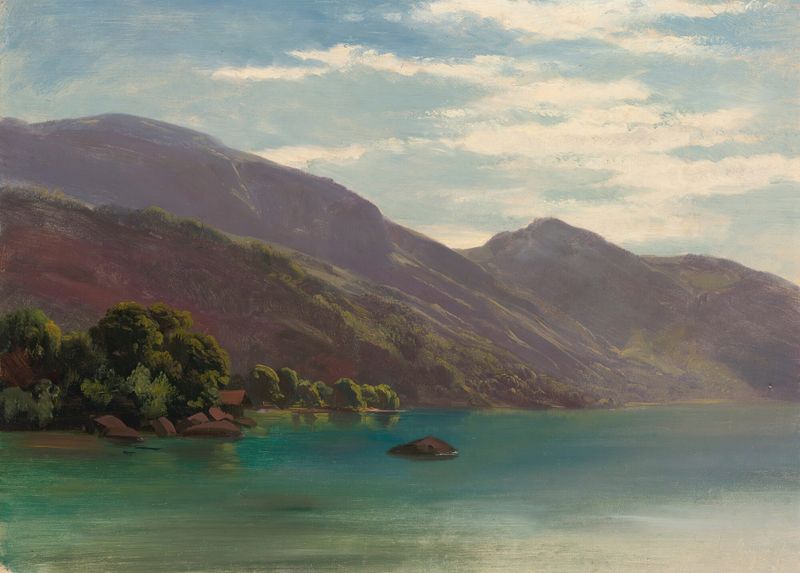
Vierwaldstättersee
Robert Zünd

Sonnige Au
Robert Zünd
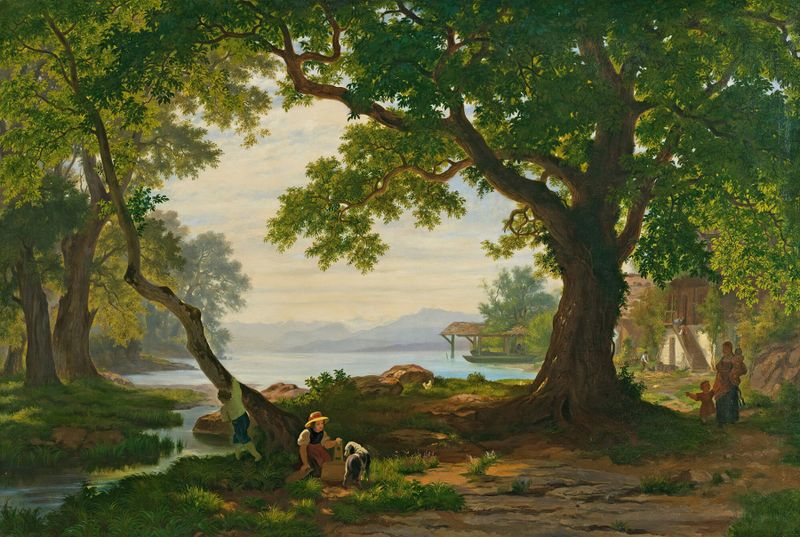
At Lake Sempach
Robert Zünd

Rest of the Holy Family on the Flight into Egypt
Robert Zünd

Waldweg Forest Track
Robert Zünd

Three Crosses Along A Country Lane
Robert Zünd
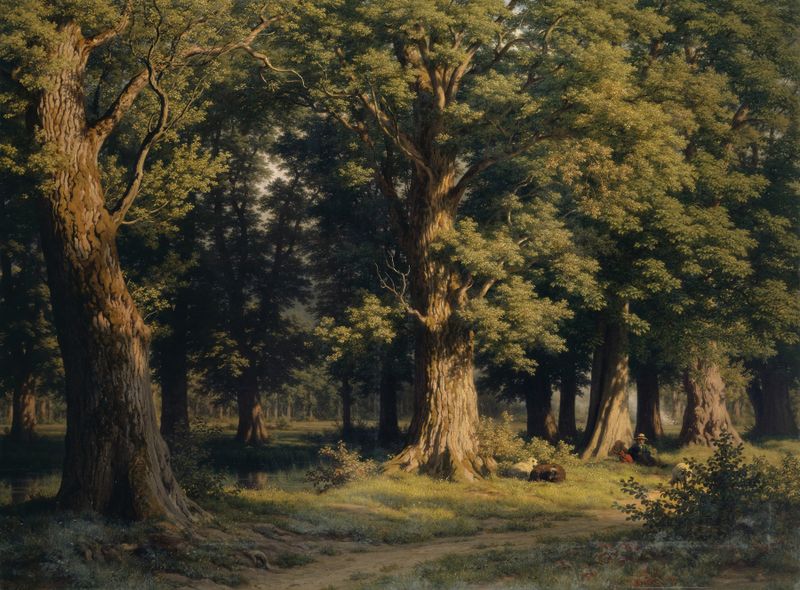
Grove near Lucerne
Robert Zünd
Eichwald (Oak Forest)
Robert Zünd
More Religious Art
Browse all →
The Return of the Prodigal Son
Rembrandt van Rijn

The Garden of Earthly Delights
El Bosco

Count Orgaz’ funeral
El Greco

The Hundred Guilder Print: the central piece with Christ preaching, the plate arched
Rembrandt van Rijn

The Descent from the Cross
Rogier van der Weyden

The return of the prodigal son
Rembrandt van Rijn