
Eichwald (Oak Forest) — History & Facts
Can beauty exist without sorrow? Robert Zünd's Eichwald (Oak Forest) invites us to ponder this profound question as we traverse his verdant landscape, where shadows linger just beneath the canopy of tranquility. Look to the left at the towering oak trees, their gnarled branches reaching towards the heavens. The rich greens of the foliage are punctuated by dappled sunlight, casting a gentle yet dramatic interplay of light and shadow across the forest floor. Notice how the soft browns of the earth merge with the vibrant greens, creating a tapestry of life that beckons exploration while also concealing what lies beneath.
The depth of the composition pulls the viewer in, while the quietude of the scene evokes a sense of both peace and unease. At first glance, the forest appears serene, yet there is an undercurrent of tension woven through Zünd's careful brushwork. The looming trees evoke a sense of grandeur, but they also cast their long shadows, suggesting the weight of history and the passage of time—reminders that beauty can be fleeting. The delicate balance between light and dark speaks to an emotional dichotomy: while the landscape enchants, it also invites the viewer to consider the fears hidden within nature's embrace, symbolizing the duality of existence. Zünd painted Eichwald in 1859 while residing in Switzerland, a time when Romanticism continued to shape the era's artistic landscape.
Artists were increasingly drawn to nature, seeking to express both its beauty and its darker, more foreboding aspects. The artist’s careful observations and emotional engagement with his surroundings reflect a personal journey during a period that was marked by both aesthetic exploration and a search for deeper meaning in the natural world.
More Artworks by Robert Zünd
Browse all →
Blick Von Schönbühl Auf Den Vitznauerstock
Robert Zünd
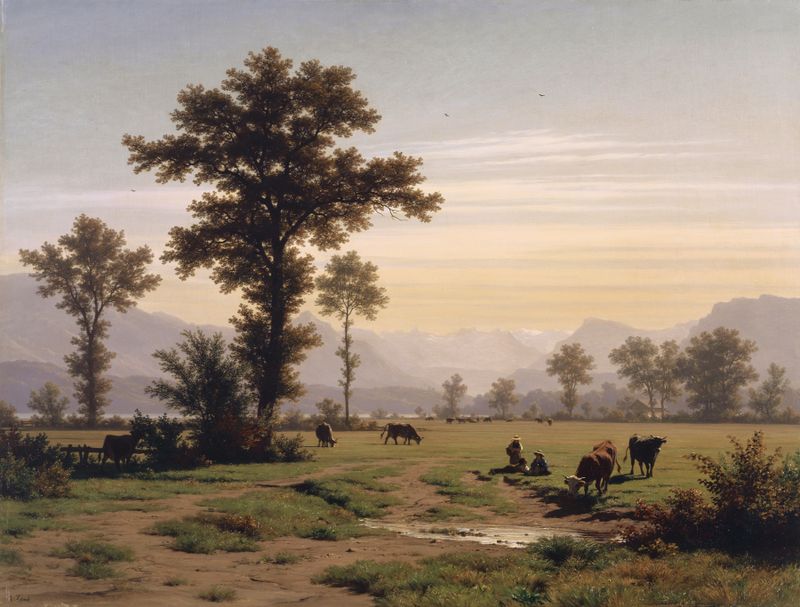
Landscape near Lucerne
Robert Zünd
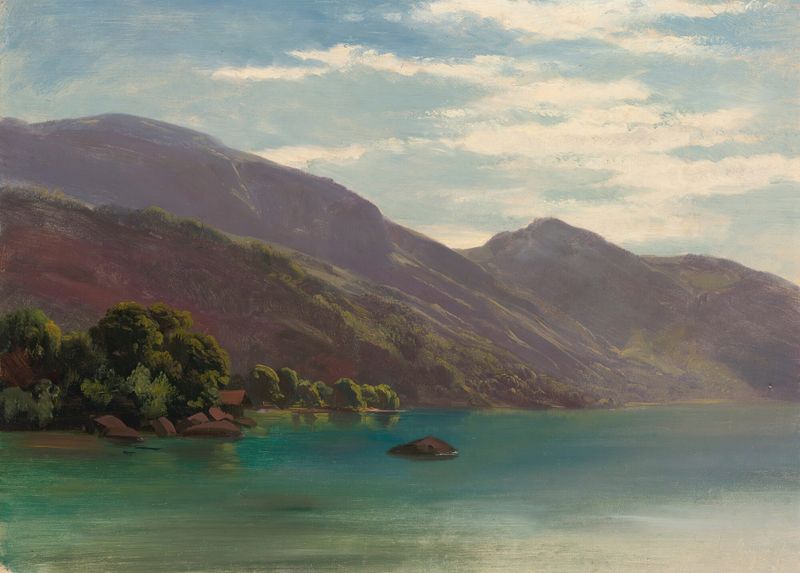
Vierwaldstättersee
Robert Zünd

Sonnige Au
Robert Zünd
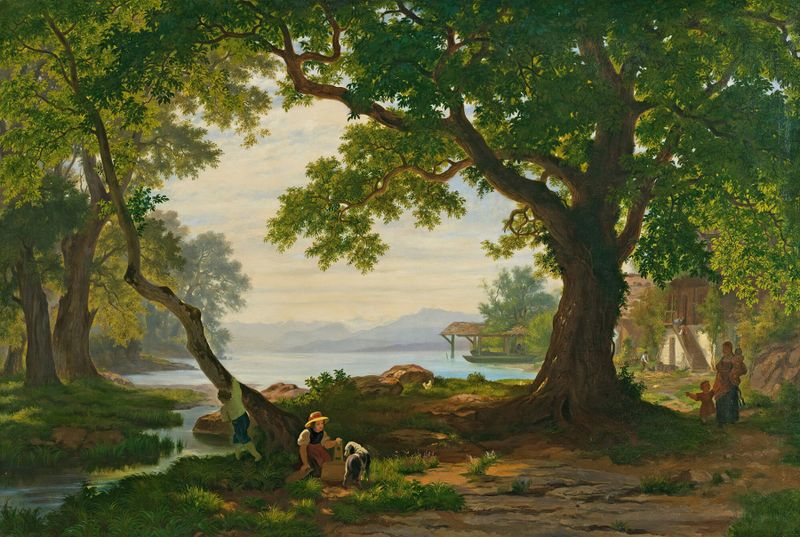
At Lake Sempach
Robert Zünd

Rest of the Holy Family on the Flight into Egypt
Robert Zünd

Waldweg Forest Track
Robert Zünd

Three Crosses Along A Country Lane
Robert Zünd
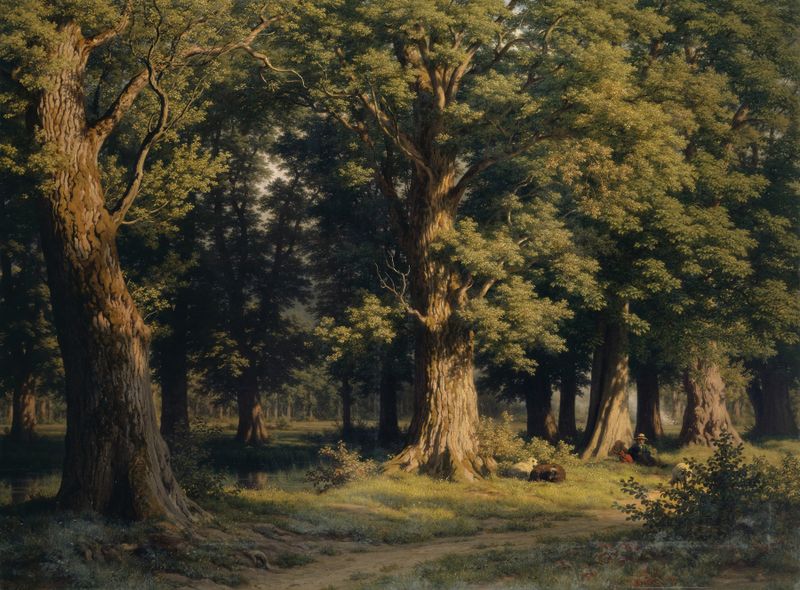
Grove near Lucerne
Robert Zünd

The Good Shepherd
Robert Zünd





