
The Grand Portico at the Temple at Esneh, Egypt — History & Facts
Can paint confess what words never could? In the grand silence of ancient stone, a hidden madness lurks, echoing the whispers of time. Look to the left at the towering columns, their intricate carvings momentarily visible beneath the warm embrace of sunlight. The artist employs a soft palette, where dusty ochres and muted blues meld seamlessly, capturing the essence of a forgotten civilization. The viewer’s eyes are drawn upward, tracing the curvature of the arches that seem to cradle the heavens themselves.
The play of light and shadow further enhances the monumental scale, emphasizing both the grandeur and the fragility of this once-vibrant temple. Amidst the architectural splendor lies an unsettling contrast: the pristine stillness of the scene juxtaposed with the chaos of history it encapsulates. Notice the scattered stones at the base, remnants of a civilization that dared to dream and ultimately succumb to time’s relentless march. The grandeur of the portico hints at an ambitious attempt to defy mortality, yet the surrounding desolation serves as a poignant reminder of the impermanence inherent in all human aspirations. In 1838, at a time when Europe was captivated by the allure of the East, the artist found inspiration in the ruins of ancient Egypt.
Traveling through Egypt, David Roberts documented these majestic sites during a period of burgeoning archaeological interest, all while grappling with the surreal beauty and melancholy of antiquity. His works not only captured the physicality of these structures but also the deeper emotional reverberations they held, reflecting a world that was both wondrous and fleeting.
More Artworks by David Roberts
Browse all →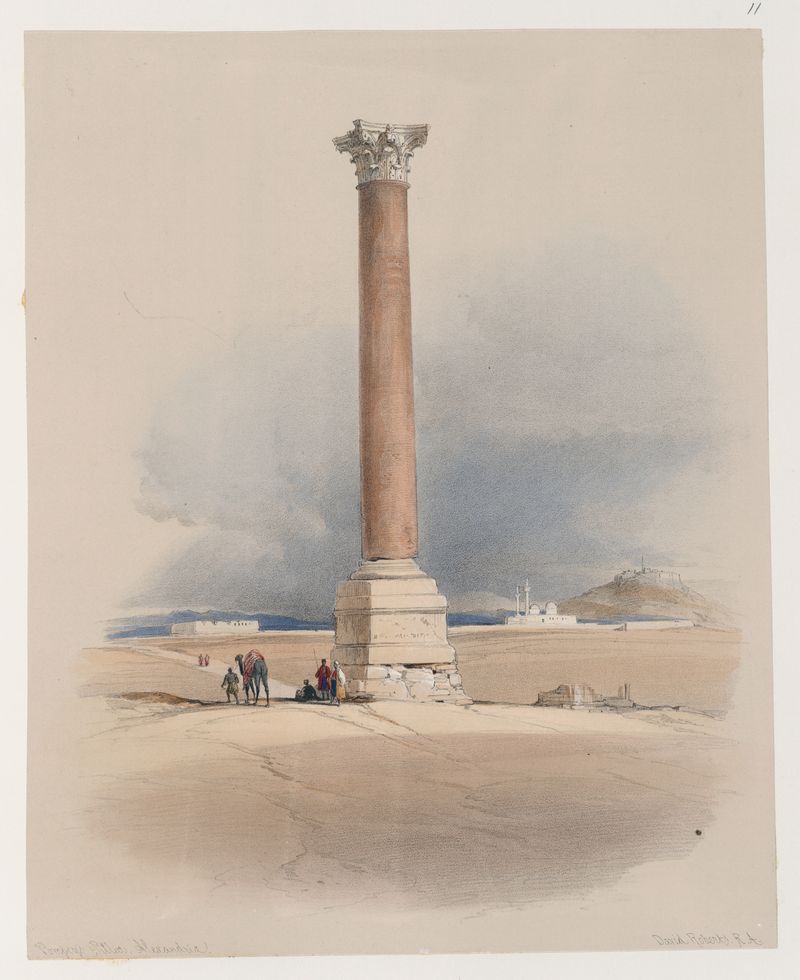
Pompey’s Pillar, Alexandria.
David Roberts

Approach to the Fortress of Ibrim.
David Roberts

Karnac [Karnak]. Nov. 29th, 1838.
David Roberts
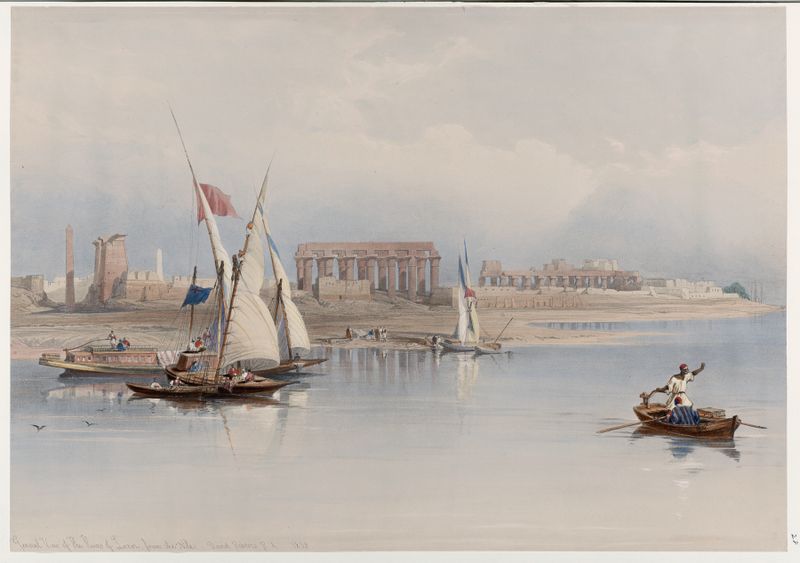
General view of the ruins of Luxor, from the Nile. 1838.
David Roberts

Statues of Memnon at Thebes, during the inundation.
David Roberts

Entrance to the tombs of the kings of Thebes. Bab-el-Malouk [Bîbân al-Mulûk].
David Roberts

The Fortress of the Alhambra, Granada
David Roberts
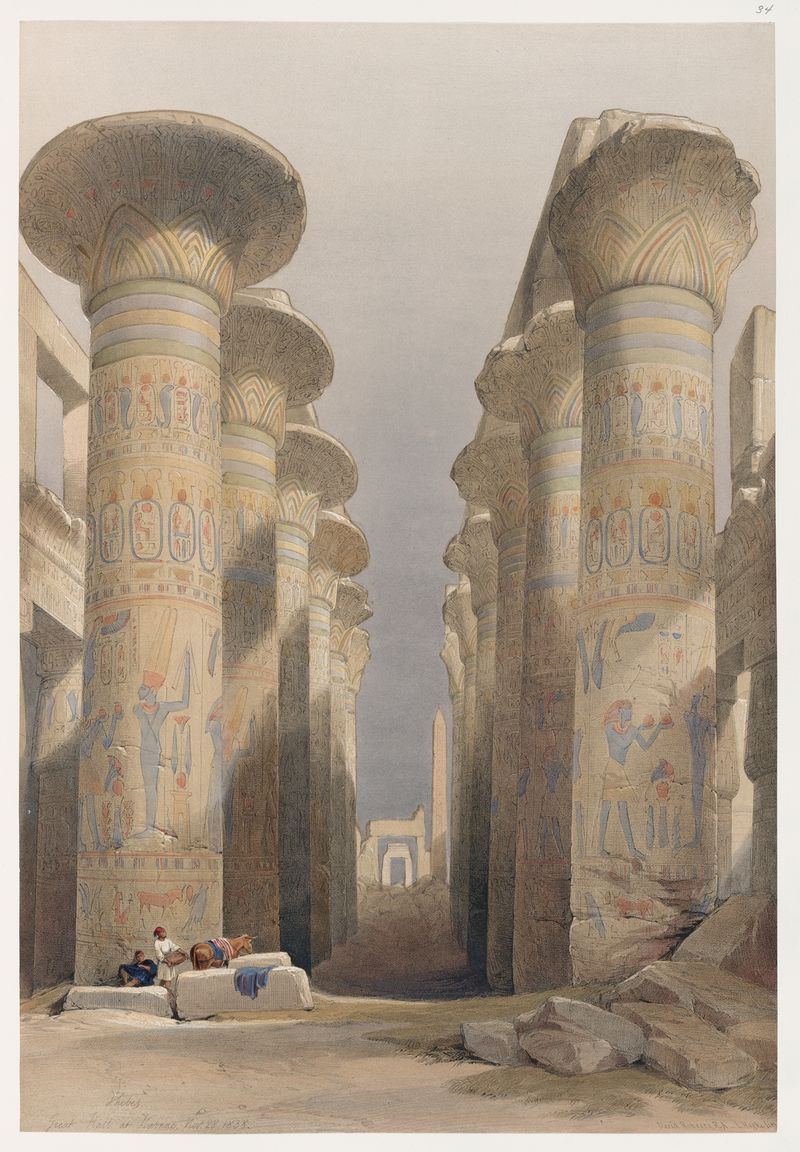
Thebes. Great Hall at Karnak. Nov. 28, 1838.
David Roberts
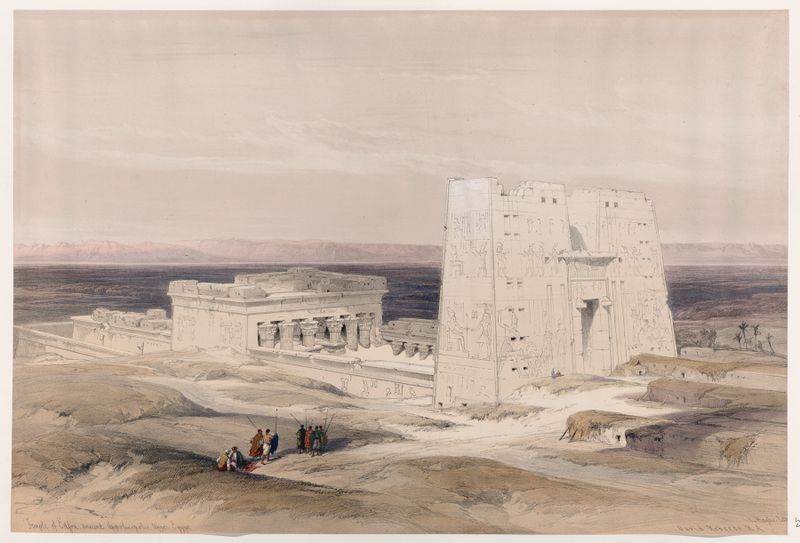
Temple of Edfou [Idfû], ancient Appolinopolis, Upper Egypt.
David Roberts

Temple of Kalabshee [Kalabsha, Kalâbishah], Nubia. Nov. 1838.
David Roberts
More Architecture Art
Browse all →
The statue of Liberty
Frédéric Auguste Bartholdi

View of Houses in Delft, Known as ‘The Little Street’
Johannes Vermeer

View of Houses in Delft, Known as ‘The Little Street’
Johannes Vermeer

The Cathedral in Rouen. The portal, Grey Weather
Claude Monet

The yellow house
Vincent van Gogh

The Church in Auvers-sur-Oise, View from the Chevet
Vincent van Gogh