The Grave of William Penn — History & Facts
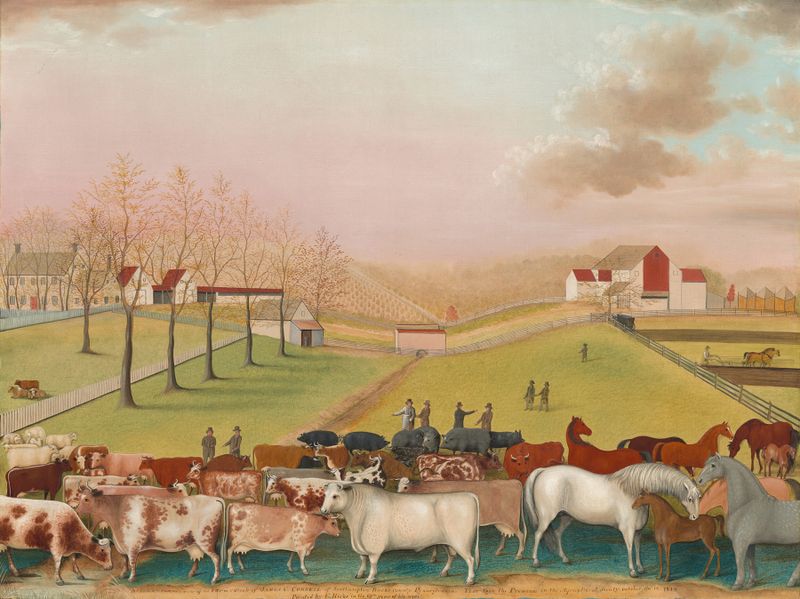
Memories linger like whispers, waiting to be unraveled with a gentle touch. Look to the center of the canvas, where a somber yet serene landscape unfolds. The peaceful grave, marked by a simple stone, is cradled by lush greenery that breathes life into the scene. Hicks employs a muted palette, soft greens and browns intertwining to evoke tranquility, while the sky above hints at an impending dusk, casting a golden glow that dances on the grave's surface.
The composition invites the viewer to reflect, drawing the eye toward the solitary resting place, a quiet testament to a life once lived. Delve deeper into the details, where the play of light and shadow reveals emotional undercurrents. Notice the stark contrast between the vibrant foliage and the grave’s austere simplicity; it speaks of nature's persistence amidst human transience. The absence of figures amplifies the weight of solitude, suggesting that memory itself is the only visitor here.
Each blade of grass, each fallen leaf, seems to hold a story, urging us to confront the delicate balance between remembrance and oblivion. In the mid-19th century, when this piece was created, Hicks was deeply entrenched in his Quaker beliefs, often reflecting on themes of peace and mortality in his works. Painted around 1847, he grappled with the shifting tides of American art, seeking a unique voice that combined spiritual and natural elements. The landscape serves as both a homage to William Penn and a meditation on the legacy of the past within the fabric of a burgeoning nation.